

Putha Hiunchuli Expedition
$ 9,500.00$ 9,250.00
Reaching Putha Hiunchuli is an expedition in itself. The adventure begins with two scenic flights: one from Kathmandu to Nepalgunj and another to Juphal in Dolpo. From Juphal, climbers embark on a six-day trek through breathtaking landscapes, gradually acclimatizing to reach the German Base Camp at an altitude of 4,575 meters. This remote and challenging route adds to the allure of the expedition.
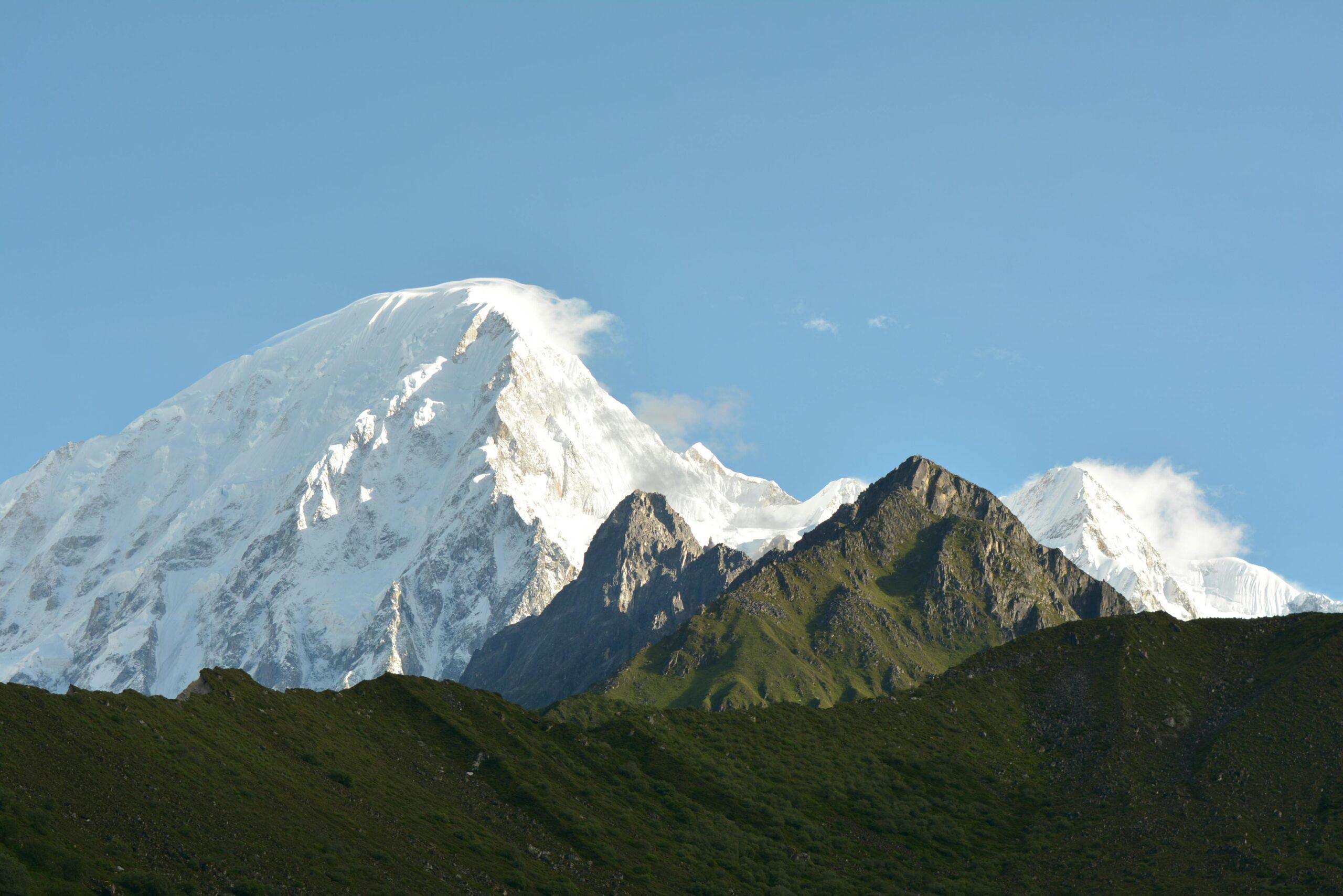
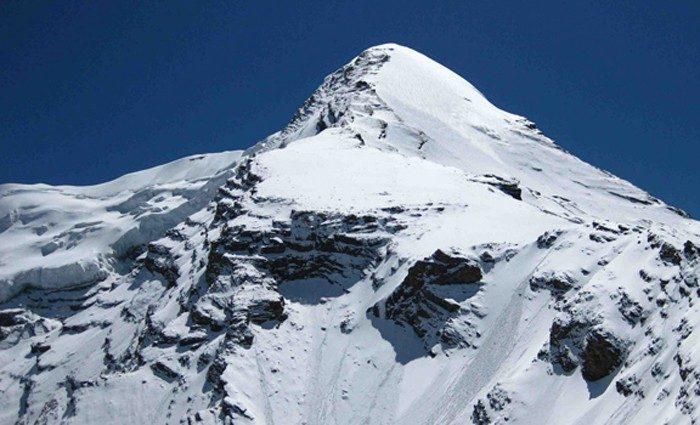
Putha Hiunchuli (7,246m) – Dhaulagiri VII is a remarkable seven-thousand-meter peak located in the remote Dolpo region of northwestern Nepal. Known for its technical simplicity and stunning surroundings, it offers climbers an adventurous yet relatively safe mountaineering experience during the autumn season. Unlike other peaks in the Himalayas, Putha Hiunchuli presents fewer avalanche and crevasse hazards, attracting only a handful of climbing teams annually. This creates a serene and secluded atmosphere for expedition enthusiasts.
For the latest information on trekking regulations, permits, conservation areas, and mountaineering requirements in Nepal, visit the official Nepal Tourism Board and relevant government authorities before planning your Pisang Peak Climbing adventure.
Also if you want to view our other treks then you can follow this link.
Product Description
Putha Hiunchuli Expedition: Cost, Itinerary, Difficulty & Complete Guide
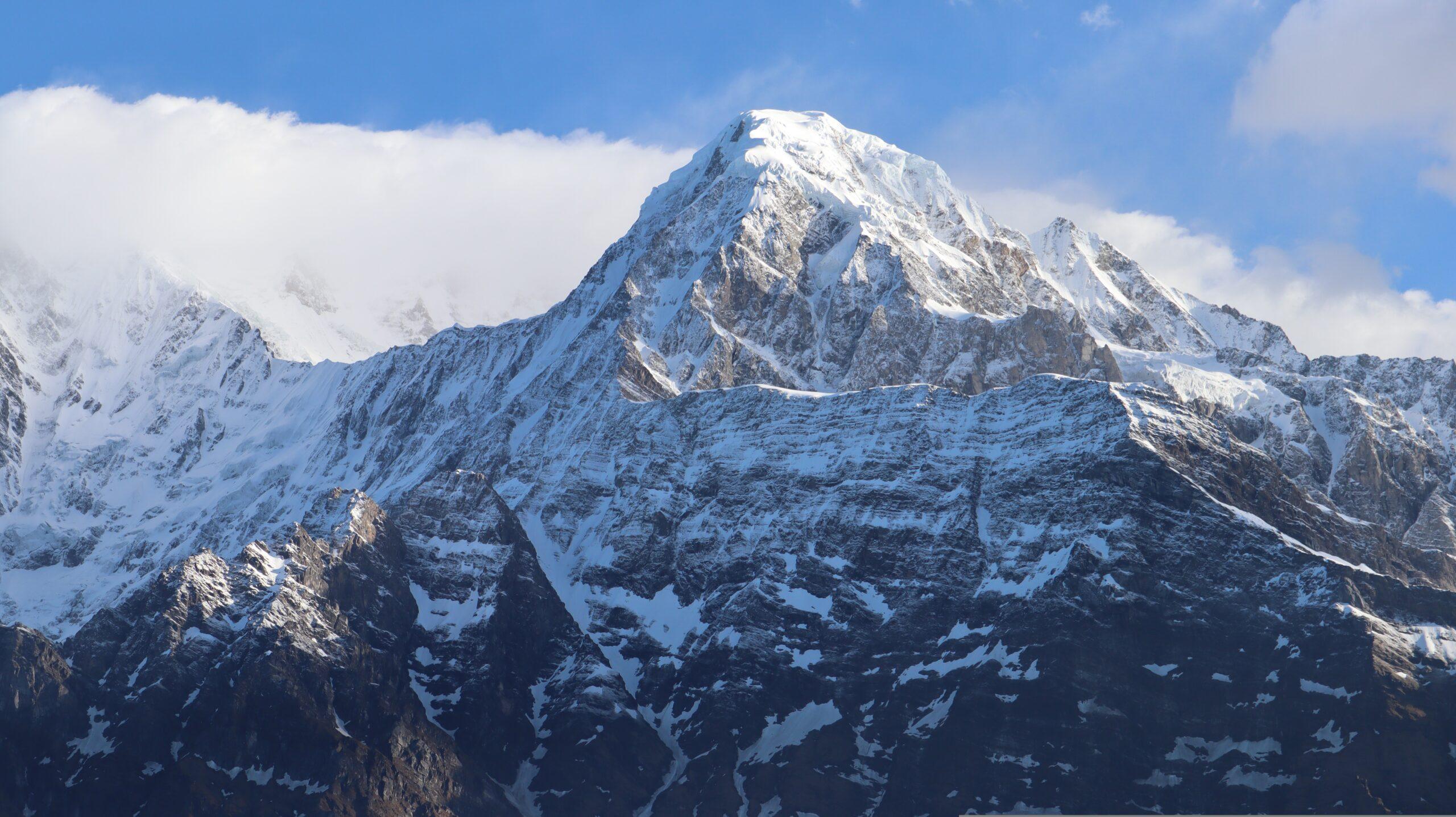
The Putha Hiunchuli Expedition is a challenging high-altitude mountaineering adventure in the remote Dolpo region of western Nepal. Rising to 7,246 meters (23,773 feet), Putha Hiunchuli is also known as Dhaulagiri VII and is the westernmost major peak of the Dhaulagiri range.
Unlike Nepal’s more popular climbing destinations, Putha Hiunchuli offers a genuinely remote Himalayan experience. The approach passes through the wilderness of Dolpo, with long trekking stages, camping, glaciers, snow-covered terrain and spectacular views of the Dhaulagiri range and surrounding mountains.
The mountain was first climbed in 1954 by Jimmy Roberts and Ang Nyima Sherpa. Modern expedition programs generally take around 31–35 days, depending on the itinerary, acclimatization schedule and logistics.
For experienced mountaineers looking for a less crowded 7,000-meter expedition in Nepal, Putha Hiunchuli is an excellent choice.
Putha Hiunchuli Expedition Highlights
- Peak: Putha Hiunchuli / Dhaulagiri VII
- Elevation: 7,246 m / 23,773 ft
- Location: Dolpo, western Nepal
- Region: Dhaulagiri Himal
- Expedition duration: Approximately 31–35 days
- Grade: Challenging / technical high-altitude expedition
- Best seasons: Spring and autumn
- Base Camp: Approximately 4,800–4,915 m
- Route: Dolpo approach and northern flanks
- Accommodation: Hotels, lodges and tented camps
- First ascent: 1954
- Climbing style: Expedition-style alpine and glacier climbing
Current expedition operators describe the mountain as a relatively approachable 7,000-meter objective, but the remote approach and high-altitude climbing still demand serious preparation and experience.
What Is the Putha Hiunchuli Expedition?
The Putha Hiunchuli Expedition is a mountaineering expedition to the 7,246-meter summit of Putha Hiunchuli in western Nepal.
The mountain lies in the remote Dolpo region, an area famous for its dramatic landscapes, Tibetan-influenced culture, high valleys and limited tourism infrastructure.
Reaching the mountain is an expedition in itself. Depending on the itinerary, climbers may travel through Kathmandu, Nepalgunj and Juphal, followed by a long trekking approach through places such as Dunai, Tarakot, Musi Khola, Kakot and Yak Kharka before reaching the mountain’s base camp.
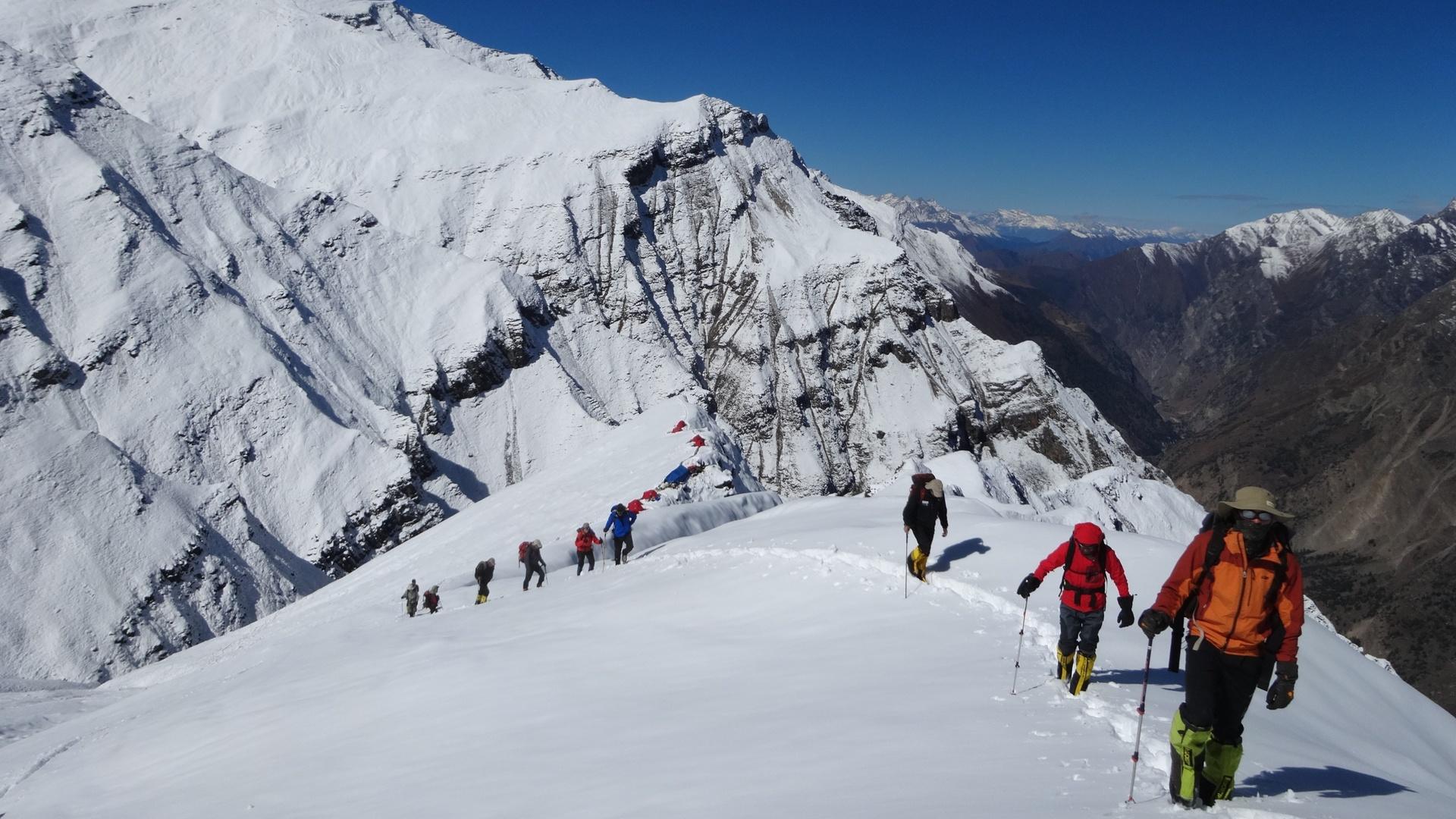
From Base Camp, climbers establish higher camps, acclimatize on the mountain and eventually attempt the summit at 7,246 meters.
Why Climb Putha Hiunchuli?
1. Climb a 7,000-Meter Himalayan Peak
Putha Hiunchuli provides an opportunity to climb above 7,000 meters without attempting an 8,000-meter giant such as Everest or Lhotse.
It can therefore be an important stepping stone for experienced climbers preparing for more demanding Himalayan expeditions.
2. Explore Remote Dolpo
The approach takes you deep into one of Nepal’s most isolated mountain regions.
Instead of following crowded trekking routes, the expedition travels through remote valleys, high pastures, traditional settlements and rugged Himalayan wilderness.
3. Experience a Less Crowded Mountain
Putha Hiunchuli receives considerably fewer climbers than Everest, Manaslu or popular trekking peaks.
This makes it attractive to mountaineers seeking solitude and a more traditional expedition experience.
4. Spectacular Dhaulagiri Views
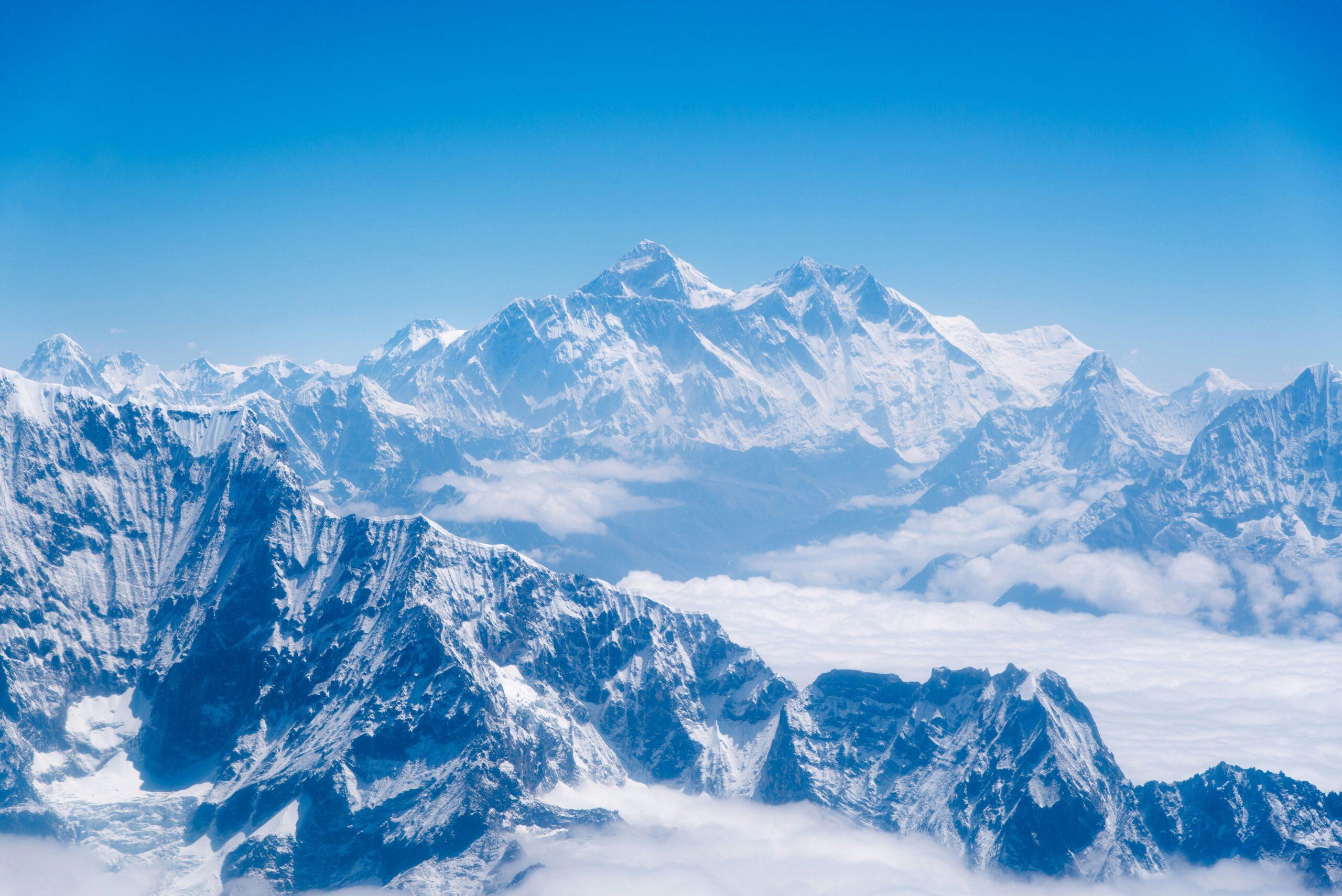
The expedition offers magnificent views of the Dhaulagiri range along with other Himalayan peaks.
The surrounding landscape is one of the major attractions of climbing in this part of Nepal.
5. Develop High-Altitude Mountaineering Experience
Climbing Putha Hiunchuli involves glacier travel, rope work, snow climbing, acclimatization and high-altitude expedition logistics.
For appropriately experienced climbers, these skills can be valuable preparation for future 7,000- and 8,000-meter expeditions.
Putha Hiunchuli Expedition Cost
The Putha Hiunchuli Expedition cost varies according to the expedition operator, group size, logistics, guide-to-client ratio, transportation, climbing support, equipment and services included in the package.
Because expedition prices change between seasons and operators, climbers should request a current quotation before booking.
Major factors affecting Putha Hiunchuli Expedition cost include:
- Nepal climbing permit
- Dolpo trekking or conservation permits
- Domestic flights
- Transportation
- Expedition staff
- Sherpa climbing support
- Food and accommodation
- Base Camp services
- Tents and kitchen equipment
- Climbing equipment
- Fixed ropes and technical equipment
- Liaison officer requirements
- Garbage management
- Insurance
- Emergency evacuation arrangements
- Number of acclimatization days
- Personal climbing equipment
A budget expedition and a premium expedition with stronger logistical and high-altitude support can have significantly different prices.
Always confirm exactly what is included in the expedition package before making a payment.
What Does a Putha Hiunchuli Expedition Package Include?
A professional expedition package may include:
Accommodation
- Hotel accommodation in Kathmandu
- Hotel accommodation during transportation stages
- Lodge accommodation where available
- Tented accommodation during the remote trek and climbing period
Transportation
- Airport transfers
- Domestic flights
- Ground transportation
- Local transportation during the approach
Expedition Services
- Trekking guide
- Climbing guide
- Sherpa support
- Porters
- Base Camp staff
- Kitchen staff
- Government liaison officer where required
Permits
- Putha Hiunchuli climbing permit
- Required trekking/conservation permits
- Other applicable government fees
Base Camp Services
- Tents
- Dining tent
- Kitchen tent
- Toilet facilities
- Kitchen equipment
- Food and fuel
- Base Camp logistics
Exact inclusions differ between operators, so travelers should carefully compare packages.
Putha Hiunchuli Expedition Itinerary
A typical Putha Hiunchuli Expedition itinerary takes approximately 31–35 days. Some current programs use around 35 days, while others operate shorter 31–33-day itineraries.
The following is a representative itinerary and can change according to weather, acclimatization and expedition logistics.
Day 1: Arrival in Kathmandu
Arrive in Kathmandu and transfer to your hotel.
Meet the expedition team and review the upcoming itinerary.
Day 2: Expedition Preparation
Complete permit formalities, equipment checks and expedition briefings.
Day 3: Kathmandu to Nepalgunj
Fly from Kathmandu to Nepalgunj.
Day 4: Nepalgunj to Juphal and Trek to Dunai
Fly toward Juphal and begin the approach trek toward Dunai.
Day 5: Dunai to Tarakot
Continue along the trail toward Tarakot.
Day 6: Tarakot to Musi Khola
Trek deeper into the remote Dolpo landscape.
Day 7: Musi Khola to Kakot
Continue toward Kakot and gradually gain altitude.
Day 8: Rest and Acclimatization at Kakot
Take a rest day and prepare for the higher-altitude section.
Day 9: Kakot to Yak Kharka
Continue toward the alpine region.
Day 10: Yak Kharka to Putha Phedi
Move closer to Putha Hiunchuli Base Camp.
Day 11: Putha Phedi to Base Camp
Reach Putha Hiunchuli Base Camp, generally around 4,800–4,900 meters depending on the expedition route. Current published itineraries place Base Camp around 4,800–4,915 m.
Days 12–15: Acclimatization and Training
Spend several days acclimatizing.
The climbing team may conduct:
- Glacier travel training
- Rope techniques
- Crampon practice
- Ice axe training
- Fixed-rope practice
- High-altitude safety training
Days 16–20: Camp I Rotations
Climb toward Camp I and return to Base Camp as part of the acclimatization strategy.
Days 21–23: Rest and Recovery
Rest at Base Camp and prepare for the summit push.
Days 24–25: Higher Camp Rotation
Move through the higher sections of the mountain and establish the final summit strategy.
Day 26: Summit Day
Begin the summit push in the early hours.
The final climb involves high-altitude snow and glacier terrain before reaching the 7,246-meter Putha Hiunchuli summit.
Day 27: Return to Base Camp
Descend carefully to Base Camp and recover.
Days 28–32: Trek Back
Retrace the approach route toward Juphal.
Days 33–34: Juphal to Kathmandu
Fly through Nepalgunj and return to Kathmandu.
Day 35: Final Departure
Transfer to the airport for your international flight.
Note: Actual expedition itineraries vary considerably. Some current programs allocate 10–13 days for the climbing period and additional contingency days for weather and summit attempts.
Putha Hiunchuli Expedition Route
The Putha Hiunchuli Expedition route takes climbers through the remote Dolpo region.
A commonly published approach is:
Kathmandu → Nepalgunj → Juphal → Dunai → Tarakot → Musi Khola → Kakot → Yak Kharka → Putha Phedi → Putha Hiunchuli Base Camp
From Base Camp, the climbing route continues through the glacier and higher camps toward the summit.
The exact camp positions and climbing strategy may differ depending on the expedition operator and current mountain conditions.
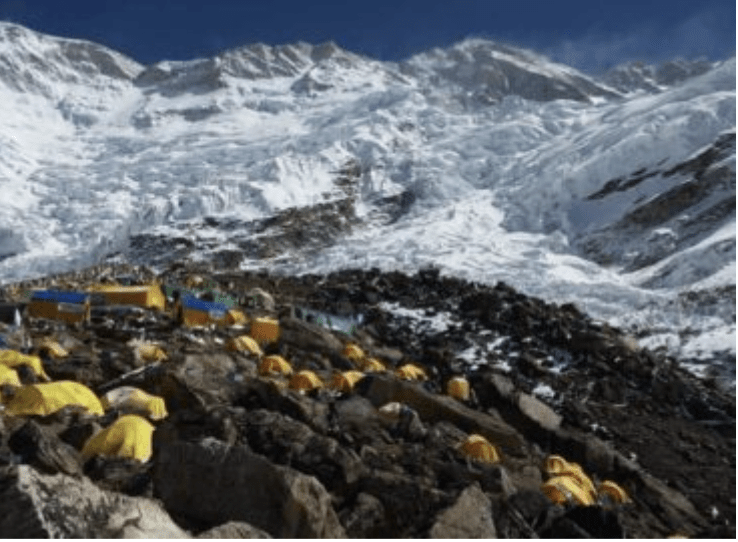
Putha Hiunchuli Base Camp
Putha Hiunchuli Base Camp is generally established around 4,800–4,915 meters.
The Base Camp becomes the main logistical center for the climbing expedition.
It normally contains:
- Sleeping tents
- Dining tent
- Kitchen
- Communication equipment
- Medical supplies
- Climbing equipment
- Food and fuel
- Expedition staff facilities
Because Putha Hiunchuli is remote, expedition logistics are particularly important.
Putha Hiunchuli Camps and Climbing Route
After acclimatization at Base Camp, climbers establish higher camps on the mountain.
A representative strategy may include:
| Camp | Approximate Elevation |
|---|---|
| Base Camp | 4,800–4,915 m |
| Camp I | Around 5,300 m |
| Camp II | Higher glacier/alpine terrain |
| Camp III | High-altitude climbing terrain |
| Summit | 7,246 m |
Exact camp elevations can vary according to the route, weather and expedition strategy.
Some current expedition programs specifically describe a Camp I–III strategy before the summit attempt.
Putha Hiunchuli Expedition Difficulty
The Putha Hiunchuli Expedition difficulty is considered challenging because climbers must combine technical climbing skills with endurance and high-altitude acclimatization.
The mountain is sometimes described as one of the more approachable 7,000-meter peaks, but “approachable” does not mean easy.
Major challenges include:
- Extreme altitude
- Glacier travel
- Crevasses
- Snow and ice
- Long summit day
- Remote approach
- Cold temperatures
- Unpredictable Himalayan weather
- Limited rescue infrastructure
- Expedition logistics
Some descriptions characterize the northern route as comparatively moderate, while other routes and sections can involve more technical climbing.
Putha Hiunchuli Height and Altitude
The official elevation commonly used for Putha Hiunchuli is:
7,246 meters / 23,773 feet
This places the mountain firmly in Nepal’s 7,000-meter mountaineering category.
Altitude is one of the biggest challenges of the expedition.
Important elevations
| Location | Approximate Elevation |
|---|---|
| Kathmandu | 1,400 m |
| Dunai | Around 2,200 m |
| Kakot | Around 3,250–3,300 m |
| Yak Kharka | Around 3,960 m |
| Putha Hiunchuli Base Camp | Around 4,800–4,915 m |
| Summit | 7,246 m |
Published 2026 itineraries show similar elevation progression through the Dolpo approach.
Acclimatization for Putha Hiunchuli
Proper acclimatization is essential.
A good expedition should provide sufficient time for the body to adapt to progressively lower oxygen levels.
The expedition strategy may involve:
- Gradual ascent
- Rest days
- Rotation between Base Camp and higher camps
- Sleeping at progressively higher elevations
- Monitoring oxygen saturation
- Controlled summit push
- Descending when necessary
Never treat acclimatization days as unnecessary delays. They can be critical to the success and safety of a high-altitude expedition.
Best Time for Putha Hiunchuli Expedition
The best seasons for a Putha Hiunchuli Expedition are generally spring and autumn.
Spring Season
March to May is a major Himalayan climbing season.
Advantages include:
- Stable climbing conditions during suitable weather windows
- Longer daylight
- Spring mountain environment
- Established expedition activity
Autumn Season
September to November is another important climbing period.
Autumn is particularly attractive because the monsoon has generally ended and visibility can improve.
Several current 2026 expedition programs specifically schedule Putha Hiunchuli climbs during September–October or autumn.
Putha Hiunchuli Expedition Permits
Climbers require the appropriate Putha Hiunchuli climbing permit and other permits required for the approach through the Dolpo region.
Depending on the route and current government regulations, expedition logistics can involve:
- Mountain climbing permit
- Conservation or national park permit
- Trekking permit
- TIMS or applicable registration
- Local permits
- Government liaison requirements
- Garbage management fees
Permit regulations and fees can change, so the expedition operator should verify the current requirements before departure.
Equipment for Putha Hiunchuli Expedition
Climbing a 7,246-meter mountain requires specialized mountaineering equipment.
Personal Equipment
- Mountaineering boots
- Crampons
- Ice axe
- Climbing harness
- Helmet
- Ascender
- Descender
- Carabiners
- Prusik loops
- Climbing rope
- Headlamp
- Trekking poles
- Expedition backpack
- Duffel bag
- Sleeping bag
- Down jacket
- Waterproof shell
- Insulated gloves
- Thermal base layers
- Goggles
- Sunglasses
- High-altitude sunscreen
Technical Equipment
Depending on the route:
- Fixed ropes
- Ascenders
- Descenders
- Ice screws
- Snow protection
- Glacier rescue equipment
- Ropes
- Anchoring equipment
Your expedition operator should provide a detailed equipment checklist before departure.
Physical Preparation for Putha Hiunchuli
The Putha Hiunchuli Expedition requires excellent cardiovascular fitness, strength and endurance.
Training should ideally begin several months before the expedition.
Recommended training
Cardiovascular Training
- Hiking
- Running
- Cycling
- Stair climbing
- Long-distance walking
Strength Training
Focus on:
- Legs
- Glutes
- Core
- Back
- Shoulders
Hiking Training
Progressively increase:
- Distance
- Elevation gain
- Backpack weight
- Consecutive trekking days
High-altitude mountaineering is different from normal gym training. You need to prepare your body for long days carrying equipment in cold and low-oxygen environments.
Can Beginners Climb Putha Hiunchuli?
The Putha Hiunchuli Expedition is not recommended as a first mountaineering experience.
Although Putha Hiunchuli is sometimes considered one of the more accessible 7,000-meter peaks, it remains a serious Himalayan expedition.
Prior experience with:
- High-altitude trekking
- Glacier travel
- Crampons
- Ice axe
- Fixed ropes
- Technical climbing
- High-altitude camping
can significantly improve your chances of a successful expedition.
A climber preparing for Putha Hiunchuli should discuss their experience and fitness with a qualified expedition operator before committing.
Safety During Putha Hiunchuli Expedition
Safety should always be the highest priority.
Important considerations include:
1. Acclimatization
Never ascend too quickly.
2. Weather
Himalayan weather can change rapidly. Summit attempts should only be made during suitable conditions.
3. Crevasse Awareness
Travel carefully on glaciers and follow the expedition team’s instructions.
4. High-Altitude Illness
Monitor symptoms of altitude-related illness and descend when necessary.
5. Experienced Guides
A qualified expedition team can provide essential support during technical and high-altitude sections.
6. Emergency Planning
Ensure the expedition has communication systems, evacuation procedures and appropriate insurance arrangements.
Putha Hiunchuli Expedition Insurance
High-altitude expedition insurance is strongly recommended.
Your policy should specifically cover:
- High-altitude mountaineering
- Emergency evacuation
- Helicopter evacuation where available
- Medical treatment
- Search and rescue
- Expedition-related emergencies
Do not assume that a standard travel insurance policy covers climbing above 7,000 meters.
Always check the policy’s altitude and mountaineering exclusions before departure.
Putha Hiunchuli vs Other Nepal Expeditions
Putha Hiunchuli vs Mera Peak
Mera Peak is significantly lower and is generally more suitable for climbers entering high-altitude mountaineering.
Putha Hiunchuli is a much more serious 7,000-meter expedition.
Putha Hiunchuli vs Island Peak
Island Peak is around 6,189 meters and is commonly used as an introduction to Himalayan climbing.
Putha Hiunchuli involves substantially greater altitude, remoteness and expedition commitment.
Putha Hiunchuli vs Manaslu
Manaslu reaches 8,163 meters and presents considerably greater altitude exposure.
Putha Hiunchuli can be considered by experienced climbers who want a 7,000-meter objective before attempting an 8,000-meter mountain.
Putha Hiunchuli vs Dhaulagiri
Dhaulagiri I reaches 8,167 meters and is a significantly larger and more demanding expedition.
Putha Hiunchuli provides a remote Dhaulagiri-region experience at a lower elevation.
Why Choose a Putha Hiunchuli Expedition in Nepal?
Choosing a Putha Hiunchuli Expedition in Nepal means experiencing a side of the Himalayas that remains relatively untouched by mass tourism.
The expedition combines:
- 7,000-meter mountaineering
- Remote Dolpo landscapes
- Traditional Himalayan culture
- Glacier climbing
- High-altitude camping
- Dhaulagiri mountain views
- Wilderness trekking
- Serious expedition experience
For climbers who value solitude and adventure, Putha Hiunchuli offers something very different from Nepal’s busiest trekking and climbing destinations.
How Long Does the Putha Hiunchuli Expedition Take?
A typical Putha Hiunchuli Expedition takes approximately 31–35 days from Kathmandu and back.
The duration includes:
- Arrival and preparation
- Domestic transportation
- Remote approach trek
- Acclimatization
- Base Camp establishment
- Camp rotations
- Summit attempt
- Contingency days
- Return journey
Some expedition programs are shorter or longer depending on the climbing strategy and weather. Current published itineraries range from roughly 31 to 35 days.
Frequently Asked Questions About Putha Hiunchuli Expedition
How high is Putha Hiunchuli?
Putha Hiunchuli is 7,246 meters (23,773 feet) high.
Where is Putha Hiunchuli located?
Putha Hiunchuli is located in the remote Dolpo region of western Nepal and forms part of the Dhaulagiri range.
How difficult is Putha Hiunchuli?
It is a challenging high-altitude expedition requiring strong physical fitness, acclimatization and previous mountaineering experience.
How long does the expedition take?
Most current commercial programs take approximately 31–35 days, although the exact duration varies by operator and route.
What is the best season for Putha Hiunchuli?
Spring and autumn are the principal climbing seasons, with several current programs operating in September–October.
What is the Putha Hiunchuli Expedition cost?
The price varies depending on expedition operator, group size, logistics, climbing support, permits, transportation and services included. Request a current quotation for an accurate price.
Do I need previous climbing experience?
Yes. Previous high-altitude trekking and mountaineering experience is strongly recommended.
Is Putha Hiunchuli harder than Mera Peak?
Yes. Putha Hiunchuli reaches more than 7,000 meters and involves substantially greater altitude and expedition demands than Mera Peak.
What permits are required?
You need a climbing permit for Putha Hiunchuli as well as the applicable trekking, conservation and local permits for the route.
Can Putha Hiunchuli be climbed in autumn?
Yes. Autumn is one of the principal climbing seasons, and current expedition programs operate during September and October.
Book Your Putha Hiunchuli Expedition
The Putha Hiunchuli Expedition is an opportunity to climb one of Nepal’s remote 7,000-meter peaks while exploring the spectacular wilderness of Dolpo.
From the long approach through western Nepal to the glacier and high-altitude climbing above Base Camp, the expedition demands commitment, preparation and careful acclimatization.
If you are an experienced mountaineer looking for a remote 7,000-meter expedition in Nepal, Putha Hiunchuli can be an unforgettable Himalayan adventure.
Contact our expedition team for the latest Putha Hiunchuli Expedition cost, itinerary, climbing permits, departure dates and customized expedition package.
Putha Hiunchuli Expedition in Nepal: discover the cost, itinerary, difficulty, altitude, route, permits, camps, equipment and essential climbing tips.
For the latest information on trekking regulations, permits, conservation areas, and mountaineering requirements in Nepal, visit the official Nepal Tourism Board and relevant government authorities before planning your Pisang Peak Climbing adventure.
Also if you want to view our other treks then you can follow this link.
Reviews
There are no reviews yet.