

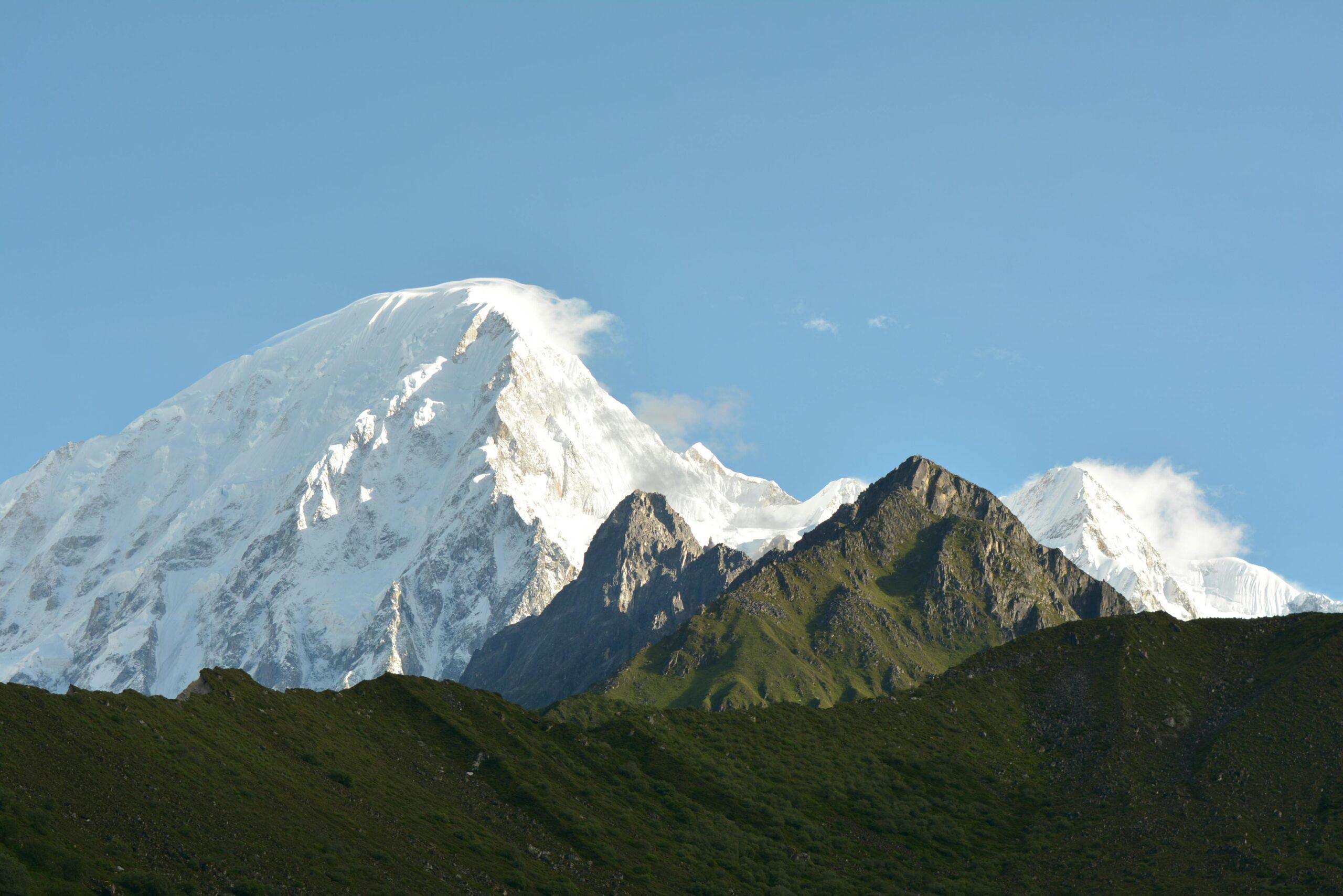
Himlung Expedition-30 Days
$ 12,000.00$ 11,500.00
Himlung Himal (7,126 m) is one of Nepal’s exciting 7,000+ meter expedition peaks, located between the Manaslu region and Annapurna region. It is considered a less technical but high-altitude challenging climb, perfect for experienced mountaineers.
Product Description
Himlung Expedition: Cost, Itinerary, Difficulty & Complete Guide
The Himlung Expedition is an exciting high-altitude mountaineering adventure in Nepal, taking climbers to the summit of Himlung Himal at 7,126 meters (23,379 feet). Located in the remote Nar Phu Valley near the Nepal–Tibet border, Himlung Himal offers a remarkable combination of technical climbing, high-altitude adventure, Tibetan-influenced culture and spectacular Himalayan scenery.
Often considered one of Nepal’s more accessible 7,000-meter expedition peaks, Himlung provides experienced climbers with an opportunity to develop their high-altitude mountaineering skills before attempting more demanding Himalayan objectives.
The expedition follows a remote route through Koto, Meta and Phu Gaon before reaching Himlung Base Camp at roughly 4,850–4,900 meters. From Base Camp, climbers establish higher camps and make acclimatization rotations before attempting the 7,126-meter summit. Current commercial programs commonly run for approximately 28–35 days, depending on the itinerary and amount of acclimatization and contingency time included.
If you are planning a Himlung Expedition in Nepal, this guide covers the cost, itinerary, route, difficulty, altitude, permits, camps, equipment, acclimatization, best season and everything you need to know before climbing Himlung Himal.
Himlung Expedition Highlights
- Summit: Himlung Himal
- Height: 7,126m / 23,379ft
- Location: Nar Phu Valley, Nepal
- Mountain range: Peri-Damodar Himal
- Standard route: West Ridge
- Base Camp: approximately 4,850–4,900m
- Difficulty: Strenuous to demanding
- Typical duration: approximately 28–35 days
- Best seasons: Spring and autumn
- Remote Nar Phu Valley approach
- Tibetan-influenced villages and Himalayan culture
- Glacier and snow climbing
- Multiple acclimatization rotations
- High-altitude expedition experience
- Spectacular views of Annapurna, Manaslu, Dhaulagiri and surrounding Himalayan peaks
Current commercial itineraries identify the West Ridge as the standard route and classify the climb as strenuous.
What Is the Himlung Expedition?
The Himlung Expedition is a guided mountaineering expedition to the summit of Himlung Himal, a 7,126-meter peak in the remote Nar Phu region of Nepal.
The mountain lies in a remote Himalayan environment between the Annapurna and Manaslu regions, close to the Nepal–Tibet border.
Unlike popular trekking routes, the approach to Himlung takes climbers through the restricted and culturally distinctive Nar Phu Valley, including settlements such as Meta and Phu Gaon.
A typical expedition follows:
Kathmandu → Besisahar → Koto → Meta → Kyang → Phu Gaon → Himlung Base Camp → Camp I → Camp II → Camp III → Himlung Summit
Current expedition itineraries commonly place Base Camp around 4,850–4,900m and use several higher camps before the summit.
Why Climb Himlung Himal?
Himlung Himal is an attractive objective for climbers seeking their first or one of their earlier 7,000-meter Himalayan expeditions.
1. Experience a 7,000-Meter Mountain
At 7,126 meters, Himlung offers genuine extreme-altitude mountaineering experience without the elevation of an 8,000-meter peak.
2. Remote Himalayan Environment
The expedition travels through the relatively isolated Nar Phu Valley, providing a wilderness experience far removed from Nepal’s busiest trekking corridors.
3. Tibetan-Inspired Culture
The villages of the Nar Phu region have strong Tibetan cultural influences, with traditional stone houses, monasteries and high-altitude settlements.
4. Technical Mountaineering Experience
The expedition involves glacier travel, fixed ropes, crampon use, steep snow and high-altitude climbing.
5. Preparation for Bigger Expeditions
Himlung can help experienced climbers develop skills for future objectives such as:
- Manaslu
- Lhotse
- Makalu
- Cho Oyu
- Other 7,000-meter peaks
- 8,000-meter expeditions
Himlung Expedition Cost
The Himlung Expedition cost varies according to the operator, group size, level of Sherpa support, itinerary, accommodation, permits, logistics and services included.
Current 2026 commercial listings show a broad range. Some local operators advertise packages around US$5,999–7,200+, while premium international expeditions can cost substantially more. For example, Madison Mountaineering lists a 2026 Himlung expedition at US$14,950.
A realistic planning range for a standard guided commercial expedition is therefore approximately:
US$6,000–15,000+ per person
The large difference reflects the level of support and inclusions rather than simply the cost of climbing the mountain.
Estimated Himlung Expedition Cost
| Expense | Approximate Cost |
|---|---|
| Commercial expedition package | US$6,000–15,000+ |
| International airfare | Varies |
| Personal climbing equipment | US$2,000–5,000+ |
| Travel insurance | Varies |
| High-altitude rescue coverage | Varies |
| Visa | Varies |
| Personal expenses | US$300–1,000+ |
| Tips and gratuities | Varies |
These are planning estimates, not a fixed quotation.
What Determines the Himlung Expedition Price?
Several factors influence the final cost.
Group Size
Larger groups can reduce the per-person cost of logistics and support staff.
Sherpa Support
A higher guide-to-climber ratio generally increases the expedition price.
Expedition Duration
Longer itineraries require more:
- Food
- Staff
- Accommodation
- Transportation
- Base Camp logistics
- Contingency days
Base Camp Services
Premium expeditions may provide more sophisticated dining, communications, medical and accommodation facilities.
Oxygen
Supplemental oxygen, masks and regulators can increase the total cost when included.
Rescue and Insurance
High-altitude rescue insurance and emergency arrangements are essential considerations.
Himlung Climbing Permit
Himlung Himal is a regulated expedition peak, so climbers need the appropriate Nepalese climbing permit and other required permissions.
Because the approach passes through the Nar Phu restricted area, expedition logistics can also include a restricted-area permit.
Current commercial expedition operators list:
- Himlung climbing royalty/permit
- Restricted-area permit
- Conservation-area fees
- Liaison officer arrangements
- Other government expedition documentation
as part of their expedition logistics.
Permit regulations and fees can change, so climbers should confirm the current government rates with their expedition operator before booking.
Himlung Expedition Itinerary
A typical Himlung Expedition itinerary takes approximately 28–35 days.
The following is a representative 32-day itinerary based on current commercial expedition schedules. Actual itineraries can change because of weather, acclimatization requirements, road conditions and mountain conditions.
Day 1: Arrival in Kathmandu
Arrive in Kathmandu and transfer to your hotel.
Altitude: approximately 1,350–1,400m
Day 2: Expedition Preparation and Briefing
Meet your expedition team and complete:
- Gear checks
- Permit arrangements
- Expedition briefing
- Route briefing
- Safety discussion
- Final preparations
Day 3: Kathmandu to Besisahar
Drive from Kathmandu toward Besisahar.
Altitude: approximately 760–823m
The journey takes several hours depending on road conditions.
Day 4: Besisahar to Koto
Continue by road toward Koto, the gateway to the Nar Phu Valley.
Altitude: approximately 2,600m
Day 5: Koto to Meta
Begin trekking through the Nar Phu Valley.
Altitude: approximately 3,560m
The landscape becomes increasingly remote and mountainous.
Day 6: Meta to Kyang
Continue toward Kyang.
Altitude: approximately 3,800–3,900m
The trail passes through dramatic Himalayan terrain.
Day 7: Kyang to Phu Gaon
Trek toward the historic settlement of Phu Gaon.
Altitude: approximately 3,900–4,200m depending on the itinerary.
Day 8: Acclimatization at Phu Gaon
Spend a day acclimatizing around Phu Gaon.
A short hike to a higher elevation can help prepare the body for the continued ascent.
Day 9: Phu Gaon to Himlung Base Camp
Continue toward Himlung Base Camp.
Altitude: approximately 4,850–4,900m.
Current commercial programs place Base Camp in this general elevation range.
Days 10–20: Acclimatization and Climbing Rotations
Once at Base Camp, the expedition changes from trekking to mountaineering.
The team prepares for:
- Glacier travel
- Fixed-line climbing
- Camp establishment
- Acclimatization rotations
- Equipment carries
- High-altitude sleeping
- Summit preparation
Current expedition schedules commonly use rotations between Base Camp and Camps I and II before the final summit period.
Days 21–26: Summit Period
The final climbing period depends heavily on:
- Weather
- Acclimatization
- Snow conditions
- Route conditions
- Team health
- Sherpa and guide assessment
A suitable weather window is required for the summit attempt.
Day 27: Descend to Meta
After completing the climbing phase, descend from the mountain and retrace the route toward Meta.
Day 28: Meta to Koto
Continue descending through the Nar Phu Valley.
Day 29: Koto to Besisahar
Drive back toward Besisahar.
Day 30: Besisahar to Kathmandu
Return to Kathmandu.
Day 31: Rest and Contingency Day
Keep a reserve day for:
- Road delays
- Weather
- Flight changes
- Expedition delays
Day 32: International Departure
Transfer to Tribhuvan International Airport for your onward flight.
Himlung Expedition Route
The classic Himlung Expedition route approaches the mountain through the remote Nar Phu Valley.
Typical route:
Kathmandu → Besisahar → Koto → Meta → Kyang → Phu Gaon → Himlung Base Camp → Camp I → Camp II → Camp III → Summit
The current commercial route is commonly identified as the West Ridge.
This approach is one of the major attractions of the expedition because the journey itself provides an opportunity to experience the remote Nar Phu landscape.
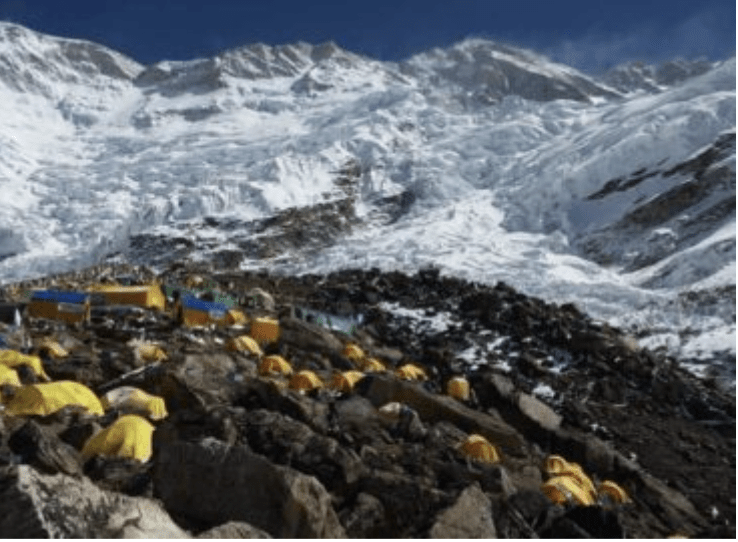
Himlung Base Camp
Himlung Base Camp is generally established around 4,850–4,900 meters.
The Base Camp becomes the operational center for the climbing phase.
It may contain:
- Dining tent
- Kitchen
- Sleeping tents
- Communication equipment
- Medical supplies
- Climbing equipment
- Expedition stores
- Weather information
- Waste-management facilities
Current commercial itineraries place Himlung Base Camp at approximately 4,900m.
Himlung High Camps
The exact camp positions can vary according to route conditions and expedition strategy.
A commonly published camp structure is:
| Camp | Approx. Altitude |
|---|---|
| Base Camp | ~4,850–4,900m |
| Camp I | ~5,450m |
| Camp II | ~6,000m |
| Camp III | ~6,350m |
| Summit | 7,126m |
Several current expedition operators publish this three-high-camp structure.
Camp I
Camp I is generally established around 5,450m.
Climbers use it during acclimatization rotations and equipment carries.
Camp II
Camp II is approximately 6,000m.
At this altitude, the effects of altitude become increasingly significant.
Proper pacing and acclimatization are essential.
Camp III
Camp III is generally around 6,350m.
This high camp may serve as the final staging point before the summit push, depending on route and expedition strategy.
Himlung Summit Day
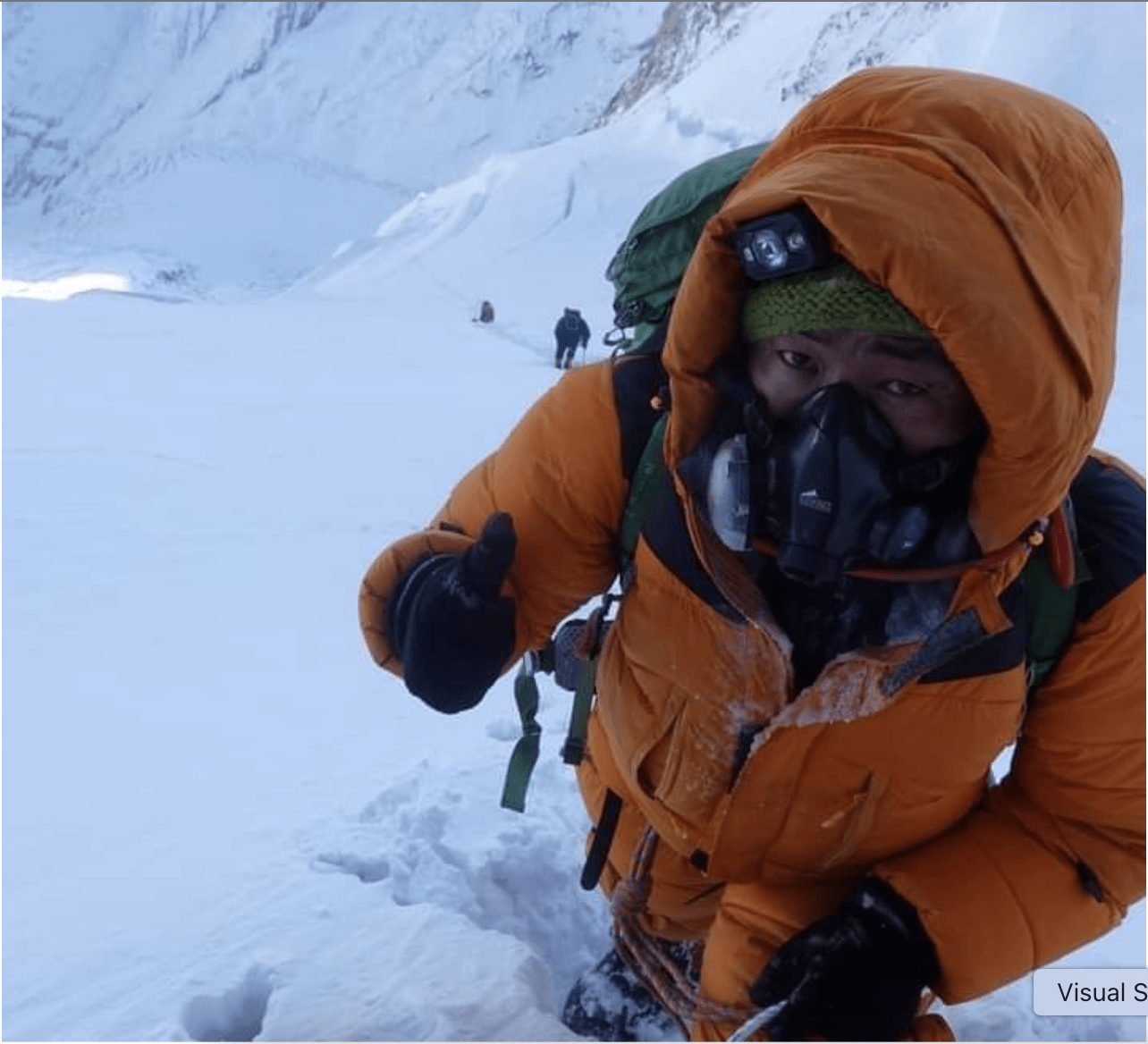
Summit day is the most demanding part of the expedition.
Climbers generally begin very early, often during the night, to maximize the available weather window.
The route can involve:
- Snow slopes
- Ice
- Fixed ropes
- Crampon climbing
- High-altitude exposure
- Strong winds
- Extreme cold
- Steep sections
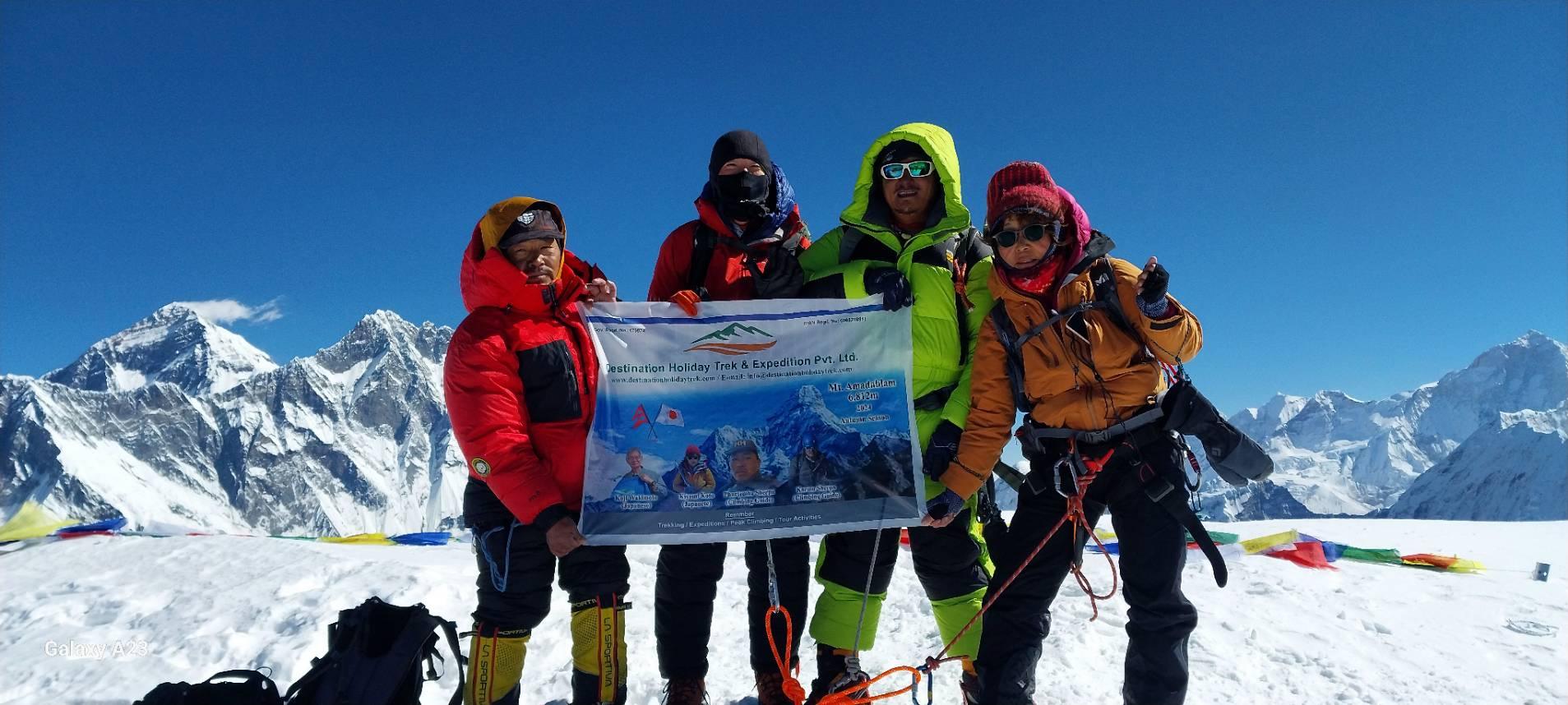
The ultimate objective is:
Himlung Himal Summit — 7,126m / 23,379ft
After reaching the summit, climbers descend carefully toward the higher camp or Base Camp depending on conditions and the expedition plan.
Himlung Expedition Difficulty
The Himlung Expedition difficulty is generally rated strenuous to demanding.
Although Himlung is sometimes considered a relatively accessible 7,000-meter peak, it should not be confused with an easy climb.
Current commercial operators classify the expedition as strenuous.
Main Challenges
Extreme Altitude
At 7,126m, oxygen availability is significantly lower than at sea level.
Cold
Temperatures at high camps and around the summit can be extremely low.
Technical Climbing
Climbers must be comfortable using:
- Crampons
- Ice axes
- Harnesses
- Ascenders
- Fixed ropes
Glacier Travel
Crevasses and changing glacier conditions require proper technique and experienced leadership.
Long Expedition
The combination of trekking, acclimatization and climbing requires sustained physical and mental endurance.
Himlung Height and Altitude
Himlung Himal stands at:
7,126 meters / 23,379 feet
A typical altitude progression is:
| Location | Approx. Altitude |
|---|---|
| Kathmandu | 1,350–1,400m |
| Besisahar | ~760–823m |
| Koto | ~2,600m |
| Meta | ~3,560m |
| Kyang | ~3,840m |
| Phu Gaon | ~3,900–4,200m |
| Himlung Base Camp | ~4,850–4,900m |
| Camp I | ~5,450m |
| Camp II | ~6,000m |
| Camp III | ~6,350m |
| Himlung Summit | 7,126m |
Exact elevations may vary slightly between expedition operators and camp placements.
Acclimatization for Himlung Expedition
Acclimatization is one of the most important components of a successful Himlung Expedition.
A proper expedition itinerary should include:
- Gradual elevation gain
- Rest days
- Acclimatization hikes
- Climbing rotations
- High-altitude sleeping
- Recovery periods
- Weather contingency days
Current 32-day programs commonly include rotations between Base Camp, Camp I and Camp II before the final summit period.
A rushed itinerary can increase the risk of altitude-related illness and reduce your chances of a safe summit attempt.
Best Time for Himlung Expedition
The two principal climbing seasons are:
Spring: March to May
Spring offers favorable conditions for many Himalayan expeditions.
Advantages can include:
- Stable weather windows
- Good visibility
- Established expedition activity
- Favorable snow conditions
April and May are commonly used for spring expeditions.
Autumn: September to November
Autumn is another excellent season.
After the monsoon, the atmosphere often becomes clearer, producing spectacular mountain views.
Current commercial Himlung programs prominently offer autumn expeditions, with some operators also offering spring departures.
Best Overall Season
Spring and autumn are generally the best seasons for a Himlung Expedition.
Himlung Expedition Equipment List
A 7,000-meter expedition requires specialized mountaineering equipment.
Technical Climbing Equipment
- Mountaineering boots
- Crampons
- Ice axe
- Climbing harness
- Climbing helmet
- Ascender
- Descender
- Locking carabiners
- Sling
- Prusik loops
- Trekking poles
- Headlamp
- Snow goggles
- Sunglasses
High-Altitude Clothing
- Base layers
- Thermal underwear
- Fleece jacket
- Down jacket
- Expedition down suit
- Waterproof shell
- Insulated trousers
- Warm gloves
- Expedition mitts
- Balaclava
- Warm hat
- High-altitude socks
Camping Equipment
Depending on your package:
- Four-season sleeping bag
- Sleeping mat
- Expedition duffel
- Backpack
- Headlamp
- Water bottles
- Thermos
- Personal hygiene kit
Your operator should provide a complete equipment checklist before departure.
Physical Preparation for Himlung Expedition
Start training several months before the expedition.
Cardiovascular Training
Build endurance through:
- Hiking
- Running
- Cycling
- Stair climbing
- Uphill walking
Strength Training
Focus particularly on:
- Legs
- Core
- Back
- Shoulders
Endurance Training
You should be able to hike for several consecutive days while carrying a backpack.
Technical Training
Prior experience with:
- Crampons
- Ice axe
- Fixed ropes
- Ascenders
- Glacier travel
- Crevasse rescue
is highly beneficial.
Can Beginners Climb Himlung?
Himlung is sometimes marketed as a relatively accessible 7,000-meter peak, but it is not suitable for complete beginners.
Previous high-altitude and technical climbing experience is strongly recommended.
A climber preparing for Himlung should ideally have experience on peaks such as:
- Mera Peak
- Island Peak
- Lobuche East
- Pisang Peak
- Other technical Himalayan peaks
However, previous trekking-peak experience alone does not guarantee readiness for a 7,000-meter expedition.
Himlung Expedition Safety
High-altitude mountaineering carries serious risks.
Potential hazards include:
- Acute Mountain Sickness
- High-altitude cerebral edema
- High-altitude pulmonary edema
- Frostbite
- Hypothermia
- Avalanches
- Crevasses
- Falling ice
- Rockfall
- Extreme weather
- Exhaustion
- Dehydration
A professional expedition should have:
- Experienced guides
- High-altitude Sherpa support
- Weather forecasting
- Communication equipment
- Medical supplies
- Emergency procedures
- Evacuation planning
The summit should never take priority over safety.
Travel Insurance for Himlung Expedition
Your insurance must specifically cover high-altitude mountaineering.
Before purchasing a policy, check that it covers:
- Mountaineering above 7,000m
- Emergency evacuation
- Helicopter rescue where available
- Search and rescue
- Medical treatment
- Trip cancellation/interruption
Some expedition operators explicitly require high-altitude medical and emergency rescue coverage.
Himlung Expedition Package
A comprehensive expedition package can include:
Kathmandu Services
- Airport transfers
- Hotel accommodation
- Expedition briefing
- Welcome/farewell dinner
- Government documentation
Transportation
- Kathmandu–Besisahar transportation
- Besisahar–Koto transportation
- Return transportation
Trekking
- Accommodation
- Meals
- Trekking staff
- Porters
- Restricted-area logistics
Base Camp
- Tents
- Dining facilities
- Kitchen
- Food
- Communication
- Medical equipment
Climbing
Depending on the package:
- Climbing Sherpas
- High-altitude support
- Fixed ropes
- High camps
- Expedition equipment
- Weather forecasting
- Oxygen
Always compare the complete list of inclusions before selecting an operator.
Himlung Expedition Packing Tips
Organize your equipment into three categories:
Trekking Gear
- Trekking boots
- Trekking trousers
- Fleece
- Rain jacket
- Backpack
- Trekking poles
Base Camp Gear
- Warm sleeping bag
- Down jacket
- Comfortable camp clothing
- Headlamp
- Personal hygiene items
Summit Gear
- Mountaineering boots
- Crampons
- Ice axe
- Harness
- Helmet
- Ascender
- Down suit
- Expedition mitts
- Goggles
- High-altitude sunglasses
Keeping summit equipment organized will save time during the final climbing phase.
Himlung Expedition vs Manaslu Expedition
| Feature | Himlung | Manaslu |
|---|---|---|
| Height | 7,126m | 8,163m |
| Difficulty | Strenuous/Demanding | Very demanding |
| Altitude | Extreme | Extreme |
| Expedition duration | ~28–35 days | Often ~40+ days |
| Technical climbing | Significant | Significant |
| Best for | 7,000m experience | 8,000m preparation |
| Location | Nar Phu Valley | Manaslu region |
Manaslu is substantially higher and represents a major step up in altitude.
Himlung Expedition vs Baruntse Expedition
Both are excellent 7,000-meter objectives.
| Feature | Himlung | Baruntse |
|---|---|---|
| Height | 7,126m | 7,129m |
| Region | Nar Phu Valley | Makalu-Barun |
| Standard route | West Ridge | Southeast Ridge |
| Difficulty | Strenuous/Demanding | Challenging/Advanced |
| Base Camp | ~4,900m | ~5,300m |
| Technical climbing | Significant | Significant |
| Cultural experience | Nar Phu Valley | Remote Makalu-Barun |
Both require strong preparation, but route conditions and technical demands differ.
Himlung Expedition Duration
The Himlung Expedition duration generally ranges from approximately 28 to 35 days.
Current commercial examples include:
- 28-day programs
- 30-day programs
- 32-day programs
- 35-day programs
depending on the expedition structure and acclimatization strategy.
A longer itinerary can provide valuable flexibility for:
- Weather
- Acclimatization
- Route conditions
- Summit attempts
- Rest
- Transportation delays
Why Choose a Guided Himlung Expedition?
A guided expedition provides valuable support throughout the journey.
Professional operators can manage:
- Permits
- Restricted-area permissions
- Transportation
- Accommodation
- Porters
- Base Camp logistics
- High-altitude Sherpa support
- Weather forecasting
- Route management
- Emergency coordination
For a 7,000-meter peak, professional expedition support is strongly recommended.
Himlung Expedition Success Factors
A successful Himlung summit attempt depends on several factors.
1. Acclimatization
Your body needs sufficient time to adapt to altitude.
2. Physical Fitness
You need excellent cardiovascular and muscular endurance.
3. Technical Skills
Crampon, rope and glacier skills are essential.
4. Weather
A safe summit window is critical.
5. Experience
Previous high-altitude climbing significantly improves preparedness.
6. Team Support
Strong guides and Sherpa climbers can make a major difference.
7. Patience
Mountaineering is unpredictable. Waiting for the right conditions is often part of success.
Frequently Asked Questions About Himlung Expedition
How high is Himlung Himal?
Himlung Himal is 7,126 meters (23,379 feet) high.
Where is Himlung Himal located?
Himlung Himal is located in Nepal’s remote Nar Phu Valley, near the Nepal–Tibet border.
How difficult is the Himlung Expedition?
Himlung is a strenuous to demanding 7,000-meter expedition requiring high-altitude and technical climbing experience.
How much does the Himlung Expedition cost?
Current 2026 commercial prices vary widely, from approximately US$6,000 to US$15,000+, depending on the operator and level of support.
How long does the Himlung Expedition take?
Most current commercial itineraries take approximately 28–35 days.
What is the best time to climb Himlung?
Spring and autumn are the primary climbing seasons, with many current commercial programs operating in autumn.
What route is used for Himlung?
The standard commercial route is commonly described as the West Ridge.
How high is Himlung Base Camp?
Himlung Base Camp is generally around 4,850–4,900 meters.
How many camps are there on Himlung?
A commonly published structure includes Camp I around 5,450m, Camp II around 6,000m and Camp III around 6,350m, followed by the summit at 7,126m.
Is Himlung harder than Mera Peak?
Yes. Himlung is considerably higher and requires significantly more expedition experience, acclimatization and technical preparation than Mera Peak.
Can beginners climb Himlung Himal?
Complete beginners should not attempt Himlung. Previous high-altitude and technical mountaineering experience is strongly recommended.
Can Himlung be a first 7,000-meter peak?
For an experienced climber, Himlung can be considered a relatively accessible introduction to 7,000-meter mountaineering, provided they have the necessary technical skills, fitness and high-altitude preparation.
What mountains can be seen from Himlung?
Depending on visibility and location, climbers can experience views toward major Himalayan peaks including Manaslu, Annapurna, Dhaulagiri and surrounding ranges.
Book Your Himlung Expedition in Nepal
The Himlung Expedition offers an extraordinary combination of remote Himalayan trekking, Tibetan-influenced culture and serious high-altitude mountaineering.
At 7,126 meters, Himlung Himal is a compelling objective for experienced climbers looking to step into the world of 7,000-meter expeditions.
The journey through the Nar Phu Valley, the remote Base Camp environment, multiple acclimatization rotations and demanding summit climb make Himlung a complete Himalayan expedition rather than simply a summit climb.
If you are planning a Himlung Expedition in Nepal, choose an experienced expedition operator, allow sufficient time for acclimatization, train specifically for high-altitude climbing and invest in reliable technical equipment.
Contact our expedition team to discuss Himlung Expedition dates, availability, cost, climbing support and customized itineraries.
For the latest information on trekking regulations, permits, conservation areas, and mountaineering requirements in Nepal, visit the official Nepal Tourism Board and relevant government authorities before planning your Pisang Peak Climbing adventure.
Also if you want to view our other treks then you can follow this link.
Reviews
There are no reviews yet.