
Baruntse Expedition
Baruntse Expedition Overview
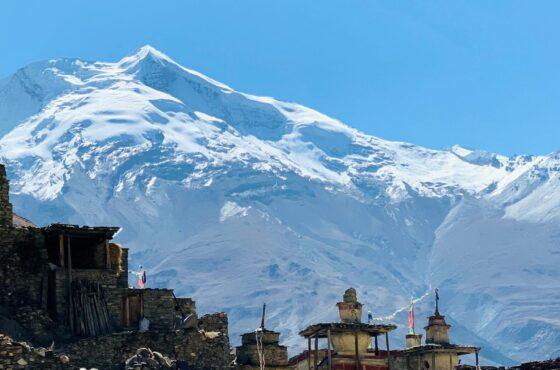
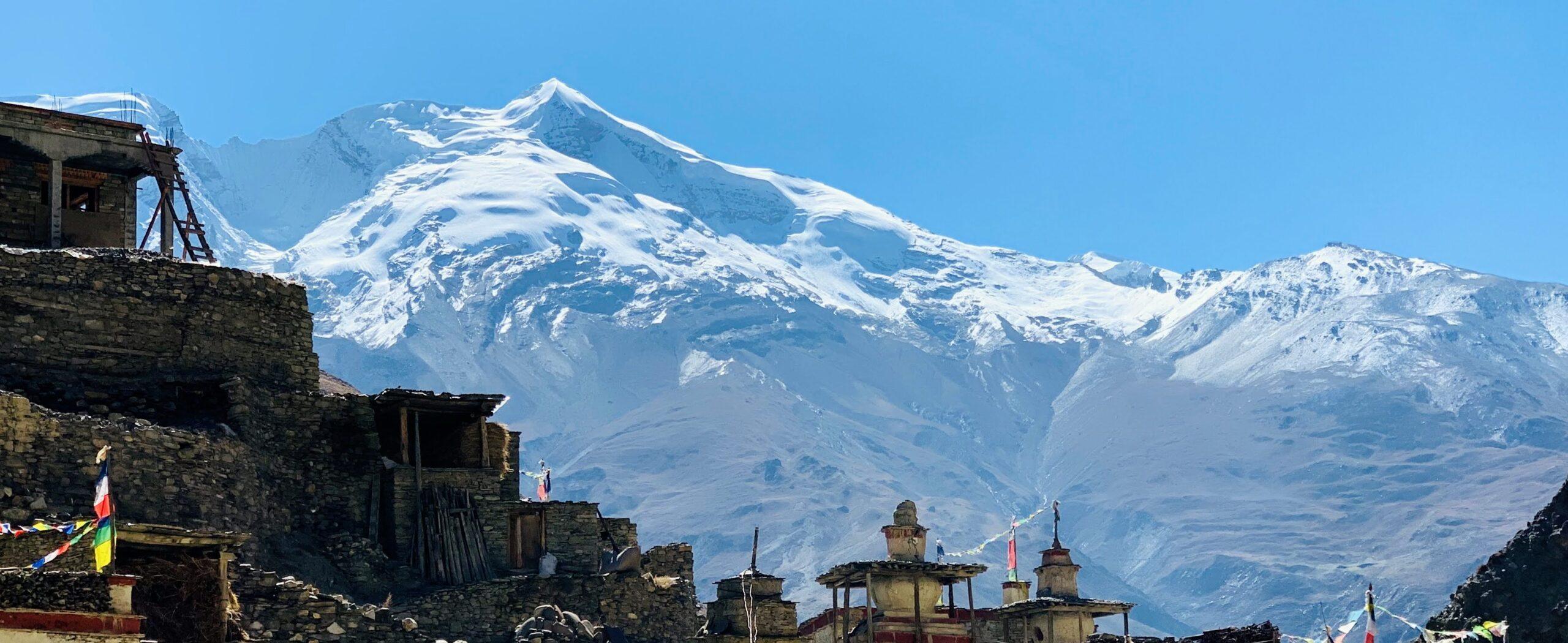
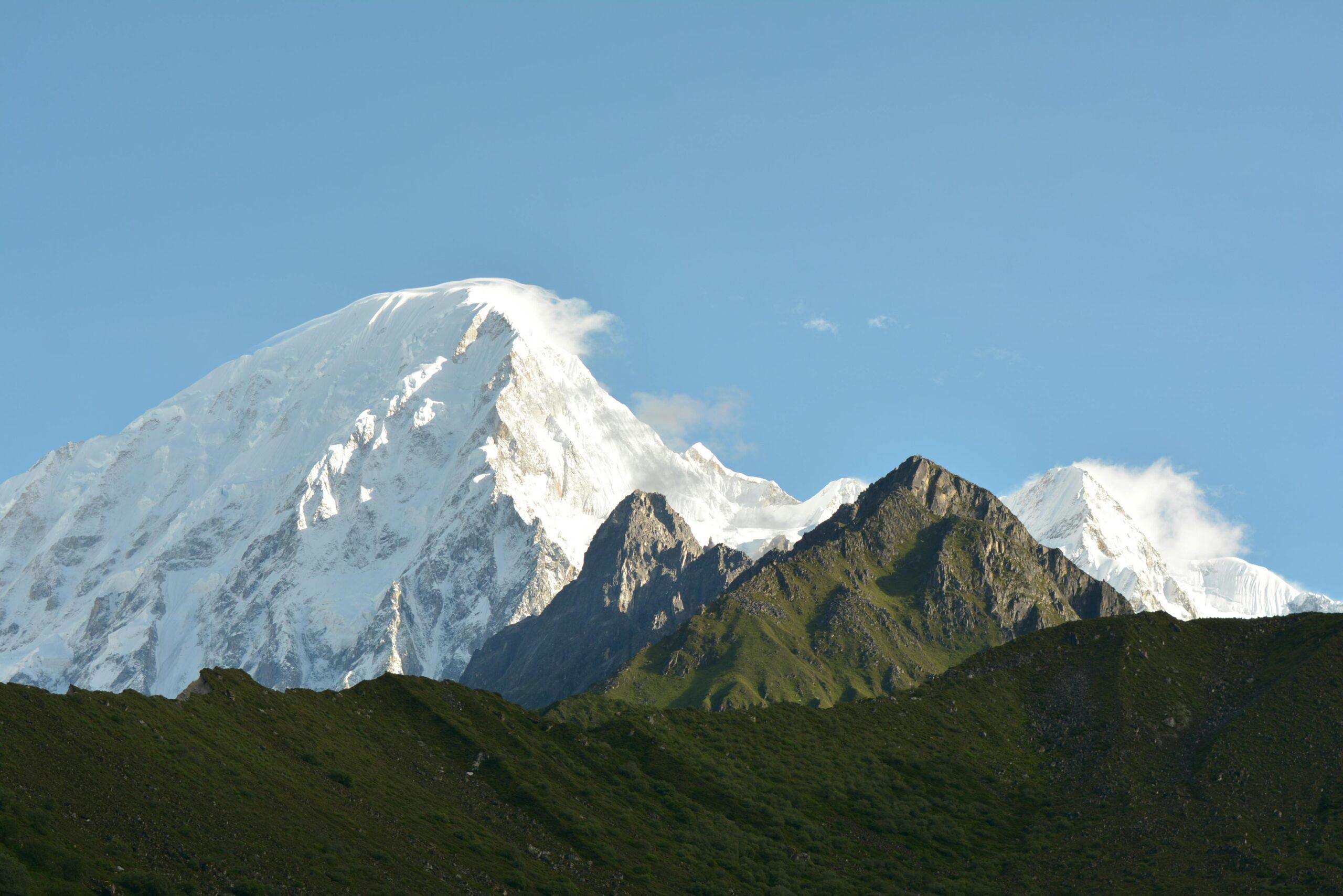
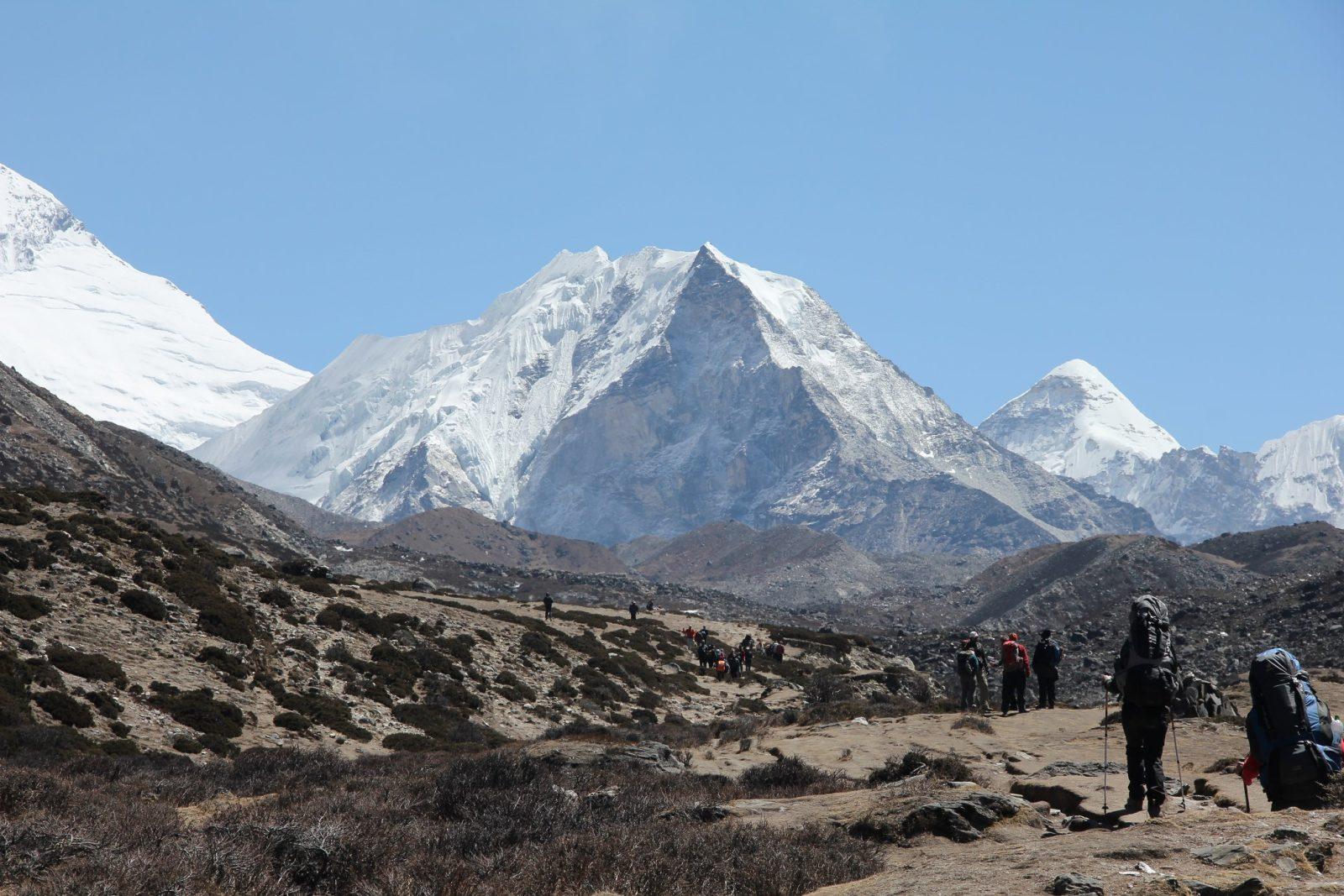
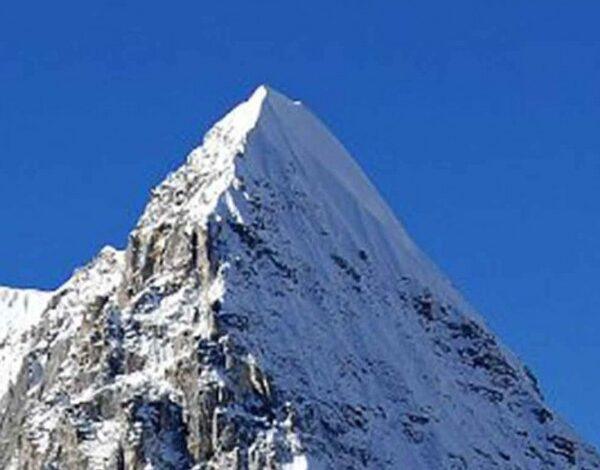
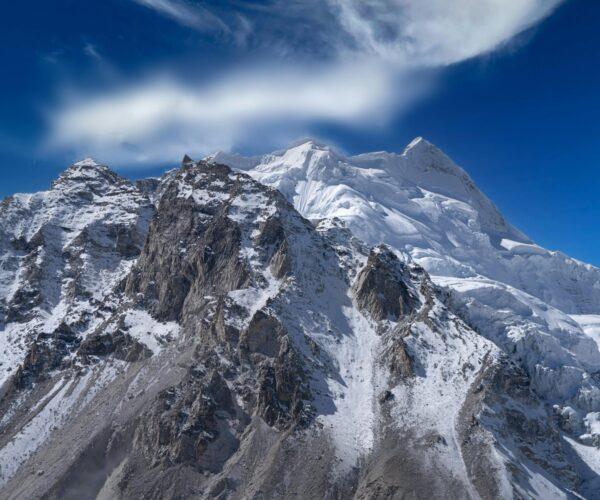
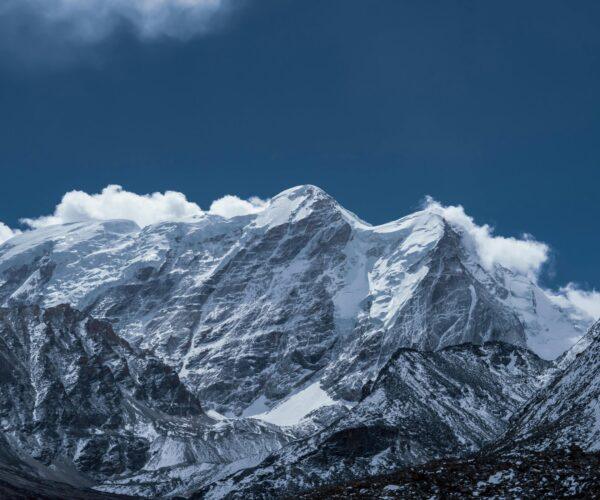
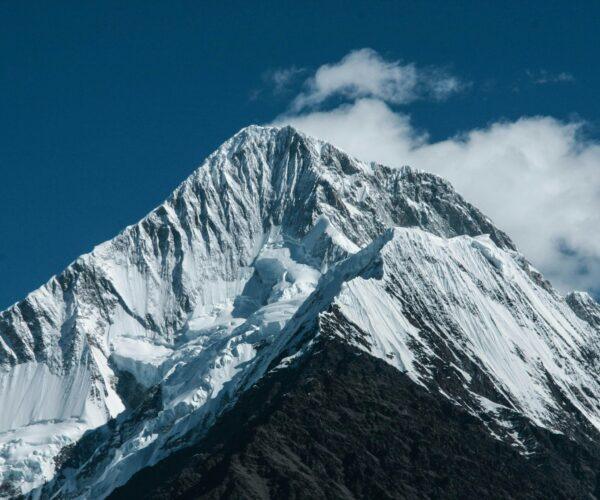
Baruntse Expedition is one of the great opportunities to prepare yourselves if you are eying for an 8000m in future. Mount Baruntse is a stunning and gorgeous snow peak between Makalu and Everest, lies in the epicenter of three glacier valleys, the Imja, the Hunku and Baruntse. The peak itself commands a central position amongst some of the high peaks of the Himalaya and it is the most accessible 7000m peak in the region besides having a normal route of ascent which can be guided.
Baruntse was the early Himalayan peaks recognized by Edmund Hillary’s team for climbing east of Everest and this mountain was first ascended by Colin Todd and Georg Harrow in 1954 by the South-East Ridge. The peak is crowned by four summits on four ridges with a high rate of successful ascent on the normal route via South Ridge.
Our Baruntse Expedition is followed by the Mera Peak summit. This will be a great preparation in terms of acclimatization and physicality for Baruntse. You will be trekking in one of the beautiful regions of Nepal.
Trip Highlights
- Summit Baruntse (7,129m), one of Nepal’s most rewarding 7,000-meter peaks
- Located in the remote Makalu-Barun region, offering pristine wilderness and fewer crowds
- Stunning views of Everest, Lhotse, Makalu, and Ama Dablam from higher camps
- Technical climbing experience including glacier travel, steep snow slopes, and fixed rope sections
- Carefully planned acclimatization rotations to enhance safety and summit success
- Fully supported expedition with experienced climbing Sherpas and professional Base Camp crew
- Scenic trekking approach through Sherpa villages, alpine forests, and high mountain valleys
- Excellent preparation peak for climbers aiming for future 8,000-meter expeditions Well-established Base Camp with quality tents, dining, and communication facilities
Itinerary
Tracking the details that you provide, we will be waiting for you at the airport at your estimated arrival time. As soon as you complete your VISA obtaining procedure, we will meet and greet and transfer you to a cozy hotel where you can rest and relax. Exploring the streets of Thamel can be a good option for the evening.
Official formalities, gear check, Kathmandu sightseeing & preparation.
After early morning breakfast at the hotel, we take a short and scenic flight to Lukla, one of the highest altitude airports. As we land at Lukla, we will meet our local team members and porters who will carry our luggage to Chutenga. We will hike towards the southeast of Lukla that leads towards Makalu Barun Conservation Area where we will obtain entry permits with nominal fees. We then follow a path that goes across small rivers and takes us past monasteries until we reach the Chutenga village.
After Chutenga, we will slowly move towards Zwatra La Pass that lies at 4610 m. After the steep ascent, our trail descends towards Thuli Kharka. We walk on barren lands down the hills until we reach our destination. Walking slowly and steadily for about 6-7 hours we finally reach Thuli Kharka.
After an appealing breakfast at the lodge in Thuli Kharka, we will head towards Kothe. The trail passes through the Hinku Valley, starting with a decent downhill with mesmerizing views of mountains. As we walk along, we will be going up and down hills through the dense green forests. As we enter the Hinku Valley, we will behold the sight of Mera Peak, our ultimate destination. Then, we make a steep descent to the Hinku River and climb a gentle steep uphill to reach our stop for the night.
After a night’s rest at Kothe, we move towards our next stop in the Mera Peak climbing journey. We will walk along the bank of the Hinku river towards Gondishung where we will stop for lunch. Gondishung is famous for a 200-year-old monastery, Lungsumgba Gompa, and other attractive heritages. It is believed that if one makes prayers at this Gompa, the Mera Peak climbing will be successful. We continue to walk until we reach Thangnak, a pasture land, used widely in summer to graze yaks. We will rest at a teahouse for the night.
The next stop after Thangnak is Khare. The trail from Thangnak to Khare is a bit challenging and demanding as it requires travelers to walk on steep moraine ridges from Dig Glacier to Dig Kharka, right in front of the Charpate Himal, meaning the four-sided hill.
Following the glacier is a 3-4 hours steep hill climb that leads to Khare. We will be walking above the tree line here. So, we will stay here for another day to acclimatize ourselves.
From Khare, the route diverges towards Baruntse and Mera Peak. If you wish to add Mera Peak to the trip, we will head towards Mera Base Camp. In other cases, we will move forward to Khamedingma. We walk steadily to acclimatize our bodies and avoid hazards. We set up our camp and rest overnight.
After resting at Khamedingma, we head towards Seto Pokhari, meaning the White Lake. It is an eye-pleasing sight of a wonderful lake at a high altitude that appears white. Our trail will be braced by the beauty of this region.
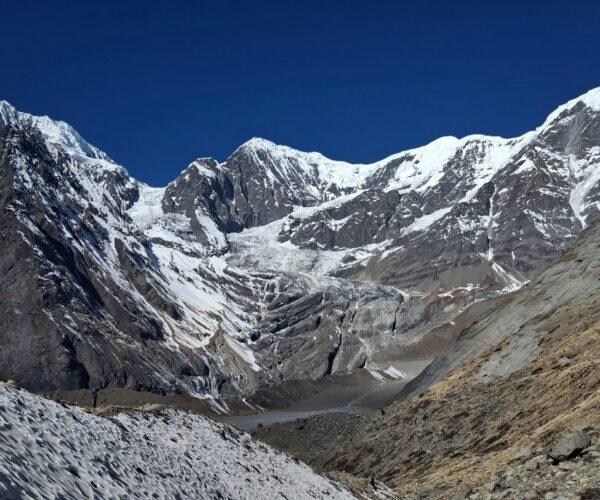
From Seto Pokhari, we walk through rugged terrain and rocky paths above the treeline. With big boulders all around, we will cross several passes until we reach the Base camp for Baruntse.
Our climbing routine starts on the 12th day. We will start with the prayer rituals at the base camp and conduct some basic training and practice with our climbing gear. Our team will set up ropes and explore various routes for climbing, while we conduct rotations and enjoy nutritious meals prepared by our kitchen team. We will ascend to higher camps and return to lower camps to rest overnight for proper acclimatization. Even if we are fully prepared, we must wait for favorable weather for the summit.
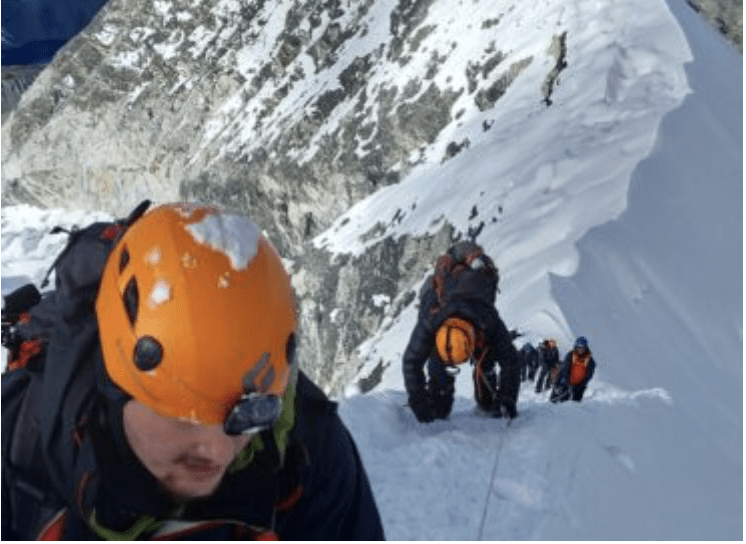
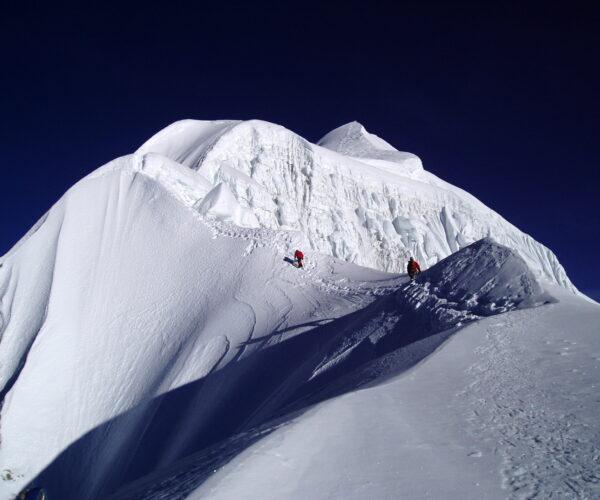
We will set up camp 1 at 6100 m altitude on the South-East ridge of the peak. The slopes rise up to 45 degrees which is why we need to fix ropes all the way up to the West Col through the Upper Barun Glacier traversing a steep 50-degree snowy slope.
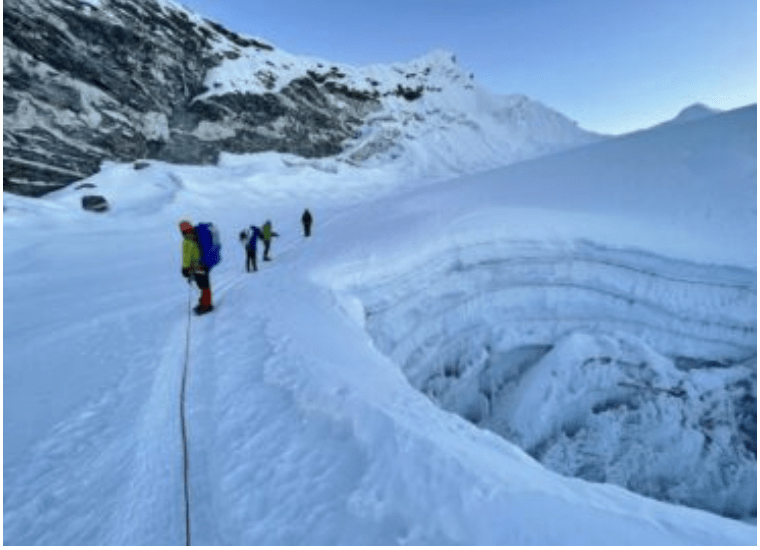
Camp 2 is set up at 6400 m in the Upper Barun Glacier that is led by an uphill climb on a glacial slope from Camp 1. We must follow the fixed line as we must pass through numerous crevasses and there are also the risks of avalanches at times.
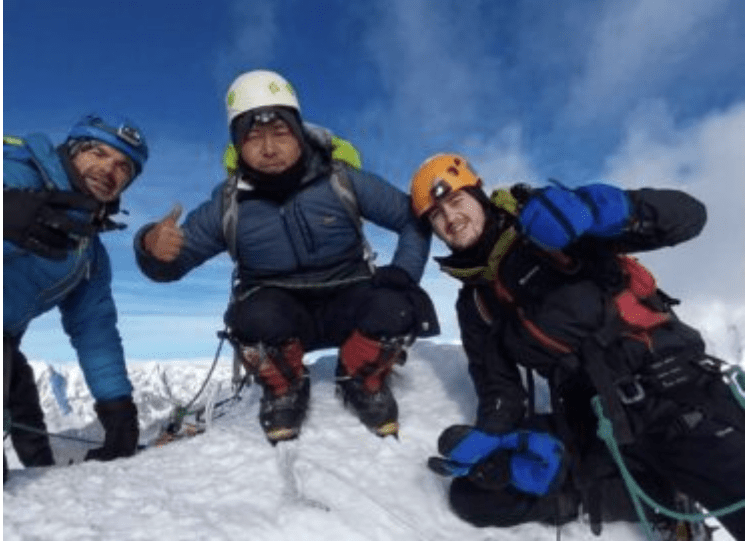
Finally, from Camp 2, we will climb an ice wall as steep as 75 degrees to reach a small Col at 6500 m. After reaching the Col, we follow the ridge to the Summit peak of Baruntse. The panoramic views of Mt. Everest, Mt. Cho Oyu, Mt. Lhotse, Kanchenjunga, Makalu, Mera Peak, Nuptse, and others can be clearly seen from the top of this peak. We will then prepare to descend to lower camps.
On this day, we will clean up the base camp, manage the garbage and tip our staff. Then we will return down to Khamedingma to rest overnight.
Trek to Chukhung (4,730 m) via Amphu Lapcha Pass (5,845 m).
Trek to Namche Bazar (3,440 m).
From Chatrabu, we descend back to Lukla and rest in a cozy hotel.
It's time to leave the Khumbu region and fly back to the Capital city. As we reach Kathmandu, you are free to explore around and go shopping for souvenirs. You can chill in Thamel or go sightseeing around the World Heritage Sites. On the 33rd day, we will all get together for a farewell dinner at a typical Nepali restaurant.
After a wonderful journey and teamwork for 33 days, it's the day when we will need to say goodbye until next time. You will be dropped at the airport by one of our representatives 3 hours prior to your scheduled departure.
Costs Include/ Exclude
Cost Includes
✅ Pick-up and drop-off services for both international and domestic flights
✅ 3 nights’ 4-star hotel accommodation in Kathmandu on a Bed & Breakfast basis with single occupancy
✅ One Welcome and Farewell Dinner at a traditional Nepali restaurant in Kathmandu
✅ Round-trip domestic flights via Ramechhap (Kathmandu – Lukla – Kathmandu) including airport taxes
✅ Early morning 5-hour drive from Kathmandu to Ramechhap and return transportation
✅ Land and air transportation and cargo for the overall expedition crew
✅ Climbing permits for the Baruntse Expedition (7129m)
✅ One Nepal Government Liaison Officer
✅ Summit route fixing charges
✅ Garbage disposal and environmental management fees
✅ High-altitude medical and helicopter rescue insurance for involved Nepalese staff
✅ Base Camp cook and Base Camp management fees
✅ Three meals per day (Breakfast, Lunch, and Dinner) during the trek to Base Camp and return
✅ Freshly cooked Continental, Nepali, and Indian meals with tea, coffee, and hot drinks
✅ High Camp services including member sleeping tents (02 Members: 01 Tent), shovel, ropes, EPI gas, MSR Reactor gas burner, and coffee set
✅ High-altitude food including rice, meat, pasta, muesli, porridge, oats, noodles, soup items, green tea, milk, coffee, dry fruits, and chocolate bars
✅ One veteran and highly experienced climbing guide
✅ 45 kg personal baggage allowance per member
✅ Individual tent, mattress, and pillow for each member at Base Camp
✅ Common Base Camp equipment: dining tent, kitchen tent, toilet tent, shower tent, tables, chairs, heater, etc.
✅ Walkie-talkie communication between Base Camp and higher camps
✅ Satellite phone available for emergency use (chargeable as per use)
✅ Daily weather forecast service throughout the expedition
✅ Sufficient backup oxygen bottles with mask regulator sets at Base Camp (chargeable as per use)
✅ First Aid medical kits
✅ 8K duffle bag and 8K outdoor cap
✅ Government taxes and company service charges
✅ Official Baruntse Expedition summit certificate upon successful ascent
Cost Excludes
❌ Nepal Entry Visa Fee (recommended for 45 days)
❌ International airfare to/from Nepal
❌ Drone and special filming permit fees
❌ Lunch and dinner during stay in Kathmandu
❌ Personal medical and emergency high-altitude helicopter rescue insurance (Minimum coverage USD 50,000 mandatory)
❌ Personal climbing gears and equipment
❌ Summit Bonus of USD 700 for each Climbing Sherpa Guide
❌ Summit Bonus of USD 250 for kitchen helpers (to be paid in cash at Base Camp after successful ascent)
❌ Porter tips and staff gratuities
❌ Any other services not mentioned in the “Service Includes” section
Group Price
| Group Size | Price per Person (USD) |
|---|---|
| 1 Person | |
| 2–4 People | |
| 5–8 People | |
| 10–15 People |
Riding Gears And Equipments
Riding Gears and Equipment
Prepare for your trek with the right gear and clothing. We provide a 75-liter duffel bag for each participant, yours to keep. Sleeping bags and down jackets can be rented in Kathmandu for USD 35 each.
Climbing Gear
Alpine climbing harness (adjustable leg loops, fits over clothing)
2 locking carabiners (large pear-shaped, screw-gate)
3 regular lightweight carabiners
Ice axe with leash (Grivel Air Tech, Black Diamond Raven, Charlet Moser Snow Walker)
Mountaineering boots (plastic or double leather; crampon compatible)
Crampons with simple repair kit
Adjustable trekking poles
Belay/rappel device (Figure 8 preferred)
General Gear
Four-season sleeping bag (rental available USD 35)
Puffy down jacket (rental available USD 35)
Daypack (35–45 liters) with rain cover
Sleeping bag liner
Clothing Essentials
Head & Upper Body
Sun hat/cap (we provide Ace the Himalaya cap)
Knitted hat/beanie
Headlamp
Sunglasses
Technical base layers (light/heavy depending on season)
Short and long sleeve technical shirts
Waterproof/windproof shell
Fleece jacket/pullover
Lower Body
Technical base layers
Hiking pants & shorts
Comfortable pants for teahouses
Waterproof/windproof shell
Hands & Feet
Liner gloves & insulated outer gloves
Warm wool/technical socks, hiking socks
Trekking/hiking boots (waterproof)
Casual shoes
Gaiters (for snow or dust)
Ice cleats/micro spikes
Undergarments
Quick-dry underwear
Sports bras (women)
Pajamas/sleeping clothes
First Aid & Personal Essentials
Sunscreen & lip balm
Ointments
Personal medications & first aid kit (guides carry kits too)
Passport & extra photos
Reusable water bottle & hydration bladder
Toiletries & towel
Toilet paper (2 rolls)
High-protein snacks (nuts, protein bars)
Waterproof/dry bags for documents/money
Airline tickets copy
Earplugs
Optional Items
Cameras, mobile phone, power bank/batteries
Cards/books, binoculars, whistle
Important Notes
Each two participants share one porter; duffel bag (~10kg/22 lbs) carried by porter.
Daily necessities (cash, papers, camera, clothing) go in your daypack with waterproof cover.
Non-trekking luggage can be stored at the hotel in Kathmandu.
Luggage allowance for Kathmandu–Lukla flight: 15kg (10kg duffel + 5kg backpack).
Down jacket & sleeping bag rentals: USD 35 each; loss/damage fee USD 100.
Dress modestly; tight/figure-hugging clothing may offend locals—wear layers as needed.
FAQ
General
Baruntse (7,129m) is considered a challenging 7,000-meter peak, suitable for climbers with previous high-altitude and technical climbing experience. The expedition involves glacier travel, steep snow slopes, and fixed rope sections.
Yes. Climbers should have experience above 6,000 meters and be confident using crampons, ice axes, ascenders, and fixed ropes. Good physical conditioning is essential.
The full expedition typically takes 30–35 days, including trekking, acclimatization rotations, summit attempt, and return to Kathmandu.
The summit of Baruntse stands at 7,129 meters
The ideal climbing seasons are:
- Spring (April–May)
Autumn (September–October)
These periods offer more stable weather and better summit windows.
During the trekking phase, accommodation is in tea houses or tented camps, depending on the route. At Base Camp and higher camps, climbers stay in fully equipped expedition tents.
Yes. The itinerary includes carefully planned acclimatization rotations to higher camps before the final summit attempt to ensure safety and increase success rates
Yes. Comprehensive travel insurance covering high-altitude mountaineering, emergency evacuation, and medical expenses is mandatory.
Climbers need a Baruntse climbing permit issued by the Government of Nepal, along with necessary trekking and conservation permits.
(23,389 ft) above sea level.