
Gokyo Trek-14 Days
$ 1,800.00$ 1,600.00
The journey to the stunning Gokyo region begins with a scenic flight from Kathmandu to Lukla, followed by a gentle trek along the Dudh Koshi River through beautiful Sherpa villages. The trail gradually ascends to Namche Bazaar, the vibrant gateway to the Everest region, where trekkers spend a day acclimatizing while enjoying panoramic views of Mount Everest and surrounding peaks.
Leaving the main Everest Base Camp trail, the route diverts toward the quieter Gokyo Valley, passing through peaceful villages like Dole and Machhermo. As the landscape becomes more rugged and alpine, trekkers are rewarded with breathtaking views of towering peaks and vast himalaya terrain.
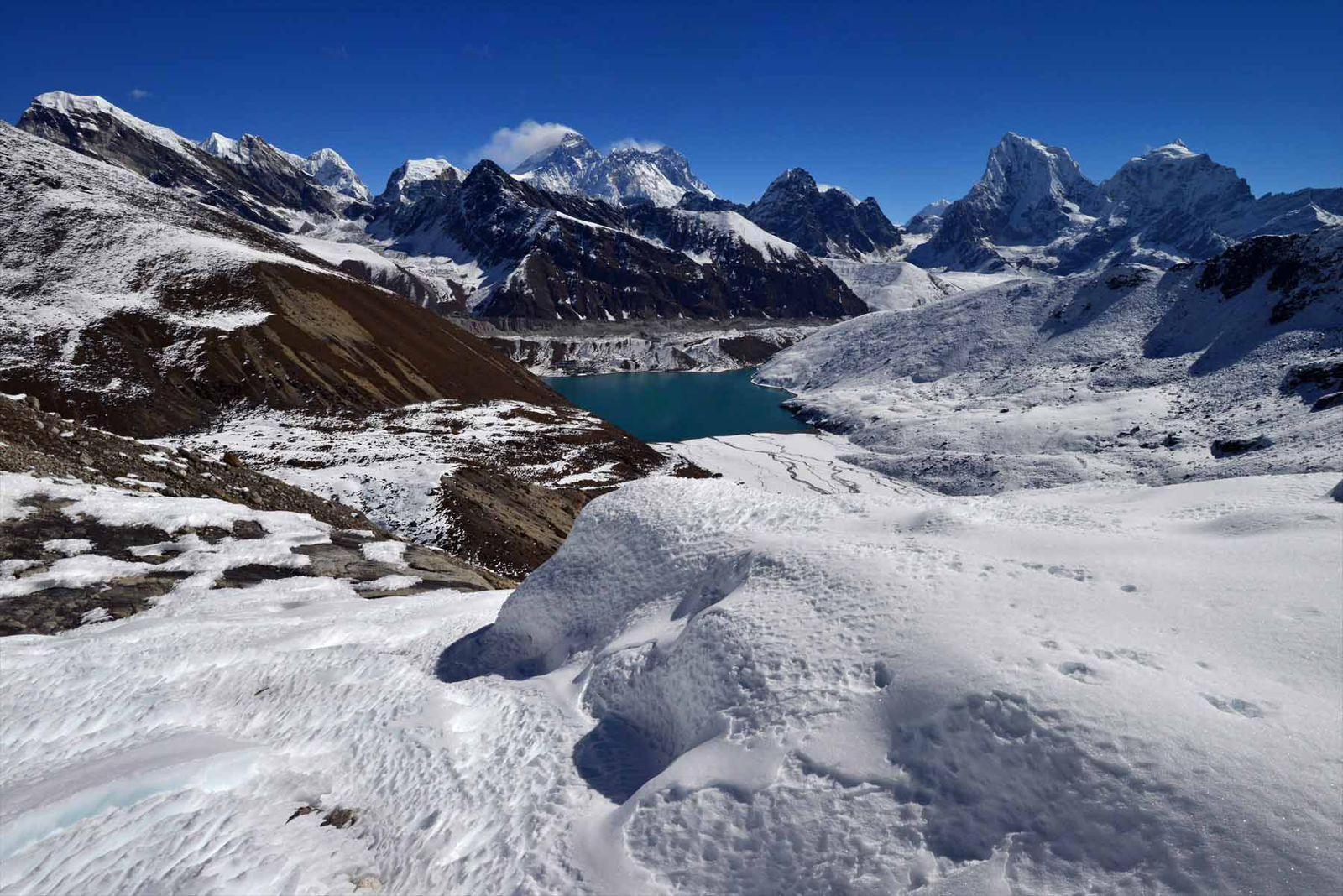
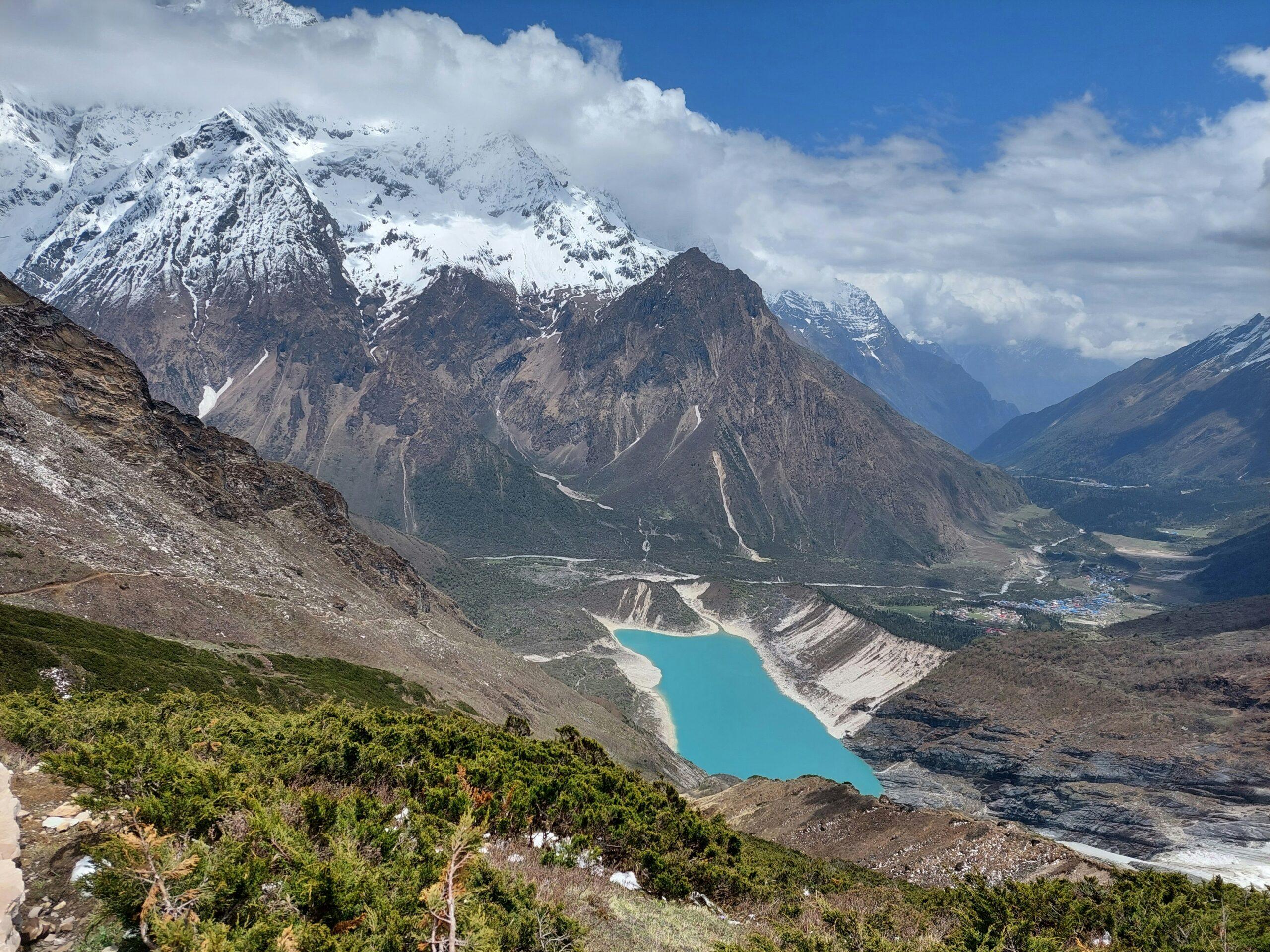
The highlight of the trek is reaching the magnificent Gokyo Lakes—pristine turquoise glacial lakes set against dramatic mountain backdrops. A hike to Gokyo Ri (5,357m) offers one of the best panoramic views in the Everest region, including Everest, Lhotse, Makalu, and Cho Oyu.
After soaking in the incredible scenery, the trail descends back through the same route to Namche Bazaar and Lukla, followed by a return flight to Kathmandu. This itinerary offers a quieter and equally rewarding alternative to the Everest Base Camp trek, perfect for those seeking stunning himalaya views with fewer crowds.
Product Description
Gokyo Trek: Cost, Itinerary, Difficulty & Complete Guide
The Gokyo Trek is one of the most spectacular trekking adventures in Nepal, taking you deep into the Everest region to a chain of breathtaking turquoise glacial lakes surrounded by some of the highest mountains on Earth.
The trek leads through the legendary Khumbu region, following the Dudh Koshi Valley from Lukla toward Namche Bazaar before branching away from the classic Everest Base Camp route toward Dole, Machhermo and Gokyo.
The ultimate highlight is Gokyo Ri at 5,357 meters, where trekkers can enjoy an extraordinary panorama of Mount Everest, Lhotse, Makalu and Cho Oyu.
Unlike the Everest Base Camp Trek, the Gokyo Trek takes you into the quieter western side of the Khumbu. The combination of glacial lakes, the enormous Ngozumpa Glacier, Sherpa villages and panoramic mountain views makes it one of the most rewarding alternatives to the classic Everest route.
A standard Gokyo itinerary takes approximately 11–14 days, depending on acclimatization days, transportation and itinerary design.
This complete guide covers the Gokyo Trek itinerary, cost, difficulty, altitude, permits, best time, route, accommodation, food, packing list, altitude sickness, safety and frequently asked questions.
Gokyo Trek Highlights
- Explore the spectacular Gokyo Lakes
- Climb Gokyo Ri at 5,357m
- Enjoy panoramic views of four 8,000m peaks
- See Mount Everest, Lhotse, Makalu and Cho Oyu
- Walk alongside the massive Ngozumpa Glacier
- Experience traditional Sherpa villages
- Explore Namche Bazaar
- Trek through Sagarmatha National Park
- Experience the quieter side of the Everest region
- Stay in traditional Himalayan teahouses
- Enjoy spectacular Himalayan sunrises
- Experience high-altitude alpine landscapes
- Optional extension to Cho La Pass and Everest Base Camp
What Is the Gokyo Trek?
The Gokyo Trek is a high-altitude trekking route through Nepal’s Khumbu region that leads from Lukla to the beautiful Gokyo Valley.
The trail initially follows the same route as the Everest Base Camp Trek toward Namche Bazaar. From Namche, however, the route turns toward Dole and Machhermo rather than continuing toward Tengboche and Dingboche.
Eventually, trekkers reach Gokyo Village, situated beside the third Gokyo Lake, commonly known as Dudh Pokhari, at approximately 4,790 meters.
From Gokyo, trekkers can climb Gokyo Ri for one of the most impressive panoramic viewpoints in the Himalayas.
Gokyo Trek Quick Facts
| Trek Information | Details |
|---|---|
| Trek Name | Gokyo Trek |
| Region | Everest / Khumbu |
| Country | Nepal |
| Starting Point | Lukla |
| Ending Point | Lukla |
| Trek Duration | 11–14 days |
| Gokyo Village | ~4,790m |
| Gokyo Ri | 5,357m |
| Difficulty | Moderate to Challenging / Strenuous |
| Trek Type | Teahouse Trek |
| Best Seasons | March–May & September–November |
| Main Attraction | Gokyo Lakes & Gokyo Ri |
| Major Glacier | Ngozumpa Glacier |
| Accommodation | Teahouses |
| Required Permits | Sagarmatha National Park + Khumbu local permit |
| Guide | Required under current NTB provisions |
| Maximum Altitude | 5,357m |
Why Choose the Gokyo Trek?
1. Spectacular Gokyo Lakes
The Gokyo Valley contains a chain of glacial lakes surrounded by dramatic Himalayan scenery.
The turquoise color of the lakes contrasts beautifully with the rocky mountain landscape and the Ngozumpa Glacier.
The main Gokyo settlement sits beside the third lake, creating one of the most memorable landscapes in the Everest region.
2. Incredible Gokyo Ri Viewpoint
Gokyo Ri rises to approximately 5,357 meters.
From its summit, trekkers can enjoy a panoramic view encompassing several of the world’s highest mountains.
On clear days, the panorama includes:
- Mount Everest
- Lhotse
- Makalu
- Cho Oyu
- Everest-region peaks
- Gokyo Lakes
- Ngozumpa Glacier
The viewpoint is one of the main reasons trekkers choose Gokyo instead of the traditional Everest Base Camp route.
3. A Quieter Alternative to Everest Base Camp
The Gokyo route shares the trail with Everest Base Camp trekkers as far as Namche Bazaar.
After that, the route branches toward the Gokyo Valley.
This generally provides a quieter trekking experience while still offering spectacular Himalayan scenery.
4. Ngozumpa Glacier
The trail around Gokyo provides impressive views of the Ngozumpa Glacier, one of the major glacial features of the Khumbu region.
The glacier forms an important part of the landscape around the Gokyo Valley.
5. Sherpa Culture
The trek provides opportunities to experience the culture and lifestyle of the Sherpa communities of the Khumbu.
You can encounter:
- Buddhist monasteries
- Prayer wheels
- Mani walls
- Prayer flags
- Traditional mountain houses
- Sherpa villages
- Himalayan hospitality
Namche Bazaar is the commercial and cultural hub of the region.
Gokyo Trek Route
The classic Gokyo Trek route is:
Lukla → Phakding → Namche Bazaar → Dole → Machhermo → Gokyo → Gokyo Ri → Machhermo → Dole → Namche → Lukla
A typical route looks like:
Kathmandu → Lukla → Phakding → Namche → Dole → Machhermo → Gokyo → Gokyo Ri → Dole → Namche → Lukla → Kathmandu
The route can also be extended to include:
Gokyo → Thangnak → Cho La Pass → Dzongla → Everest Base Camp
This creates a longer and considerably more challenging Gokyo–Cho La–Everest Base Camp itinerary.
Gokyo Trek Itinerary
Day 1: Fly to Lukla and Trek to Phakding
Lukla: 2,840m
Phakding: approximately 2,610m
Walking: 3–4 hours
Your Gokyo adventure begins with a scenic flight toward Lukla.
After meeting your trekking team, begin walking along the Dudh Koshi Valley toward Phakding.
The first day is deliberately short, allowing your body to begin adjusting to the altitude.
Overnight: Phakding
Day 2: Phakding to Namche Bazaar
Altitude: 3,440m
Walking: 5–7 hours
After breakfast, continue along the Dudh Koshi River.
You cross several suspension bridges decorated with colorful prayer flags before entering Sagarmatha National Park.
The trail gradually becomes steeper as you approach Namche Bazaar.
Namche is the largest settlement in the Khumbu region and an important acclimatization point.
Overnight: Namche Bazaar
Day 3: Acclimatization Day in Namche
Altitude: 3,440m
Today is an important acclimatization day.
Rather than remaining completely inactive, most trekkers take a short hike to higher elevations before returning to Namche to sleep.
Popular activities include hiking toward:
- Everest View Hotel
- Khumjung
- Khunde
- Syangboche
The purpose is to expose your body to higher altitude while sleeping at the same elevation.
Overnight: Namche Bazaar
Day 4: Namche Bazaar to Dole
Altitude: approximately 4,040–4,100m
Walking: 5–6 hours
Today you leave the main Everest Base Camp trail and follow the route toward the Gokyo Valley.
The trail climbs through rhododendron and birch forests.
As you gain altitude, the landscape becomes increasingly open and alpine.
You eventually reach Dole, a small mountain settlement surrounded by spectacular peaks.
Overnight: Dole
Day 5: Dole to Machhermo
Altitude: approximately 4,470m
Walking: 4–6 hours
The trail continues through high-altitude terrain toward Machhermo.
You pass yak pastures and small settlements while the surrounding mountains become increasingly dramatic.
Machhermo is an important stop before the final climb to Gokyo.
Overnight: Machhermo
Day 6: Machhermo to Gokyo
Altitude: approximately 4,790m
Walking: 4–6 hours
This is one of the most spectacular days of the trek.
The route climbs along the Dudh Koshi valley toward the Gokyo Lakes.
You pass the first and second lakes before eventually reaching the third lake, where Gokyo Village is located.
The turquoise lake, surrounding mountains and Ngozumpa Glacier create an extraordinary Himalayan landscape.
Overnight: Gokyo
Day 7: Gokyo Exploration and Acclimatization
Altitude: approximately 4,790m
A second acclimatization and exploration day can be included at Gokyo.
Depending on weather and fitness, you can explore the surrounding lakes or simply rest before the early-morning Gokyo Ri climb.
Popular destinations include:
- Fourth Gokyo Lake
- Fifth Gokyo Lake
- Ngozumpa Glacier viewpoints
- Gokyo Valley
Overnight: Gokyo
Day 8: Gokyo Ri Sunrise and Descend
Gokyo Ri: 5,357m
Walking: 6–8 hours
Wake early for the climb to Gokyo Ri.
The ascent is steep but non-technical.
The reward is an extraordinary sunrise panorama over the Himalayas.
From the summit, you can see some of the world’s highest peaks, including:
- Everest
- Lhotse
- Makalu
- Cho Oyu
After enjoying the views, descend back toward Gokyo and continue toward a lower overnight stop depending on your itinerary.
Overnight: Gokyo / Dole / Machhermo
Day 9: Descend Toward Namche Bazaar
Walking: 6–7 hours
Begin the descent through Machhermo and Dole.
The lower altitude makes the walk easier from an acclimatization perspective, although the long downhill sections can be demanding on the knees.
Overnight: Namche Bazaar
Day 10: Namche Bazaar to Lukla
Walking: 6–8 hours
Follow the Dudh Koshi Valley back toward Lukla.
The trail descends through forests and Sherpa villages before reaching Lukla.
Enjoy your final evening in the Khumbu with your trekking team.
Overnight: Lukla
Day 11: Fly Lukla to Kathmandu
Take the morning flight from Lukla toward Kathmandu, subject to weather and operational conditions.
After arriving in Kathmandu, transfer to your hotel.
Overnight: Kathmandu
Buffer Days
A buffer day is strongly recommended for the Gokyo Trek.
Flights to and from Lukla can be affected by:
- Weather
- Visibility
- Wind
- Airport operations
Adding 1–2 extra days gives you greater flexibility in case of delays.
Gokyo Trek Altitude
Altitude is one of the most important factors on this trek.
| Location | Approx. Elevation |
|---|---|
| Kathmandu | 1,400m |
| Lukla | 2,840m |
| Phakding | 2,610m |
| Namche Bazaar | 3,440m |
| Dole | ~4,040m |
| Machhermo | ~4,470m |
| Gokyo Village | ~4,790m |
| Gokyo Ri | 5,357m |
The high altitude is the primary reason the Gokyo Trek requires proper acclimatization.
Gokyo Trek Difficulty
The Gokyo Trek is generally considered moderate to challenging, with some sources rating it strenuous because of the high altitude.
The trail does not involve technical mountaineering, but the combination of altitude and sustained uphill walking makes it physically demanding.
Main challenges include:
- High altitude
- Long trekking days
- Steep climbs
- Cold temperatures
- Thin air
- Rocky terrain
- Early-morning Gokyo Ri ascent
- Potential snow and ice
The climb to Gokyo Ri is particularly demanding because the summit reaches 5,357m.
Is Gokyo Trek Suitable for Beginners?
Yes, but with preparation.
A reasonably fit beginner can complete the Gokyo Trek with:
- Proper acclimatization
- A sensible itinerary
- Regular training
- A licensed guide
- Appropriate equipment
However, it should not be considered an easy trek.
The biggest challenge is not technical climbing but altitude.
If you have little high-altitude experience, avoid unnecessarily fast itineraries.
Altitude Sickness on Gokyo Trek
Altitude sickness is one of the most important risks.
Symptoms may include:
- Headache
- Nausea
- Dizziness
- Fatigue
- Loss of appetite
- Difficulty sleeping
- Shortness of breath
How to reduce the risk
- Ascend gradually
- Take acclimatization days
- Drink plenty of water
- Walk slowly
- Avoid excessive alcohol
- Eat properly
- Inform your guide about symptoms
- Descend if symptoms become severe
Never continue climbing simply because you have a fixed itinerary.
Your health is more important than reaching Gokyo Ri.
Best Time for Gokyo Trek
The best seasons are generally spring and autumn.
Spring: March–May
Spring offers:
- Pleasant daytime temperatures
- Good mountain visibility
- Rhododendron flowers
- Increasingly stable weather
- Beautiful mountain landscapes
April and May are particularly popular.
Autumn: September–November
Autumn is one of the best periods for trekking in the Everest region.
You can generally expect:
- Clear skies
- Excellent mountain visibility
- Dry trails
- Stable weather
- Comfortable daytime temperatures
October and November are particularly popular.
Current 2026 trekking sources identify March–May and September–November as the principal trekking seasons.
Gokyo Trek in Winter
December to February brings cold temperatures and potential snow.
The route remains possible for experienced trekkers, but the upper trail and Gokyo Ri can become significantly more difficult.
Proper winter clothing, footwear and weather planning are essential.
Gokyo Trek During Monsoon
June to August is generally less popular because of the monsoon.
Challenges include:
- Rain
- Cloud
- Poor mountain visibility
- Slippery trails
- Flight disruptions
Although the Khumbu region can have different weather patterns at altitude, spring and autumn remain the safer choice for predictable trekking conditions.
Gokyo Trek Cost
The cost of the Gokyo Trek depends on:
- Group size
- Trek duration
- Guide
- Porter
- Lukla flights
- Accommodation
- Meals
- Permits
- Kathmandu hotels
- Insurance
- Personal expenses
Current 2026 published estimates commonly place a guided Gokyo Trek around US$1,200–2,200+ per person, depending on package quality and inclusions.
Typical cost structure
| Expense | Typical Treatment |
|---|---|
| Lukla flights | Usually included |
| Licensed guide | Usually included |
| Porter | Package dependent |
| Teahouse accommodation | Usually included |
| Trekking meals | Usually included |
| Sagarmatha permit | Included |
| Khumbu local permit | Included |
| Kathmandu accommodation | Package dependent |
| Travel insurance | Extra |
| Personal expenses | Extra |
| Tips | Extra |
Always check exactly what a trekking package includes before booking.
Gokyo Trek Permits
The Gokyo Trek lies inside Sagarmatha National Park and the Khumbu local administrative area.
The current Nepal Tourism Board lists Gokyo Trek among the Everest routes covered by the guide and TIMS requirement.
Sagarmatha National Park Permit
The current fee for foreign visitors is NPR 3,000.
Khumbu Pasang Lhamu Rural Municipality Permit
A separate local entry fee of approximately NPR 3,000 is currently reported for foreign trekkers.
TIMS
There is an important discrepancy among current third-party 2026 trekking sources regarding TIMS, with some saying it is no longer required in Khumbu.
However, because the official Nepal Tourism Board currently lists Gokyo Trek under routes requiring an agency-issued TIMS card and licensed guide, this article follows the official NTB position.
Before publishing a commercial package or booking a trek, your agency should verify the latest permit requirements directly with the relevant authorities.
Accommodation on Gokyo Trek
The Gokyo Trek is primarily a teahouse trek.
Accommodation is generally basic but comfortable enough for trekkers.
Typical facilities include:
- Twin-sharing rooms
- Beds and mattresses
- Blankets
- Shared bathrooms
- Dining rooms
- Hot meals
- Limited hot showers
- Charging facilities
At higher elevations, facilities become more basic and prices generally increase.
Food on Gokyo Trek
Teahouses provide a variety of meals.
Breakfast
Common options include:
- Eggs
- Pancakes
- Porridge
- Tibetan bread
- Toast
- Muesli
- Tea
- Coffee
Lunch and Dinner
Popular choices include:
- Dal Bhat
- Noodles
- Fried rice
- Pasta
- Momos
- Soup
- Potatoes
- Vegetables
Dal Bhat remains one of the most popular trekking meals because it provides plenty of carbohydrates and is usually filling.
Gokyo Trek Packing List
Clothing
- Moisture-wicking base layers
- Thermal underwear
- Fleece jacket
- Down jacket
- Waterproof jacket
- Trekking trousers
- Warm hat
- Gloves
- Trekking socks
Footwear
- Waterproof trekking boots
- Camp shoes
- Extra socks
Trekking Equipment
- Daypack
- Duffel bag if using a porter
- Trekking poles
- Sleeping bag
- Headlamp
- Water bottles
- Water purification tablets/filter
- Sunglasses
- Sunscreen
- Personal first-aid kit
Electronics
- Smartphone
- Camera
- Power bank
- Charging cables
- Universal adapter
Documents
- Passport
- Travel insurance
- Permits
- Emergency contact details
- Passport photographs if required
Physical Preparation for Gokyo Trek
Start preparing approximately 4–8 weeks before the trek.
Walking
Build up to several hours of continuous walking.
Hiking
Practice uphill hiking with a backpack.
Stair climbing
Excellent preparation for the steep sections around Namche, Dole and Gokyo Ri.
Strength training
Focus on:
- Squats
- Lunges
- Step-ups
- Calf raises
- Core exercises
Cardio
Cycling, swimming, running and brisk walking can improve cardiovascular endurance.
The goal is to build endurance rather than maximum strength.
Gokyo Trek Safety Tips
1. Follow a Proper Acclimatization Schedule
Do not rush through Namche and the upper Khumbu.
2. Trek With a Licensed Guide
The current NTB rules list Gokyo among the Everest routes requiring a licensed guide.
3. Check Weather Conditions
Weather can change rapidly at high altitude.
4. Carry Sufficient Water
Dehydration can worsen altitude-related symptoms.
5. Protect Yourself From the Sun
At high altitude, UV exposure can be intense.
Use:
- Sunglasses
- Sunscreen
- Hat
- Lip balm with SPF
6. Carry Travel Insurance
Your insurance should cover high-altitude trekking and emergency evacuation where applicable.
7. Keep a Buffer Day
Lukla flights are weather dependent, so an extra day or two is highly recommended.
Gokyo Trek vs Everest Base Camp Trek
| Feature | Gokyo Trek | Everest Base Camp |
|---|---|---|
| Main Destination | Gokyo Lakes | Everest Base Camp |
| Maximum Altitude | 5,357m | ~5,364m |
| Main Viewpoint | Gokyo Ri | Kala Patthar |
| Major Attraction | Gokyo Lakes | Everest Base Camp |
| 8,000m Peaks | Excellent panorama | Excellent views |
| Crowds | Generally quieter | Generally busier |
| Glacier | Ngozumpa | Khumbu Glacier |
| Duration | ~11–14 days | ~12–14 days |
| Difficulty | Moderate–Challenging | Moderate–Challenging |
If your priority is panoramic mountain views and alpine lakes, Gokyo may be the better choice.
If your priority is standing at Everest Base Camp, choose the classic EBC trek.
Gokyo Trek vs Everest Three Pass Trek
| Feature | Gokyo Trek | Three Pass Trek |
|---|---|---|
| Duration | 11–14 days | 18–21 days |
| Difficulty | Moderate–Challenging | Very Difficult |
| Maximum Altitude | 5,357m | ~5,545m |
| High Passes | None | 3 |
| Gokyo Lakes | Yes | Yes |
| Everest Base Camp | No | Yes |
| Technical Sections | No | Some challenging sections |
| Best For | Scenic high-altitude trek | Experienced trekkers |
The Three Pass Trek is substantially more demanding because it crosses Kongma La, Cho La and Renjo La.
Can You Combine Gokyo With Everest Base Camp?
Yes.
One of the most popular advanced itineraries combines:
Gokyo Lakes → Cho La Pass → Everest Base Camp → Kala Patthar
The route typically takes around 16–18+ days, depending on the itinerary.
The Cho La Pass reaches approximately 5,420m and can involve snow and glacial terrain, making the combined trek significantly more difficult than the standard Gokyo Trek.
Who Should Do the Gokyo Trek?
The Gokyo Trek is ideal for:
- Mountain lovers
- Photographers
- Experienced hikers
- Fit beginners
- Adventure travelers
- Travelers seeking a quieter Everest experience
- Trekkers interested in glacial lakes
- People who want spectacular Everest-region views without necessarily visiting Everest Base Camp
It may not be suitable for people who are uncomfortable with:
- High altitude
- Long uphill walks
- Cold temperatures
- Basic teahouses
- Remote mountain environments
Why Book a Guided Gokyo Trek?
A professional trekking company can arrange:
- Licensed trekking guide
- Required permits
- Lukla flights
- Accommodation
- Meals
- Porter
- Transportation
- Acclimatization planning
- Emergency support
- Route planning
- Weather monitoring
A local guide is especially valuable when dealing with altitude, changing weather and flight delays.
Frequently Asked Questions
How high is Gokyo Ri?
Gokyo Ri is approximately 5,357 meters (17,575 feet) high.
How high is Gokyo Village?
Gokyo Village sits at approximately 4,790 meters above sea level.
How long is the Gokyo Trek?
A typical Gokyo Trek takes approximately 11–14 days, including acclimatization and travel days.
Is Gokyo Trek difficult?
The Gokyo Trek is generally moderate to challenging, with altitude being the biggest challenge.
Can beginners do the Gokyo Trek?
Yes, fit beginners can complete it with proper preparation, acclimatization and professional guidance.
What is the best time for Gokyo Trek?
The best seasons are March–May and September–November.
Do I need a guide for Gokyo Trek?
Yes. The current Nepal Tourism Board lists Gokyo Trek among Everest-region routes requiring a licensed guide and agency-issued TIMS card.
What permits are required for Gokyo Trek?
The main requirements are the Sagarmatha National Park entry permit and Khumbu Pasang Lhamu Rural Municipality permit, along with the applicable TIMS requirement under current NTB rules.
Can I do Gokyo Trek without technical climbing?
Yes. The standard Gokyo Trek does not require technical mountaineering skills.
Can I climb Gokyo Ri?
Yes. Gokyo Ri is a non-technical trekking peak/viewpoint, although the climb to 5,357m is physically demanding.
Can I see Everest from Gokyo Ri?
Yes. Gokyo Ri provides excellent views of Everest along with Lhotse, Makalu and Cho Oyu on clear days.
Is Gokyo better than Everest Base Camp?
It depends on your goals. Gokyo is particularly attractive for lakes, panoramic mountain views and a quieter trail, while Everest Base Camp is better for travelers who specifically want to reach EBC.
Can I combine Gokyo with Everest Base Camp?
Yes. The most popular combination crosses Cho La Pass and connects Gokyo with the Everest Base Camp route.
Is Gokyo Trek safe?
It can be a safe trek with proper acclimatization, weather monitoring, appropriate equipment, travel insurance and professional guidance.
Is there Wi-Fi on the Gokyo Trek?
Wi-Fi may be available at some teahouses, but connectivity becomes less reliable at higher elevations.
Is electricity available?
Many teahouses provide charging facilities, but charging may cost extra and availability can vary.
Final Thoughts
The Gokyo Trek is one of Nepal’s finest high-altitude trekking experiences.
While the Everest Base Camp Trek receives much of the attention, Gokyo offers something different: turquoise glacial lakes, enormous glaciers, Sherpa culture and one of the most spectacular panoramic viewpoints in the Himalayas.
Standing on Gokyo Ri at 5,357 meters, with Everest, Lhotse, Makalu and Cho Oyu dominating the horizon, is an unforgettable Himalayan experience.
For travelers who want a quieter alternative to Everest Base Camp while still experiencing the extraordinary landscapes of the Khumbu, the Gokyo Trek is an excellent choice.
Book Your Gokyo Trek
Ready to explore the spectacular Gokyo Valley?
Join our Gokyo Trek in Nepal with experienced local guides, carefully planned acclimatization, comfortable teahouse accommodation and reliable trekking support.
Contact us today to plan your Gokyo adventure.
For the latest information on trekking regulations, permits, conservation areas, and mountaineering requirements in Nepal, visit the official Nepal Tourism Board and relevant government authorities before planning your Pisang Peak Climbing adventure.
Also if you want to view our other treks then you can follow this link.

Reviews
There are no reviews yet.