

Nepal Trekking Update September 2026: Heavy Rain, Snowfall and Safety Advice
Introduction
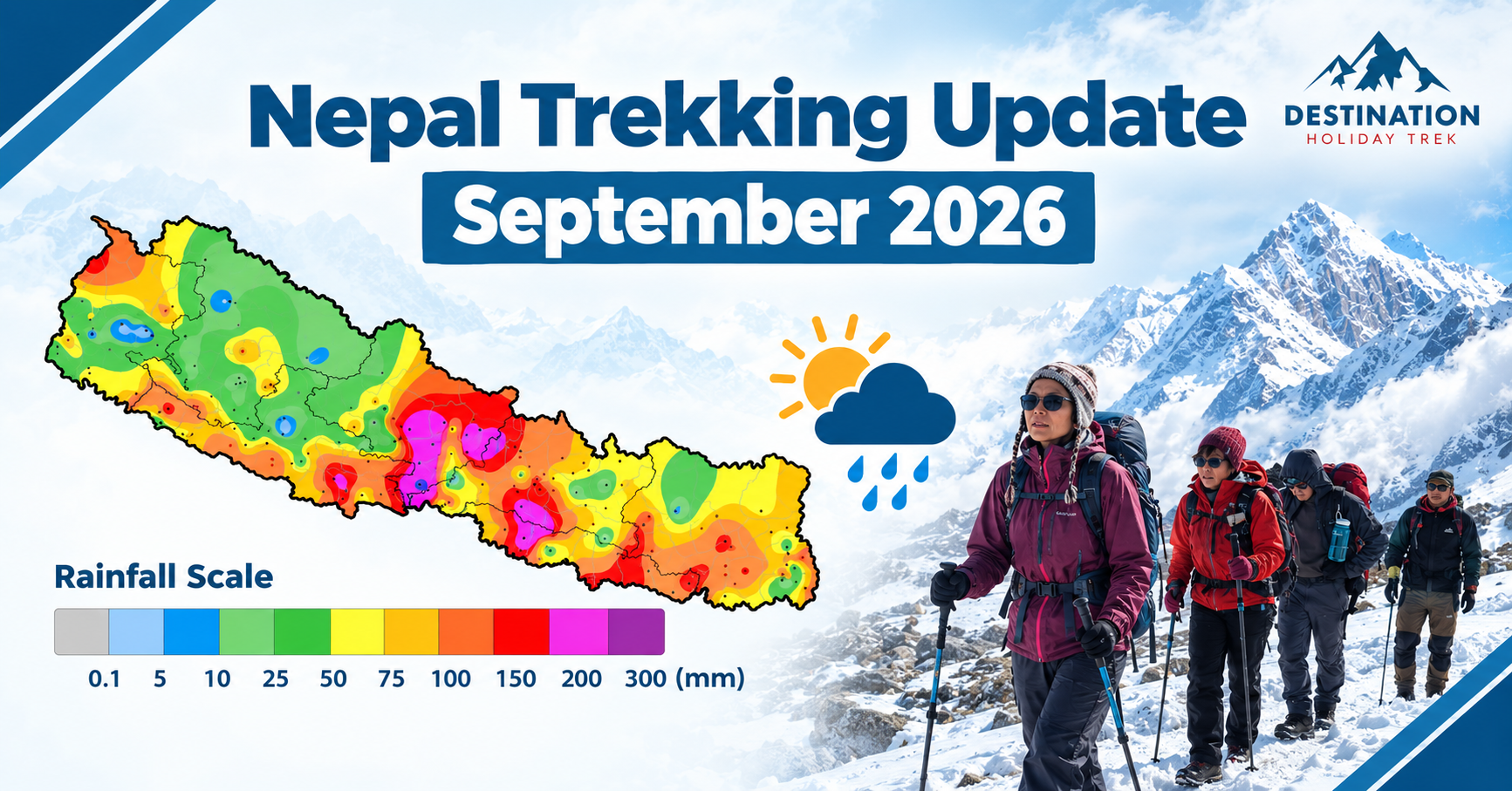
If you have a trek planned in Nepal this week, it is important to check the latest weather and trail conditions before you leave. Trekking is still possible in September 2026, but conditions are changing quickly across the country. Nepal’s Department of Hydrology and Meteorology (DHM) has issued a heavy rain alert for September 24 to 28, while unusually heavy snowfall has already forced climbers off Manaslu.
The current weather is linked to a low pressure system moving in from the Bay of Bengal and comes after a monsoon season that has already caused serious flooding in parts of Nepal. This article brings together the latest information from Nepal’s weather authorities and credible Nepal news sources and explains what these conditions could mean for anyone planning trekking in Nepal in the coming weeks. Since mountain weather can change quickly, always confirm the latest conditions with your guide or trekking agency before departure.
Nepal Trekking Update: September 2026 at a Glance
| Topic | Current Status (as of September 24, 2026) |
| Nationwide rain alert | DHM has warned of heavy to very heavy rain from September 24 to 28, mainly in Koshi, Bagmati, Gandaki, Lumbini and Madhesh provinces |
| Manaslu region | Heavy, unusual snowfall reported. Expedition teams have left the mountain and ended the climbing season early |
| Annapurna region | Kaski district trails (Ghandruk, Syauli Bazaar area) have seen repeated flood and landslide damage this monsoon season |
| Everest (Khumbu) region | No major trail damage reported. Solukhumbu falls inside the current rain alert zone, so flight delays are possible |
| Langtang and Rasuwa | Still recovering from the late August flood disaster. Extra caution advised in this area |
Nepal Trekking Conditions in September 2026
A normal September in Nepal is a transition month. Monsoon rain usually eases off by mid month, and trails dry out ahead of the busy October season. This year has not followed that pattern. Nepal’s DHM has warned of heavy to very heavy rain from September 24 to 28, caused by a low pressure system over the Bay of Bengal, with western and central parts of the country expected to get the most rain.
This comes on top of an already hard monsoon. Nepal is still recovering from the Rasuwa and Bhotekoshi flood disaster in late August, which damaged roads, bridges and homes in the Langtang area. At high altitude, the problem is snow rather than rain. On Manaslu, heavy snowfall through September has been strong enough that long time local residents say they have not seen conditions like this before.
Which Trekking Regions May Be Affected?
Manaslu Region
Manaslu has seen the biggest disruption this season. According to a report from Onlinekhabar, continuous rain has led to around five feet of snow building up in the high country near Manaslu, and climbing teams have been coming down from the mountain after waiting almost two weeks for better weather. This mainly affects the climbing route above Base Camp, but trekkers on the Manaslu Circuit Trek should still check current snow depth at the Larkya La Pass with their guide before crossing.
Everest Region
No major trail damage has been reported in the Everest region so far. Solukhumbu district does sit inside the current DHM rain alert area, so short flight delays to Lukla and some low cloud at lower elevations are possible this week. If you are heading toward Everest Base Camp Trek, build in one or two spare days in case flights are delayed. The same applies to longer routes such as the Everest Three Pass Trek and the Gokyo Trek, both of which pass through higher, more exposed sections of the Khumbu.
Annapurna Region
The Annapurna region has had a rough monsoon. Rivers in Kaski district, especially the Modi Khola and Kimrung Khola near Ghandruk, have flooded more than once this season, damaging roads and trail bridges. Trekkers planning an Annapurna Base Camp Trek or the longer Annapurna Circuit Trek should ask their agency directly about the current state of the Nayapul, Birethanti and Ghandruk trail sections before starting.
Other High Altitude Trekking Areas
The Langtang and Rasuwa area is still recovering from the late August flood, so extra caution is needed there separate from this week’s rain alert. Rain shadow areas like Upper Mustang usually get much less rain, which can make them a calmer option this month. High altitude climbs are directly exposed to the same snow pattern hitting Manaslu, so current conditions should be confirmed with your operator before any summit attempt, whether that is the Manaslu Expedition, the Ama Dablam Expedition, the Mera Peak Expedition, or the Makalu Expedition.
Main Risks for Trekkers During Heavy Rain and Snowfall
Trail Conditions and Landslides
Weeks of rain have left many hillsides fully soaked. This raises the chance of landslides on steep trail sections, especially in the Annapurna foothills where this has already happened more than once this season.
Snowfall at Higher Elevations
Heavy, unseasonal snow, like what has hit Manaslu, can hide the trail, reduce visibility and raise avalanche risk near high passes. This mainly affects climbing routes but also matters for any trek that crosses a high pass close to that altitude.
River Crossings and Flooded Trails
Rivers such as the Modi Khola and Kimrung Khola have already damaged bridges and trail sections this season. During heavy rain, a normally easy river crossing can turn risky within hours.
Road and Transportation Problems
Heavy rain often disrupts road access to trailheads, and Lukla flights are sensitive to cloud and wind. Expect possible flight delays and blocked or detoured roads during the active rain period from September 24 to 28.
Altitude and Cold Weather Risks
Unexpected snow at altitude adds cold exposure on top of normal altitude sickness risk. Wet gear in cold weather raises the chance of hypothermia, so good waterproofing matters more than usual this season.
Nepal Trekking Safety Checklist for September 2026
- Confirm your exact route and altitude with your guide or agency, not just the general region.
- Ask directly if any part of your trail has had flood or landslide damage recently.
- Add one or two buffer days to your plan in case of flight delays or trail detours.
- Avoid crossing high passes during the September 24 to 28 rain window if you can move the date.
- Keep your travel insurance details, including emergency evacuation cover, easy to find.
- Share your trek itinerary with someone outside your trekking group.
- Check for phone signal or Wi-Fi access points along your route for weather updates.
What Trekkers Should Check Before Starting a Trek
- Current DHM rain warnings for the province you will be trekking through.
- Recent news from your trekking region, including reports from TAAN, ACAP or local ward offices.
- Whether your trekking agency has already updated your itinerary for current conditions.
- Lukla or other domestic flight status if your route needs a mountain flight.
- Road access to your starting point, especially for Annapurna and Langtang routes.
- Your guide’s own recent experience on the exact trail section you are worried about.
What to Pack for Unstable Weather
- A proper waterproof jacket and waterproof trekking pants, not just water resistant ones.
- A waterproof cover for your backpack, plus dry bags for your phone, passport and camera.
- One extra warm mid layer in case temperatures drop lower than expected.
- Trekking poles for balance on muddy or snowy sections.
- Gaiters if your route goes near a high pass that could have fresh snow.
- A headlamp with spare batteries, since delays can push your arrival into the evening.
- A simple water purification method, since flooding can affect local water sources.
What to Do if Weather Conditions Change During the Trek
If rain, snow or wind gets worse while you are on the trail, let your guide make the call on whether to continue, wait, or turn back. An experienced guide usually notices early warning signs, such as a river changing sound or color, fresh debris on a slope, or sudden low visibility, before they become dangerous. It is better to lose a day at a lower, safer teahouse than to push forward to stay on schedule. If you lose phone signal, stay with your group and follow your guide’s instructions rather than moving ahead alone.
Are Nepal Treks Still Possible in September 2026?
There is no single yes or no answer, because conditions are different in each region right now. Lower routes away from the current rain alert, and rain shadow areas like Upper Mustang, are less affected. High passes near the snow line, especially around Manaslu, carry more uncertainty until the current weather clears. Annapurna trails in Kaski district have had repeated flood damage this season and need extra checking before you go. Everest region trekking has not had major reported damage, but Solukhumbu is inside the current rain alert zone, so short flight and weather delays are likely this week.
For most trekkers, this means treks are going ahead, but with more flexible timing, extra buffer days, and closer monitoring of the exact route.
How to Get Reliable Nepal Trekking Weather and Travel Updates
Before you leave, check the Nepal Tourism Board travel updates for official notices. It also helps to follow trusted Nepal news outlets for on the ground detail. As one example of how fast things can change, the latest Manaslu snowfall report from Onlinekhabar shows how local officials and climbing teams described this season’s snow in real time. Government weather bulletins are the best source for rain and storm timing, while trekking associations and local ward offices tend to report trail damage the fastest. Trekkers should verify current conditions before departure using more than one source, since a single report can go out of date within days during active weather.
Plan Your Nepal Trek With Destination Holiday Trek
Weather and trail conditions in Nepal can change within days during a period like this one, so the best thing any trekker can do is stay updated rather than rely on a plan made weeks ago. If you are planning a trek in the coming weeks, it helps to talk to someone before you fix your dates. You can contact Destination Holiday Trek to go over current route conditions, realistic buffer days, and what our local guides are seeing on the trail right now. If you would like to know more about how our team plans around conditions like this, you can also read why choose Destination Holiday Trek. We are a trekking operator, not a weather authority, so our job is to help you plan sensibly around the best available information, not to predict what the mountains will do next.
Final Takeaway
September 2026 has brought challenging and changing conditions across Nepal, with heavy rainfall, snowfall, landslide and flood risks affecting different trekking regions in different ways. Manaslu has experienced unusual snowfall, parts of the Annapurna region have faced flood and landslide damage, while Everest, Langtang and other high altitude areas also require careful weather and trail monitoring. The period from September 25 to 27 is particularly important because of the forecast for heavy to extremely heavy rainfall.
This does not mean all trekking in Nepal is closed, but conditions can change quickly depending on the route, altitude, weather and local trail situation. Check the latest DHM and Nepal Tourism Board updates, follow your guide’s advice, prepare for delays and keep your itinerary flexible. If you are planning a trek during this period, contact Destination Holiday Trek for current route information, local guidance and help planning a safer and flexible trekking itinerary.
Frequently Asked Questions
- Is September 2026 safe for trekking in Nepal?
Trekking is continuing in most regions, but this is an active weather period. DHM has a heavy rain warning from September 24 to 28, and Manaslu has seen unusually heavy snow. Safety depends on your exact route, so check it with your guide. - Is there heavy snowfall in Nepal in September 2026?
Yes, at higher elevations. Reports from the Manaslu region describe unusually heavy, ongoing snowfall through September, strong enough to end the mountain’s climbing season early, according to local officials and Nepal news sources. - Which Nepal trekking regions are affected by heavy rain?
DHM’s September 24 to 28 alert names Koshi, Bagmati, Gandaki, Lumbini and Madhesh provinces as likely to get heavy to very heavy rain. The Annapurna region in Kaski district has also had repeated flood and landslide damage earlier in the season. - Is Manaslu Circuit Trek affected by snowfall?
The heaviest snow reported is around the higher climbing camps above Manaslu Base Camp. The Larkya La Pass area on the Manaslu Circuit Trek sits in the same wider region, so trekkers should check current snow conditions with their guide before crossing. - Can I trek to Everest Base Camp in September 2026?
There is no report of major trail damage in the Everest region so far. Solukhumbu is inside the current rain alert zone, so build buffer days into your plan in case Lukla flights are delayed. - What should I pack for trekking in Nepal during unstable weather?
Truly waterproof outer layers, dry bags for electronics, an extra warm layer, trekking poles, and gaiters if your route goes near a high pass. See the packing list above for full details. - Should I change my trekking itinerary because of bad weather?
Add buffer days and try to avoid crossing high passes during the September 24 to 28 rain window if your schedule allows. Let your guide make any final call on rerouting based on conditions at the time. - How often does this kind of weather happen in Nepal in September?
Some rain at the start of September is normal as the monsoon fades. Heavy rain and snow lasting this late into September, after an already difficult monsoon season, is less common, which is why this advisory exists.