- Gorkarneswor-9, Kathmandu, Nepal
- destinationholidaytreks@gmail.com
- info@destinationholidaytrek.com


Introduction Ama Dablam Expedition
Rising like a jewel in the Khumbu region of Nepal, Ama Dablam Expedition is one of the most iconic and beautiful mountains in the world. Standing at 6,812 meters (22,349 feet), it may not be the tallest peak in the Himalayas, but its dramatic ridges, steep faces, and perfect pyramid shape have earned it the nickname “the Matterhorn of the Himalayas.”
For trekkers and climbers alike, an Ama Dablam expedition is not just about reaching the summit—it’s about immersing yourself in the raw beauty of the Everest region, connecting with Sherpa culture, and testing your physical and mental limits in one of the most breathtaking landscapes on Earth.


Why Ama Dablam Expedition is Special ?
Unlike towering giants such as Mount Everest or Lhotse, Ama Dablam offers a unique blend of technical climbing and aesthetic beauty. The name itself translates to “Mother’s Necklace”—“Ama” meaning mother and “Dablam” referring to the sacred pendant worn by Sherpa women. The hanging glacier resembles that pendant, adding a spiritual dimension to the mountain.
What sets Ama Dablam apart:
- Technical challenge: It requires rock, ice, and mixed climbing skills.
- Stunning scenery: You get panoramic views of Everest, Lhotse, and Makalu.
- Cultural immersion: The journey passes through traditional Sherpa villages.
Less crowded: Compared to Everest, the routes are quieter and more intimate.
Climbing Ama Dablam Expedition: The Technical Challenge
Ama Dablam is considered a technical peak, making it a favorite among experienced climbers seeking a serious challenge without the extreme altitude of 8,000-meter peaks.
Camps and Route Overview:
- Base Camp (4,600 m):
Preparation and acclimatization. - Camp 1 (5,700 m):
Reached via rocky ridges and exposed terrain. - Camp 2 (6,000 m):
Narrow ledges with dramatic drop-offs. - Camp 3 (6,300 m):
Located below the Dablam (hanging glacier).
Summit Push:
A mix of steep ice walls, rock climbing, and knife-edge ridges.
Climbers must navigate:
- Fixed ropes
- Vertical rock sections
- Ice slopes up to 70 degrees
- High exposure with sheer drops on both sides
This is not a beginner’s climb—it demands solid mountaineering skills, physical fitness, and mental resilience.
Acclimatization and Safety
Altitude sickness is one of the biggest risks in any Himalayan expedition. Proper acclimatization is essential.
Key Tips:
- Follow the “climb high, sleep low” principle
- Stay hydrated and eat well
- Take rest days seriously
- Listen to your body
Many
The Journey Begins: Trekking to Base Camp
The expedition usually begins with a thrilling flight to Tenzing-Hillary Airport, often considered one of the most dangerous airports in the world. From Lukla, trekkers follow the classic Everest Base Camp trail.
Key Stops Along the Way:
- Namche Bazaar
The bustling heart of the Khumbu region, perfect for acclimatization. - Tengboche Monastery
A spiritual highlight with stunning views of Ama Dablam. - Pangboche Village
One of the oldest Sherpa settlements in the region.
After several days of trekking, climbers reach Ama Dablam Base Camp at around 4,600 meters. This is where preparation, training, and acclimatization intensify.
Best Time for Ama Dablam Expedition
The best seasons to climb Ama Dablam are:
- Autumn (October–November):
Stable weather, clear skies, and excellent visibility. - Spring (April–May):
Slightly warmer temperatures and blooming rhododendrons.
Autumn is generally preferred due to more predictable weather conditions and less risk of avalanches.
Cultural Experience: Life in the Khumbu
One of the most rewarding aspects of the Ama Dablam expedition is the cultural journey.
The Khumbu region is home to the Sherpa people, known for their mountaineering expertise and warm hospitality. Along the trail, you’ll encounter:
- Prayer flags fluttering in the wind
- Mani stones carved with Buddhist mantras
- Yak caravans transporting goods
- Traditional teahouses offering dal bhat and tea
Visiting monasteries like Tengboche provides a deeper understanding of the spiritual connection between the Sherpa people and the mountains.
Physical and Mental Preparation
Climbing Ama Dablam is as much a mental challenge as it is a physical one.
Physical Preparation:
- Cardiovascular training (running, hiking, cycling)
- Strength training (legs, core, upper body)
- Practice with climbing gear
Mental Preparation:
- Handling fear and exposure
- Staying calm under pressure
- Maintaining focus during long, exhausting days
Many climbers train for months, if not years, before attempting Ama Dablam.
Equipment and Logistics
A successful expedition requires careful planning and the right gear.
Essential Equipment:
- Mountaineering boots
- Crampons and ice axe
- Harness and helmet
- Down suit and sleeping bag
- Climbing ropes and carabiners
Cost of the Ama Dablam Expedition
An Ama Dablam expedition typically costs between $6,000 to $12,000 USD, depending on the level of support and services.
Cost Includes:
- Climbing permits
- Guides and Sherpa support
- Food and accommodation
- Equipment (sometimes)
While it is not cheap, it is significantly more affordable than climbing Everest.
The Summit Experience
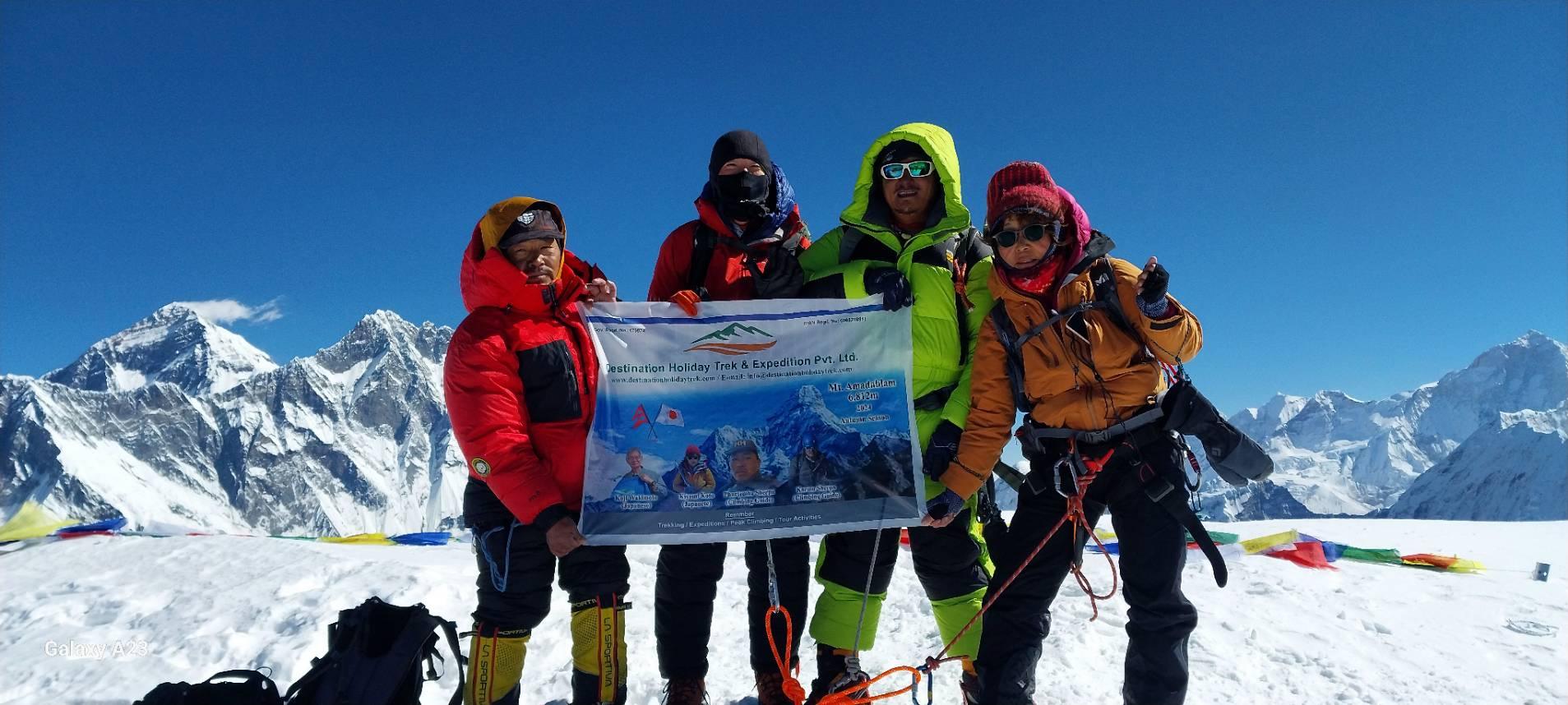
Reaching the summit of Ama Dablam is an unforgettable moment.
As you stand on the narrow peak, surrounded by the towering हिमालय, you’ll witness:
- Everest rising in the distance
- Endless snow-covered peaks
- A silence that feels almost spiritual
The sense of achievement is immense—not just because of the physical effort, but because of the journey it took to get there.
Final Thoughts
An Ama Dablam expedition is more than just a climb—it’s a life-changing adventure. It combines the thrill of technical mountaineering with the serenity of Himalayan landscapes and the richness of Sherpa culture.
For trekkers dreaming of taking the next step into mountaineering, Ama Dablam offers the perfect challenge. It demands respect, preparation, and determination—but in return, it offers one of the most rewarding experiences the Himalayas have to offer.
Whether you reach the summit or not, the journey itself will leave a lasting imprint on your soul.
You Can also view our other Blogs here