

Top 5 Base Camp Trekking in Nepal: Best Treks for 2026/2027
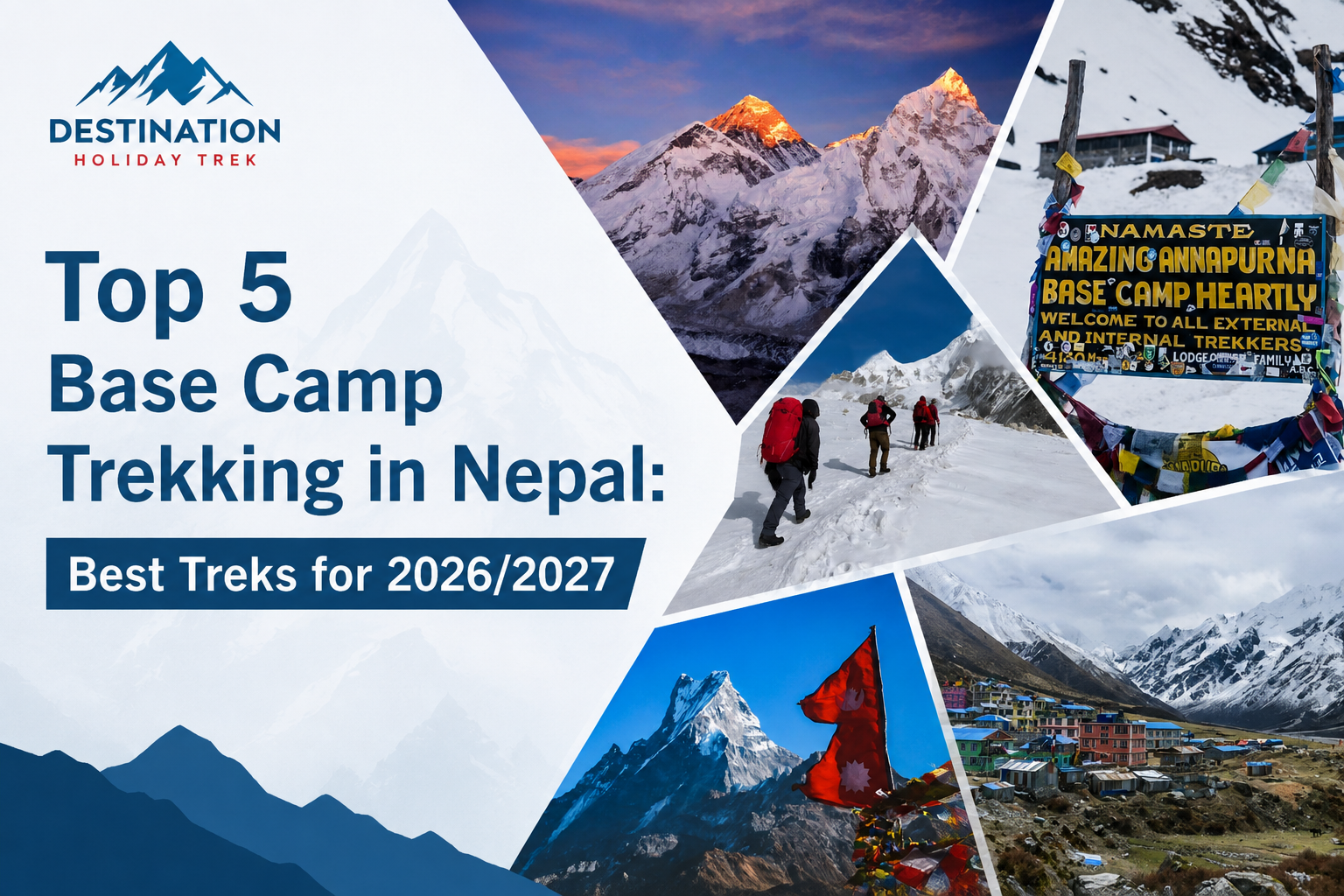
Table of Content
Introduction
Nepal is home to eight of the world’s ten highest mountains, and trekking here means walking through valleys, forests, and high passes with some of the most dramatic mountain scenery on earth close at hand. This is why base camp trekking in Nepal has become one of the most searched and most requested trekking styles among international travelers, offering a genuine taste of the high Himalaya without requiring mountaineering skills.
Trekkers can choose from many types of routes, from short valley walks near Kathmandu or Pokhara to multi week circuits around 8,000 metre peaks. This guide covers five of the most popular options: the Everest Base Camp Trek, Annapurna Base Camp Trek, Manaslu Circuit Trek, Mardi Himal Trek, and Langtang Valley Trek. Not all five are technically “base camp” treks in the strict sense, and we explain those differences honestly below, so you can understand each route clearly enough to decide which trek fits your time, fitness level, budget, and interests.
What Is Base Camp Trekking in Nepal?
Base camp trekking means walking marked trails to the starting point of a mountaineering expedition, or to a high viewpoint near a major peak, without climbing the mountain itself. It is trekking, not mountaineering, so none of the five treks in this article require ropes, crampons, or climbing experience. What they do require is reasonable fitness, proper acclimatization, and the right clothing for cold, high altitude conditions. A typical day involves four to seven hours of walking, overnight stays in teahouses (small family run lodges) rather than tents, and meals prepared by the lodge owners, with rest days built into the itinerary so the body can adjust to lower oxygen levels.
It is also worth being clear about terminology. Everest Base Camp and Annapurna Base Camp are traditional base camp treks ending at the actual base camp used by expeditions. Manaslu Circuit is primarily a circuit trek around the mountain rather than a direct base camp trail. Mardi Himal ends at a high camp and viewpoint near its base camp area, not a full mountaineering base camp. Langtang Valley is a high altitude valley trek and not a conventional base camp trek at all. Since April 2023, Nepal has also required foreign trekkers on most popular routes, including all five treks here, to travel with a licensed guide arranged through a registered agency.
Top 5 Base Camp Treks in Nepal at a Glance
| Trek | Region | Approx. Duration | Highest Point | Difficulty | Best For |
| Everest Base Camp Trek | Khumbu (Everest region) | 12 to 14 days | Kala Patthar, about 5,545 m | Challenging | Iconic Everest views, experienced first timers |
| Annapurna Base Camp Trek | Annapurna region | 7 to 10 days | ABC, about 4,130 m | Moderate | First time trekkers, shorter high altitude trek |
| Manaslu Circuit Trek | Gorkha/Manaslu region | 14 to 16 days | Larkya La Pass, about 5,106 m | Challenging | Remote, less crowded trekking |
| Mardi Himal Trek | Annapurna foothills | 5 to 7 days (10 day itineraries available) | Mardi Himal viewpoint, about 4,500 m | Moderate | Short Himalayan trek, close up Machhapuchhre views |
| Langtang Valley Trek | Langtang region | 7 to 10 days | Tserko Ri, about 4,984 m | Moderate | Trekkers with limited time near Kathmandu |
Durations vary depending on the operator, starting point, and whether extra acclimatization or side trips are included.
1. Everest Base Camp Trek
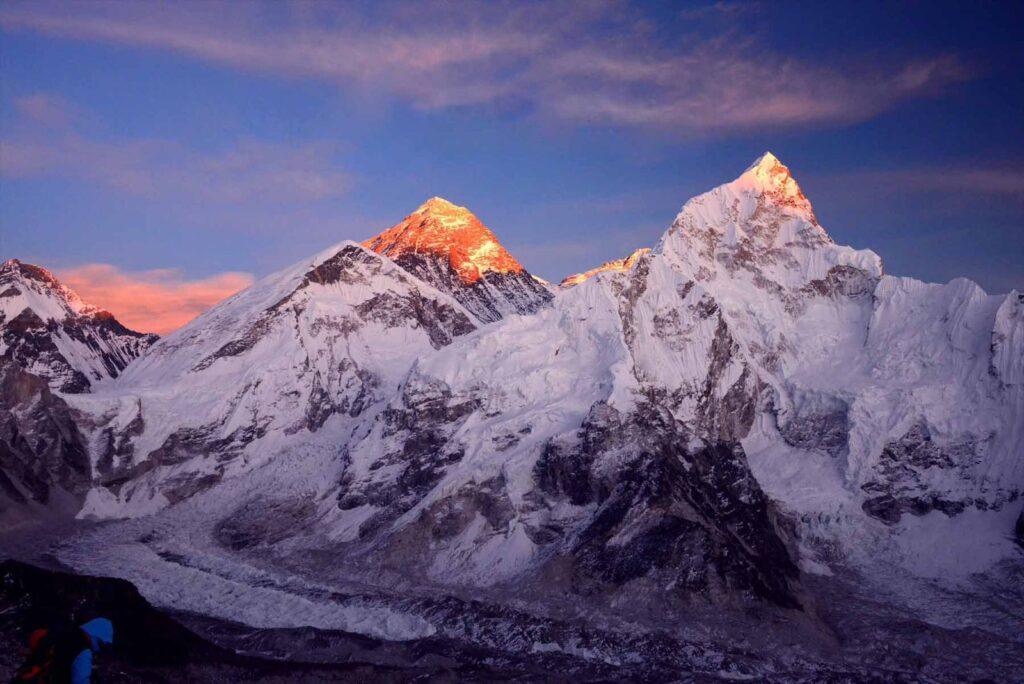
The Everest Base Camp Trek is Nepal’s most recognized trekking route, and for good reason: it leads directly into the Khumbu region, home to Mount Everest, Sherpa culture, and some of the highest trekking trails in the world. Most journeys begin with a short mountain flight from Kathmandu to Lukla, followed by about eight to nine days of walking to reach Everest Base Camp and Kala Patthar. Our Everest Base Camp Trek itinerary is built around a realistic acclimatization schedule rather than the fastest possible pace.
Everest Base Camp Trek Highlights
- Flight from Kathmandu to Lukla, the starting point of the trek
- Namche Bazaar, the main trading hub of the Khumbu
- Tengboche, home to one of the region’s most important monasteries
- Dingboche, Lobuche, and Gorak Shep on the approach to base camp
- Everest Base Camp itself, at the foot of the Khumbu Icefall
- Kala Patthar, a viewpoint with a clear, unobstructed view of Everest’s summit
- Sagarmatha National Park, a UNESCO World Heritage Site
- Sherpa villages, prayer flags, and monasteries throughout the trail
Everest Base Camp Trek Difficulty and Altitude
This is a genuinely demanding trek. Everest Base Camp sits at roughly 5,364 m, and Kala Patthar reaches around 5,545 m. Daily walking is typically five to seven hours, with steep ascents and descents and thinner air at higher elevations. Good baseline fitness, prior hiking experience, and a properly built in acclimatization schedule are all important. Altitude, not distance, is what makes this trek harder than routes with similar walking hours at lower elevations.
Best Time for Everest Base Camp Trek
Spring (March to May) and autumn (September to November) offer the clearest mountain views and the most stable weather, and are the busiest seasons on the trail. Winter is colder and quieter, with a real chance of snow at higher elevations, while the monsoon months bring rain, leeches at lower altitudes, and frequent cloud cover that can obscure mountain views.
Everest Base Camp Trek Cost and Permits
Trekkers need a Sagarmatha National Park entry permit and a Khumbu Pasang Lhamu Rural Municipality entry permit, along with an agency issued TIMS card and a licensed guide, which is now mandatory on this route. Costs vary widely depending on group size, season, and the level of service included, and typically cover permits, guide and porter fees, teahouse accommodation, and most meals during the trek. Flights to and from Lukla and any Kathmandu hotel nights are usually priced separately.
Who Should Choose Everest Base Camp Trek?
- Trekkers who want to see Everest, Nuptse, Lhotse, and Ama Dablam up close
- Travelers with around two weeks available for the full itinerary
- Trekkers comfortable with a physically demanding, high altitude trek
- Those who have done some hiking beforehand or are reasonably fit
- Travelers who want the most iconic and widely recognized trekking route in Nepal
2. Annapurna Base Camp Trek
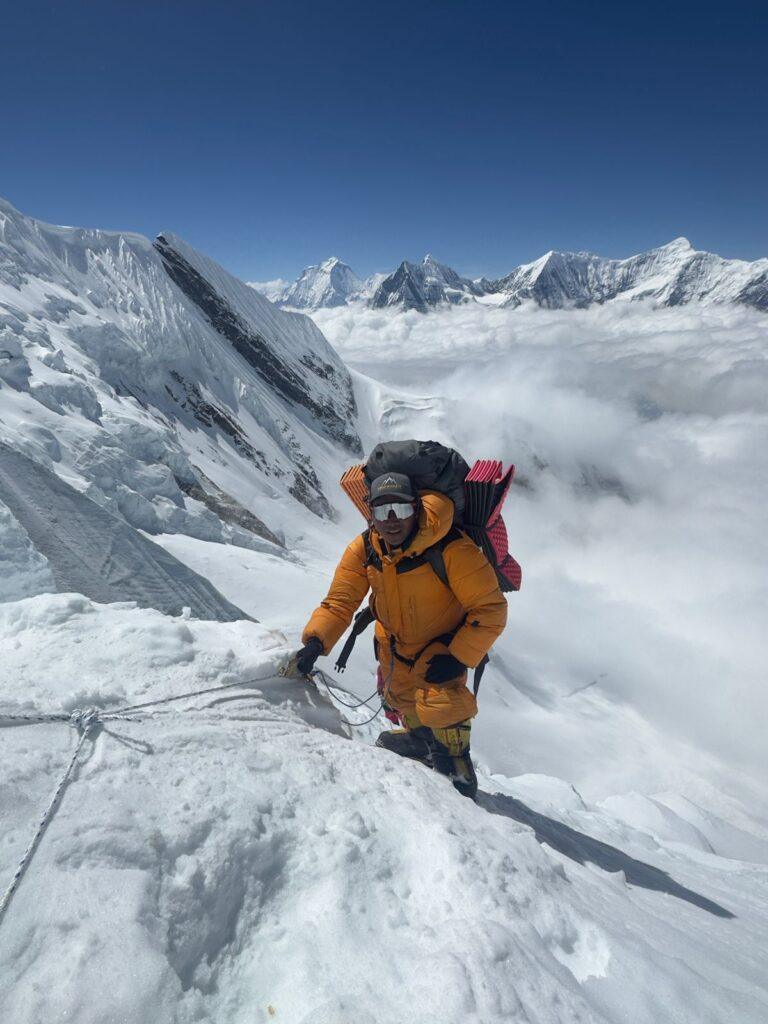
The Annapurna Base Camp Trek, often shortened to ABC Trek, takes trekkers into the Annapurna Sanctuary, a natural amphitheater of mountains surrounded by the Annapurna range and Machhapuchhre (Fishtail). It starts from Pokhara, Nepal’s lake city, and is generally shorter and less demanding than Everest Base Camp, which makes it one of the most popular introductory high altitude treks in the country. Our Annapurna Base Camp Trek itinerary can be adjusted for trekkers who want a slower pace with extra acclimatization.
Annapurna Base Camp Trek Highlights
- Drive from Pokhara to the trailhead through farmland and hills
- Gurung villages and terraced farmland along the lower trail
- Rhododendron and bamboo forest sections
- Chhomrong, the last large village before the Sanctuary
- Machhapuchhre Base Camp on the approach to ABC
- Annapurna Base Camp itself, surrounded by the Annapurna massif on nearly all sides
- Close views of Machhapuchhre (Fishtail) throughout the upper trail
Annapurna Base Camp Trek Difficulty and Altitude
Annapurna Base Camp sits at around 4,130 m, considerably lower than Everest Base Camp, and the trek is generally rated moderate rather than challenging. Trails involve a lot of stone steps and up and down walking through the valley, so it still requires decent fitness, but the shorter overall duration and lower maximum altitude make it more accessible to first time high altitude trekkers.
Best Time for Annapurna Base Camp
Spring and autumn again offer the best combination of visibility and trail conditions. Spring adds blooming rhododendron forests along the lower trail sections. Winter is possible but cold at the Sanctuary, and monsoon season brings rain and reduced visibility, though the lower elevation means it is somewhat more monsoon tolerant than higher routes like Everest Base Camp.
Annapurna Base Camp Trek Cost and Permits
This route requires an Annapurna Conservation Area Permit (ACAP) and an agency issued TIMS card, along with a licensed trekking guide. Costs are generally lower than Everest Base Camp because of the shorter duration and lack of internal flights, though prices still depend on group size, season, and service level.
Who Should Choose Annapurna Base Camp?
- First time trekkers looking for an accessible high altitude experience
- Travelers with limited time who still want a genuine Himalayan trek
- Those who want to avoid domestic flights and fly directly into Pokhara instead
- Trekkers interested in Gurung culture and forested trail scenery
- Anyone who wants strong mountain views without a two week commitment
3. Manaslu Circuit Trek
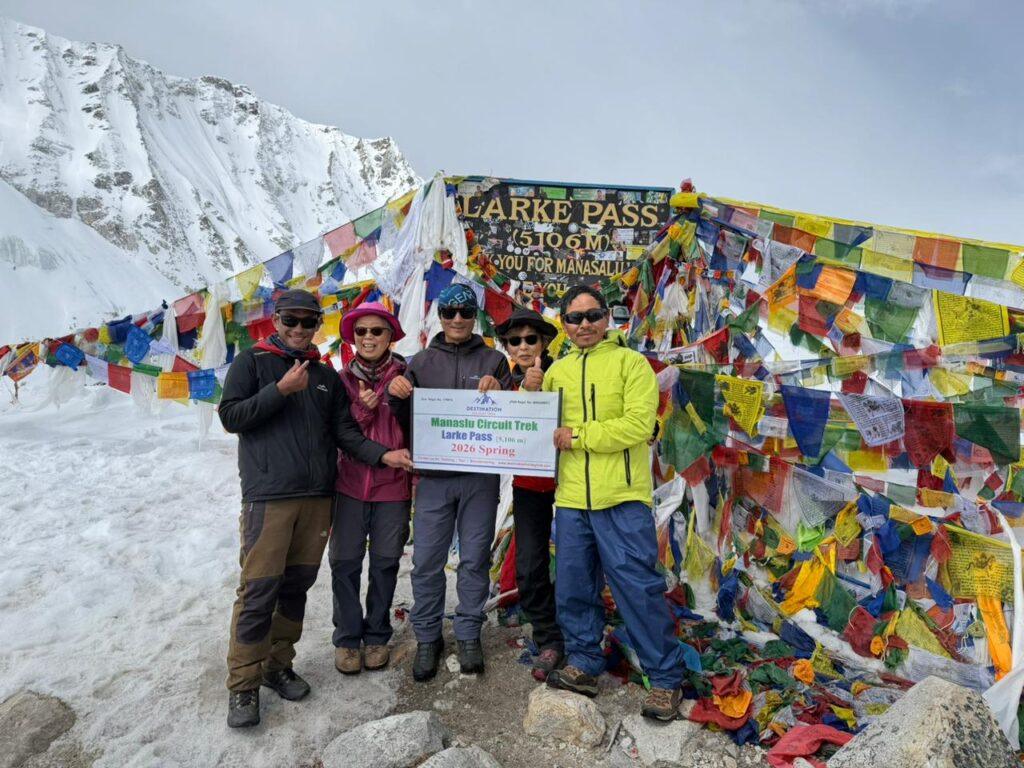
The Manaslu Circuit Trek is best understood as a circuit trek around Mount Manaslu (8,163 m), the eighth highest mountain in the world, rather than a direct base camp trek. The trail circles the mountain rather than ending at its base, crossing the high Larkya La Pass to link the Budhi Gandaki and Marsyangdi valleys. A separate route does lead to Manaslu Base Camp itself, but this is typically used by climbing expeditions and is not part of the standard teahouse circuit most trekkers walk.
Why Trek the Manaslu Circuit?
Manaslu offers a remote, less crowded alternative to Everest and Annapurna, with a similar sense of scale but noticeably fewer trekkers on the trail. Because the region only opened to trekking in the 1990s and remains a restricted area, the villages along the route have kept much of their traditional character.
Manaslu Circuit Route and Highlights
- Trailhead near Soti Khola or Machha Khola, followed by the Budhi Gandaki valley
- Namrung, marking the transition into the upper, Tibetan influenced part of the region
- Samagaon and Samdo, both shaped by Tibetan Buddhist culture
- Monasteries and chortens lining the trail in the upper valley
- Close views of Manaslu itself before the climb toward the pass
- Larkya La Pass, the high point of the trek and the route’s most demanding day
- Continuation into the Annapurna region near Dharapani after the pass
Larkya La Pass and Altitude
The high point of the trek is Larkya La Pass, at approximately 5,106 m, usually crossed early in the morning before winds pick up. The pass connects the Manaslu region to the Annapurna Circuit trail near Dharapani. This is a long, cold, physically demanding day and the most serious altitude challenge on the route.
Manaslu Circuit Trek Difficulty
Manaslu Circuit is rated as a challenging trek, comparable in difficulty to Everest Base Camp, due to its long duration, high pass, and remote terrain with fewer facilities than the more developed Everest and Annapurna trails. Good acclimatization planning is essential, particularly in the days leading up to the Larkya La crossing.
Manaslu Circuit Permits and Guide Requirements
Manaslu is a restricted area, which means trekkers need a Manaslu Restricted Area Permit in addition to the Manaslu Conservation Area Permit and Annapurna Conservation Area Permit (for the section near the pass). Restricted area rules require trekkers to travel with a licensed guide and, in most cases, as part of a group of at least two trekkers arranged through a registered agency, a stricter requirement than the general guide rule that applies elsewhere in Nepal.
Who Should Choose the Manaslu Circuit?
- Experienced trekkers or fit first timers looking for a real challenge
- Travelers who want a remote, less crowded alternative to Everest and Annapurna
- Those interested in Tibetan influenced culture and traditional villages
- Trekkers who have two and a half to three weeks available
- Anyone comfortable with restricted area rules and group travel requirements
Read our Manaslu Circuit Trek itinerary for a full day by day breakdown, or see our Manaslu Circuit Trek Guide for more detail on permits and preparation.
4. Mardi Himal Trek
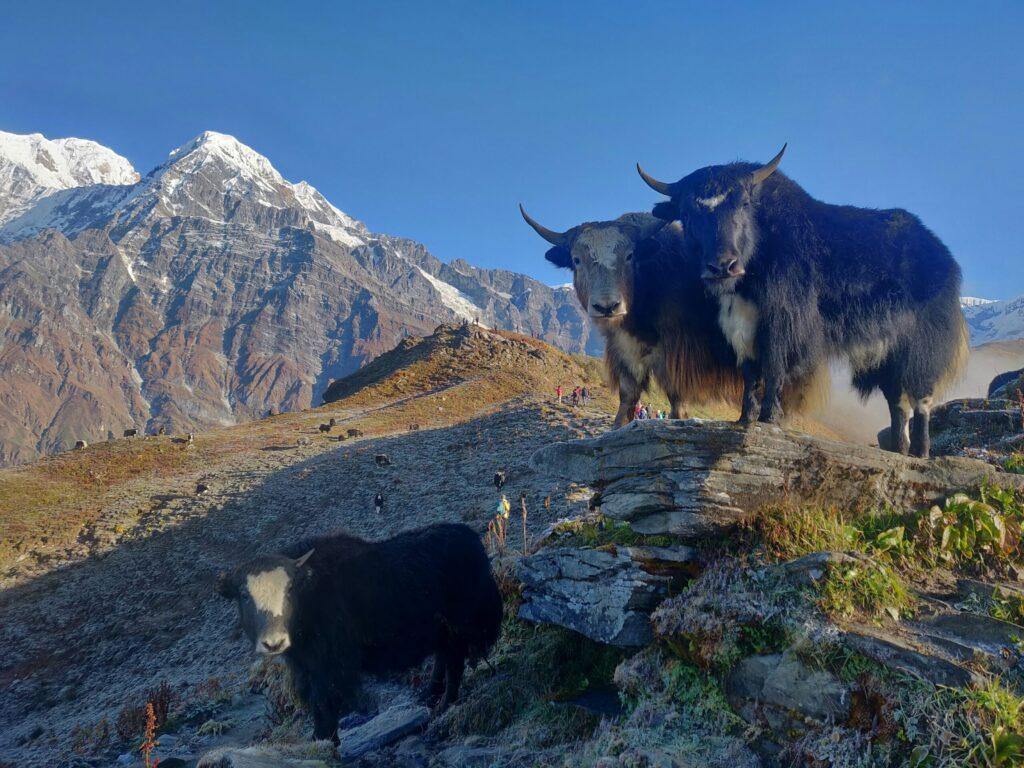
Mardi Himal Trek is a shorter Himalayan trek near Pokhara that has grown quickly in popularity because it offers close mountain views in about a week, making it a practical option for travelers with limited holiday time. It leads to a high camp and viewpoint near Mardi Himal’s base camp area rather than a full mountaineering base camp, so it is best described as a Mardi Himal Base Camp and viewpoint trek rather than a traditional base camp trek.
What Makes Mardi Himal Trek Special?
The route stays relatively quiet compared to the main Annapurna trails, passing through forest for much of the lower section before opening onto ridge trails with close views of Machhapuchhre and the southern Annapurna peaks. It is one of the shortest ways to reach genuinely high altitude Himalayan scenery from Pokhara.
Mardi Himal Route and Highlights
- Drive from Pokhara to the trailhead
- Rhododendron and oak forest on the lower section of the trail
- Forest Camp and Low Camp as the trail gains altitude
- High Camp, above the treeline with open mountain views
- Mardi Himal viewpoint and base camp area, the highest point of the trek
- Close up views of Machhapuchhre and Annapurna South throughout the upper trail
Mardi Himal Trek Difficulty and Altitude
Mardi Himal is a moderate trek. The highest point on most itineraries is around 4,500 m at the upper viewpoint, and the trail involves steady, sometimes steep, walking rather than technical terrain. It is more demanding than a simple hill walk but generally more manageable than Everest or Manaslu because of its shorter duration.
Best Time for Mardi Himal Trek
Spring and autumn again provide the clearest views and driest trails. Because much of the lower trek passes through forest, it can also be walked in slightly less settled weather than fully exposed routes, though visibility at High Camp and the viewpoint still depends heavily on clear skies.
Who Should Choose Mardi Himal?
- Travelers with around a week available
- First time trekkers who want a taste of high altitude scenery quickly
- Anyone combining a trek with other activities in Pokhara
- Trekkers who prefer a quieter trail than the main Annapurna routes
- Those who want strong Machhapuchhre and Annapurna views without a long commitment
See our Mardi Himal Trek itinerary for a full schedule.
5. Langtang Valley Trek
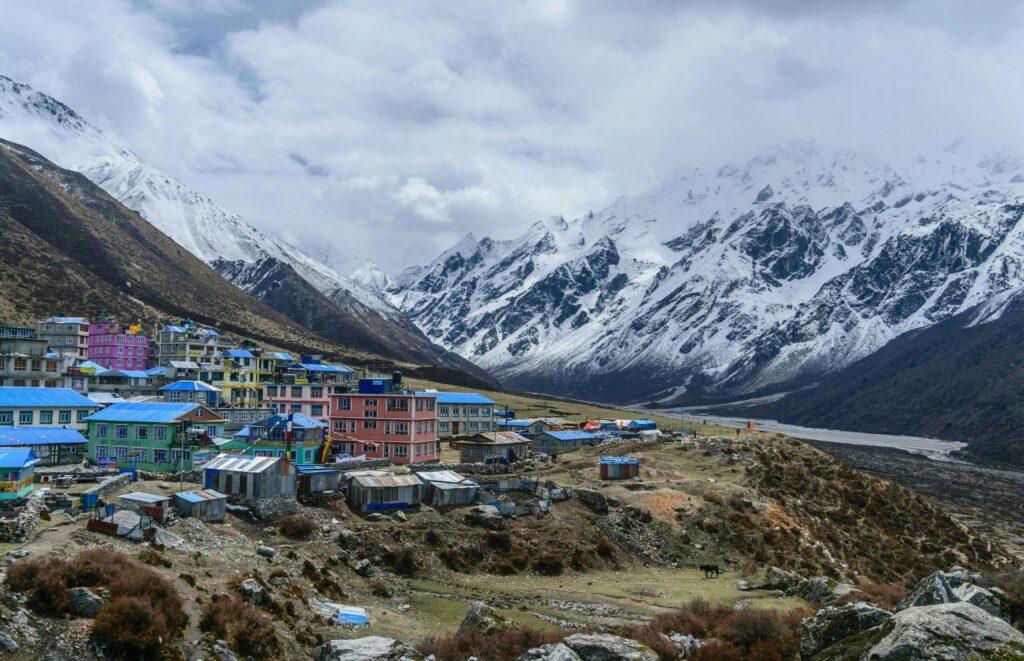
Langtang Valley Trek is primarily a high altitude valley trek rather than a conventional base camp trek. It does not end at a mountaineering base camp; instead, it follows the Langtang valley to Kyanjin Gompa and the high viewpoints above it. Its main appeal is that it is one of the closest major trekking regions to Kathmandu, making it practical for travelers with less time to spare.
Why Choose the Langtang Valley Trek?
Because the trailhead at Syabrubesi is only a drive of several hours from Kathmandu, Langtang avoids the need for a separate domestic flight, which can simplify logistics and reduce the risk of weather related delays. The valley also has a strong Tamang cultural identity, distinct from the Sherpa culture of the Everest region.
Langtang Valley Route and Highlights
- Drive from Kathmandu to Syabrubesi, the starting point of the trek
- Forest trail near Lama Hotel on the lower section
- Langtang Village, opening into the wider valley
- Kyanjin Gompa, with its monastery and local cheese factory
- Optional side trip to Kyanjin Ri, a high viewpoint above Kyanjin Gompa
- Optional side trip to Tserko Ri, the highest viewpoint on the route
- Langtang National Park, which the entire route passes through
Langtang Valley Trek Difficulty and Altitude
Langtang is a moderate trek. Kyanjin Gompa itself sits at around 3,870 m, while the optional viewpoints of Kyanjin Ri and Tserko Ri reach roughly 4,773 m and 4,984 m. The trail involves steady walking with some steep sections, and altitude gain over the trek is significant enough that acclimatization still matters, even though the trek is shorter than Everest or Manaslu.
Best Time for Langtang Valley Trek
Spring and autumn are the most popular seasons, offering clear mountain views and stable trails. Winter brings cold temperatures and possible snow at Kyanjin Gompa and above, while monsoon season brings rain and cloud cover that can limit visibility on the higher side trips.
Who Should Choose Langtang Valley?
- Trekkers with limited time who are based in or flying into Kathmandu
- Travelers who want a genuine Himalayan trek without a domestic flight
- Those interested in Tamang culture and monastery villages
- Trekkers who want strong mountain views without the length of Everest or Manaslu
- Anyone looking for a moderate, accessible introduction to high altitude trekking
Our Langtang Valley Trek itinerary includes time in Kyanjin Gompa for the optional viewpoint hikes.
Comparison of the Top 5 Treks
| Trek | Duration | Difficulty | Highest Altitude | Crowd Level | Best For |
| Everest Base Camp | 12 to 14 days | Challenging | About 5,545 m | High | Iconic views, experienced trekkers |
| Annapurna Base Camp | 7 to 10 days | Moderate | About 4,130 m | High | Beginners, shorter high altitude trek |
| Manaslu Circuit | 14 to 16 days | Challenging | About 5,106 m | Low | Remote experience, experienced trekkers |
| Mardi Himal | 5 to 7 days | Moderate | About 4,500 m | Moderate | Short holidays, first time trekkers |
| Langtang Valley | 7 to 10 days | Moderate | About 4,984 m | Moderate | Short holidays, trekkers near Kathmandu |
No single trek is “the best” for every traveler. Each route has a different balance of altitude, duration, culture, and crowd level, so the right choice depends on what matters most to you.
Which Trek Is Best for You?
- Best Trek for First Time Trekkers: Annapurna Base Camp or Mardi Himal, since both offer high altitude scenery with a moderate difficulty level and shorter overall duration.
- Best Trek for Everest Mountain Views: Everest Base Camp Trek, for its direct views of Everest, Nuptse, Lhotse, and Ama Dablam from the trail and from Kala Patthar.
- Best Trek for a Short Holiday: Mardi Himal Trek, which can typically be completed in under a week including travel days from Pokhara.
- Best Trek for a Remote Experience: Manaslu Circuit Trek, thanks to its restricted area status, lower trekker numbers, and traditional villages.
- Best Trek for Cultural Experience: Manaslu Circuit and Langtang Valley both offer strong, distinct cultural experiences: Tibetan influenced villages on Manaslu and Tamang culture in Langtang.
- Best Trek for Experienced Trekkers: Everest Base Camp or Manaslu Circuit, given their higher altitudes, longer duration, and more demanding terrain.
- Best Trek Near Kathmandu: Langtang Valley Trek, since it starts with a direct drive from Kathmandu rather than a domestic flight.
Best Time for Base Camp Trekking in Nepal
Spring, March to May
Temperatures rise gradually as the season progresses, trails are generally dry, and rhododendron forests bloom at lower elevations on routes like Annapurna Base Camp and Mardi Himal. This is one of the two peak seasons, so popular routes and teahouses can be busy, especially in April and May.
Monsoon, June to August
Rain is frequent, especially in the afternoons, and cloud cover often blocks mountain views. Trails can be muddy and leeches are common at lower elevations. Some rain shadow areas, like parts of the Manaslu and upper Annapurna region, receive less rainfall than lower valley trails, but overall this is the least popular season for these five treks.
Autumn, September to November
This is generally considered the most reliable season for clear skies and stable weather across all five treks, which is why it is also the busiest period on the trails, particularly October. Teahouses can fill up quickly on popular routes without advance booking.
Winter, December to February
Days are often clear and cold, with far fewer trekkers on the trail. High passes such as Larkya La can be affected by snow and may occasionally be impassable, and some higher teahouses close during the coldest months. Winter can suit travelers who prioritize quiet trails over guaranteed pass crossings.
No single month works best for every trek or every traveler. Trail conditions, crowd levels, and views vary by route, and personal preference for cold, crowds, or rain tolerance should factor into the decision as much as the calendar.
Trekking Permits and TIMS in Nepal
Permit requirements vary by trekking region, so it is important to check the rules for the specific route you plan to walk rather than assuming one permit covers everything.
- TIMS Card (Trekkers’ Information Management System): required for trekking in Nepal. Since the Revised TIMS Provision of March 2023, TIMS cards for most popular routes must be issued through a registered trekking agency, and Nepal Tourism Board rules require trekkers on these routes to be accompanied by a licensed guide.
- National Park entry permits: required for treks inside national parks, such as Sagarmatha National Park (Everest) and Langtang National Park.
- Conservation Area permits: required for treks inside conservation areas, such as the Annapurna Conservation Area Permit (ACAP) for both Annapurna Base Camp and Mardi Himal, and the Manaslu Conservation Area Permit.
- Restricted area permits: required for treks in areas with additional government restrictions, such as the Manaslu Restricted Area Permit, which comes with stricter rules including mandatory group travel with a licensed guide.
- Guide requirements: a licensed guide arranged through a registered trekking agency is currently required on Everest Base Camp, Manaslu Circuit, Mardi Himal, and Langtang routes, among others listed by the Nepal Tourism Board.
Because these rules have changed in recent years and can be updated again, always confirm current requirements with the Nepal Tourism Board, Trekking Permit page or through the NTNC E-Permit system rather than relying on older blog posts.
Accommodation and Food During the Trek
All five treks follow the teahouse trekking model: small, family run lodges rather than tents. Rooms are simple, usually twin bed with shared bathrooms higher up the trail, though private bathrooms are more common at lower elevations. Dining rooms are heated in the evening and double as the main gathering space.
Charging and Wi-Fi are generally available for a small fee, but both become slower and less reliable at higher elevations, and can be unavailable on remote sections of Manaslu. Hot showers are usually available for a fee too, though sometimes only as bucket showers higher up.
Food is a mix of Nepali dishes like dal bhat, noodle and rice dishes, soups, and simple Western options such as pasta. Bottled and boiled water are both sold on the trail, and many trekkers also carry purification tablets or a filter. As a rule, facilities get more basic the further you are from a road, so expect fewer comforts on Manaslu than on the more developed Everest and Annapurna trails.
How Difficult Is Base Camp Trekking in Nepal?
Trekking difficulty depends on several factors working together, not distance alone:
- Daily walking hours: most days involve four to seven hours of walking
- Elevation gain: steep, sustained climbs and descents are common, particularly in the Everest and Manaslu regions
- Altitude: reduced oxygen makes the same physical effort feel harder, regardless of fitness level
- Fitness: general cardiovascular fitness and some prior hiking experience help, though none of these treks require technical climbing skills
- Acclimatization: built in rest days let the body adjust and reduce the risk of altitude sickness
- Mental preparation: long days, changing weather, and basic facilities at altitude all call for some mental resilience, especially on longer treks
A short trek with a high final altitude, like Mardi Himal, can still feel demanding, while a longer trek at lower altitude, like Annapurna Base Camp, may be less taxing overall. It is this combination of factors, not distance alone, that determines how hard a trek feels.
Altitude Sickness and Trekking Safety
Altitude sickness, or Acute Mountain Sickness (AMS), can affect trekkers above roughly 2,500 m regardless of age or fitness. Common symptoms include headache, nausea, dizziness, loss of appetite, and poor sleep. Mild symptoms are common and often ease with rest and slower ascent, but they should never be ignored.
Proper acclimatization, meaning rest days and avoiding excessive elevation gain in a single day, is the best way to reduce risk. If symptoms worsen instead of improving, the standard response is to descend rather than continue higher, and licensed guides are trained to recognize this and make the call.
Travel insurance covering high altitude trekking and emergency evacuation, including helicopter rescue, is strongly recommended for all five treks. This article is general information only. For personal medical concerns, including pre existing conditions, consult a qualified doctor before you travel.
What to Pack for Base Camp Trekking in Nepal
- Trekking boots (broken in before the trip)
- Trekking trousers and moisture wicking base layers
- Warm mid layers (fleece or wool)
- A down jacket for high altitude evenings
- A waterproof, windproof outer jacket
- Warm gloves and a warm hat
- Sunglasses with strong UV protection
- Sunscreen
- Trekking poles
- A reusable water bottle
- Water purification tablets or a filter
- A headlamp with spare batteries
- Basic first aid supplies, including blister care
- Any personal medication you regularly need
- A sleeping bag rated for cold temperatures (check the minimum expected temperature for your route and season)
- A daypack for daily walking and, if using a porter, a separate duffel bag
- Passport, permit documents, and travel insurance details
This list covers the essentials rather than every possible item. Your trekking agency can advise on specifics based on your chosen route and season.
Why Trek with Destination Holiday Trek?
- Sherpa family run trekking company based in Kathmandu
- Established in 2017, with years of experience across Nepal’s major trekking regions
- Government licensed guides with direct local Himalayan knowledge
- Safety focused approach, including realistic acclimatization schedules
- Experience across both trekking and expedition style journeys
- Customized trekking options for different timeframes, fitness levels, and interests
Final Thoughts
Base camp trekking in Nepal covers a genuinely wide range of experiences, from the iconic high altitude trail to Everest Base Camp, to the quieter, culturally rich circuit around Manaslu, to shorter options like Mardi Himal and Langtang Valley for travelers with less time. The right choice comes down to how much time you have, your fitness level, your budget, and what kind of scenery and culture interest you most, and no single route is the right answer for every traveler.
Whichever trek you choose, proper planning around permits, acclimatization, and season will make a real difference to how much you enjoy it. If you are ready to start planning, get in touch with Destination Holiday Trek to talk through your options and build an itinerary that fits your time, fitness, and interests.
Frequently Asked Questions
1. What is the best base camp trek in Nepal?
There isn’t a single “best” trek for everyone. Everest Base Camp offers the most iconic views, Annapurna Base Camp is more accessible for beginners, and Manaslu, Mardi Himal, and Langtang each offer their own balance of remoteness, duration, and culture.
2. Which base camp trek is best for beginners?
Annapurna Base Camp and Mardi Himal are generally the most beginner friendly, thanks to their shorter duration and moderate difficulty rating.
3. What is the most popular trek in Nepal?
Everest Base Camp Trek is generally the most popular and most searched trekking route in Nepal, followed closely by Annapurna Base Camp.
4. How much does base camp trekking in Nepal cost?
Costs vary significantly based on trek length, group size, season, and service level, and typically include permits, guide and porter fees, teahouse accommodation, and most meals. Contact a registered trekking agency for an accurate quote based on your chosen route and dates.
5. What is the best time for trekking in Nepal?
Spring (March to May) and autumn (September to November) offer the most stable weather and clearest mountain views across all five treks, though each season has trade offs in crowd levels and trail conditions.
6. Do I need a guide for trekking in Nepal?
Yes. Since April 2023, foreign trekkers are required to trek with a licensed guide arranged through a registered trekking agency on most popular routes, including all five treks in this article.
7. Which trek is best for a short holiday?
Mardi Himal Trek is the shortest of the five, typically completed in under a week including travel from Pokhara.
8. Is Everest Base Camp harder than Annapurna Base Camp?
Yes, generally. Everest Base Camp reaches a higher altitude, takes longer, and involves more demanding terrain than Annapurna Base Camp.
9. Which trek is less crowded?
Manaslu Circuit is the least crowded of the five, largely due to its restricted area status and additional permit requirements.
10. What permits are required for trekking in Nepal?
Requirements vary by region but generally include a TIMS card, national park or conservation area permits, and, for restricted areas like Manaslu, an additional restricted area permit. Always confirm current rules with the Nepal Tourism Board before you travel.