

Manaslu Circuit Trek Reopens 2026: Latest Trail Update After the Flood
Introduction
Manaslu Circuit Trek reopens for the 2026 autumn season after a flash flood struck the Therang Khola near Namrung on September 6, 2026, damaging two bridges and prompting a three-day trail closure that ended once emergency repairs were completed. This article walks through exactly what happened, what has been fixed, and what you need to know if you’re planning a Manaslu Circuit Trek this season.
Manaslu Circuit Trek Flood 2026: Key Facts at a Glance
| Detail | Information |
| Flood date | September 6, 2026, around 3:30 a.m. |
| Location | Therang Khola, near Namrung, Chumnubri Rural Municipality Ward 4 |
| Suspension issued | September 6, 2026 by DAO Gorkha and MCAP |
| Trail reopened | September 9, 2026 |
| Nepal Tourism Board confirmation | September 11, 2026 |
| Casualties | None reported |
| Current trail status | Open, with a temporary wooden bridge in use at Namrung |
| Maximum elevation on route | Larkya La Pass, 5,106 meters |
| Guide requirement | Mandatory for all trekkers, including solo permit holders |
Is the Manaslu Circuit Trek Reopens Right Now
Yes. As of September 20, 2026, the full route, including the crossing at Namrung and the climb to Larkya La Pass at 5,106 meters, is open to trekkers. The Gorkha District Administration Office (DAO) lifted its suspension on September 9, 2026, and the Nepal Tourism Board added its own confirmation on September 11, 2026, after verifying the repaired sections.
What Caused the Closure
Early on the morning of September 6, 2026, at around 3:30 a.m. local time, a flash flood hit the Therang Khola near Namrung, inside Chumnubri Rural Municipality Ward 4. According to Assistant Chief District Officer Netra Prasad Sharma, debris had built up and temporarily blocked the stream near its source. When that natural blockage gave way, the trapped water surged downstream all at once.
The flood caused real damage. An iron bridge connecting Chumnubri wards 2 and 4 was destroyed, along with a suspension bridge over the Budhi Gandaki River on the approach to Namrung forest. Two micro hydropower plants were knocked out, cutting local electricity and phone service, and four homes in the area were swept away. No one was hurt. Residents moved to higher ground before the water reached the village, a detail confirmed by both the district police office and the DAO.
It’s worth noting this flood is unrelated to the Rasuwa flood that hit the Bhote Koshi and Trishuli river system on August 26, 2026, which affected the Langtang and Tamang Heritage routes further north. The two events happened on separate river systems roughly two weeks apart.
How the Trail Was Repaired So Quickly
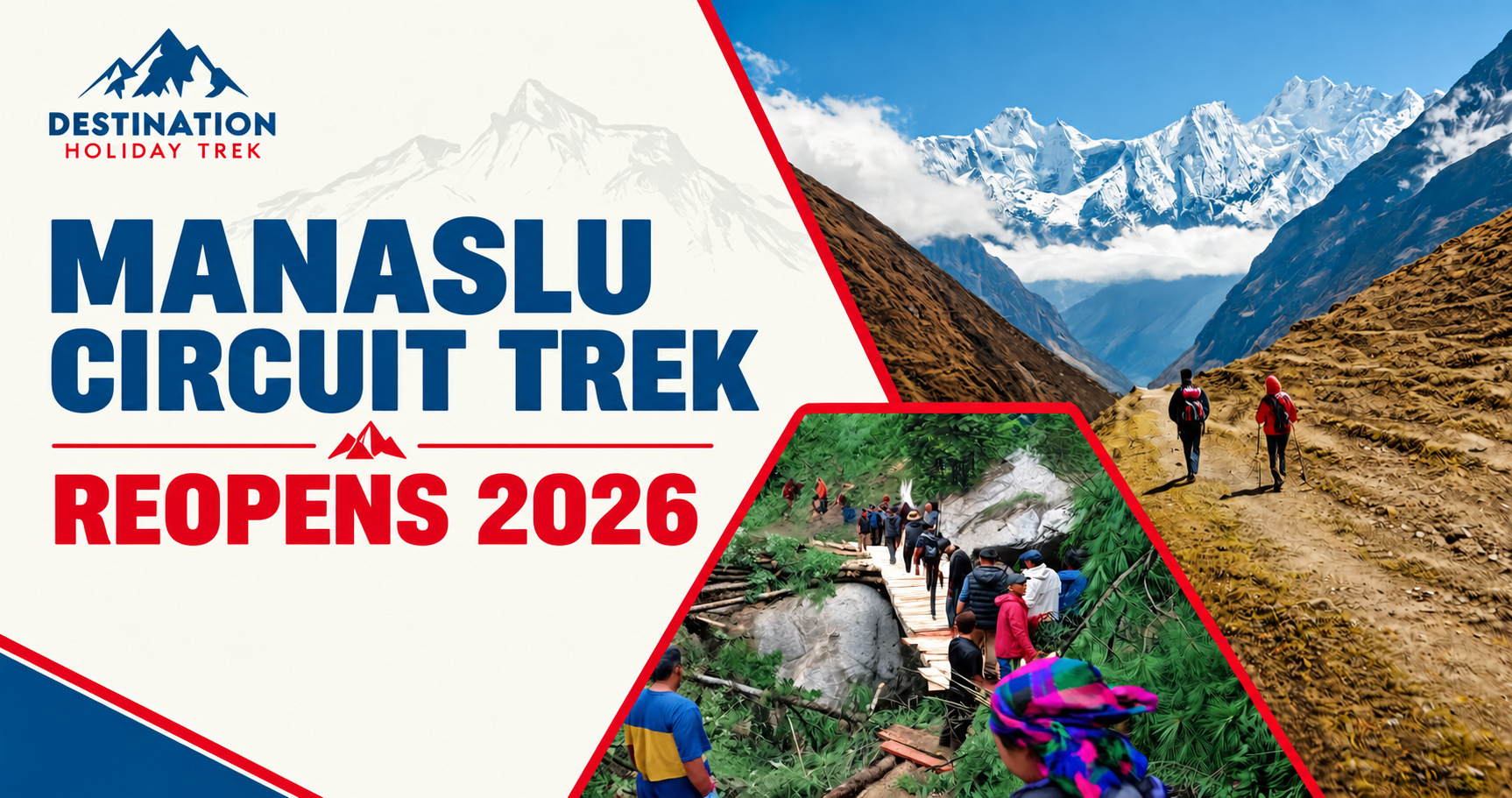
Once the suspension was announced, residents of Chumnubri Rural Municipality moved fast. Led by Ward 4 Chair Pema Gyalpo Lama and working alongside the Manaslu Conservation Area Project (MCAP), they built a temporary wooden bridge across the damaged section and cleared an alternate path around the worst hit ground, all within about two days.
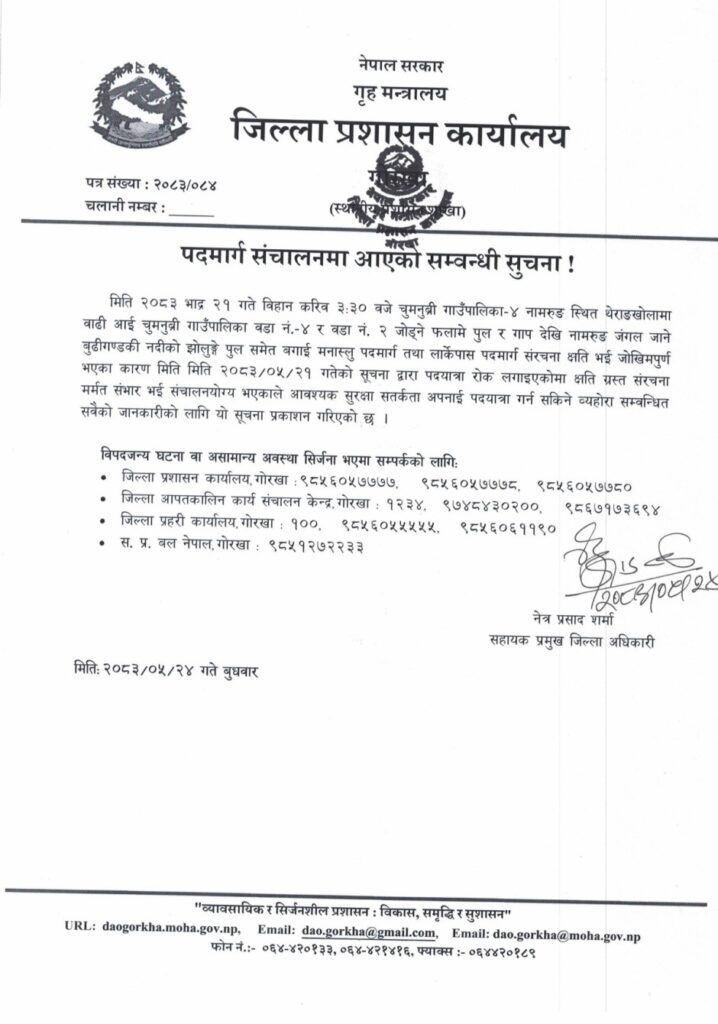
That community effort is the reason the DAO could issue a reopening notice so soon. The government notice, dated September 9, 2026, confirmed the damaged structures had been repaired and made passable again, and it asked trekkers to apply normal safety caution while crossing. If you’d like to read the source document yourself, the full notice is posted on the official DAO Gorkha portal.
Timeline of Events
| Date | What Happened |
| September 6, 2026 | Flash flood destroys two bridges near Namrung |
| September 6, 2026 | DAO and MCAP jointly suspend Manaslu and Larke Pass trekking |
| September 7, 2026 | Nepal Police advises trekkers to postpone travel |
| September 9, 2026 | Locals complete temporary wooden bridge and alternate trail |
| September 9, 2026 | DAO Gorkha lifts the suspension |
| September 11, 2026 | Nepal Tourism Board confirms the repaired trail is safe |
| September 18, 2026 | 4G mobile coverage extends to Samagaon; road access extended to Machha Khola |
Can Tourists Trek Manaslu Right Now?
Yes, tourists can trek the Manaslu Circuit right now, and the route through Namrung, Samagaon, and over Larkya La is functioning normally for anyone with the correct permits and a licensed guide. That said, “open” does not mean the situation is identical to a normal season. The wooden crossing at Namrung is a temporary fix rather than a permanent structure, so trekkers passing through that section should expect a brief, controlled crossing rather than a casual stroll across a solid suspension bridge.
Most trekking agencies are running trips as scheduled, and lodges along the route have largely returned to normal service. If your departure date is close, the simplest way to trek with confidence is to get a same week status check from your agency rather than relying on general news coverage, since local conditions near a single river crossing can shift faster than broader reporting.
What Should Trekkers Do Before Planning Manaslu Circuit Trek in 2026?
Before locking in dates, a few checks will save you a lot of stress later.
- Confirm the current status of the Namrung crossing directly with a TAAN registered agency rather than relying on older articles, since bridge conditions can change again if the region sees heavy rain.
- Book your Restricted Area Permit, MCAP, and ACAP (if exiting via Dharapani) through a registered agency well ahead of your trip, since these cannot be filed independently at the immigration office.
- Arrange a licensed guide, which remains mandatory even under the new solo permit rule introduced in March 2026.
- Buy travel insurance that specifically covers high altitude trekking and helicopter evacuation, and check how the policy treats route disruptions or itinerary changes caused by weather events.
- Build one or two spare days into your schedule so a single day of bad weather near Namrung or Larkya La doesn’t derail your whole trip.
- Pack for wet trail conditions, including a dry bag for documents and electronics, given that some sections may still be muddy from recent rain and flood cleanup.
Current Trail Conditions Section by Section
Because conditions vary along the 177 kilometer route, here’s where things stand as of late September 2026.
- Soti Khola to Jagat remains fully open and passable, running through the lower forested part of the valley with no reported damage.
- Jagat to Namrung is open but needs a bit more attention in wet weather, since this stretch runs through the narrower Budhi Gandaki gorge.
- Namrung itself is the section to watch closely. This is where the temporary wooden bridge and the alternate trail are in use. Guides are advising trekkers not to bunch up on the bridge or stop in the middle for photos, and never to cross if the river is visibly rising.
- Namrung to Samagaon is open and trekkers are moving through normally.
- Larkya La Pass is part of the open route, though weather at that altitude changes quickly, so always confirm conditions with your guide before the final push over the pass.
If you want a full day by day breakdown of this route, our Manaslu Circuit Trek itinerary page covers pacing options from ten days up to eighteen with the Tsum Valley extension.
Permit Rules for 2026, Including the Solo Trekker Change
There’s a meaningful update here for anyone planning to travel alone. Until March 22, 2026, the Manaslu Restricted Area Permit required a minimum of two trekkers on a single application. That requirement has been removed. A solo trekker can now hold a Restricted Area Permit in their own name.
That said, solo does not mean independent. Two rules still apply. A licensed Nepali guide must accompany you for the entire restricted section, and your permit still has to be arranged through a TAAN registered trekking agency rather than filed directly with immigration. One licensed guide can lead up to seven trekkers, so if you’re traveling by yourself you’ll simply have that guide to yourself. If you’re finishing the circuit by exiting through Dharapani, you’ll also need an ACAP permit, since that stretch enters the Annapurna Conservation Area.
For help sorting out permits or joining a scheduled group departure to reduce costs, you can reach out through our contact page and our team will walk you through the paperwork.
Best Time to Trek Manaslu
| Season | Why It Works |
| October | Clear skies and stable weather, the most popular window |
| November | Cool, clear conditions with strong mountain visibility |
| April | Warm temperatures and spring scenery starting to bloom |
| Early May | Comfortable daytime temperatures and good views |
| Late September | Monsoon is tapering off, but trails can still be wet |
If your trip falls in late September, plan for the possibility of rain and confirm conditions the morning of departure. October is generally the more predictable choice this year given the recent flood activity.
Safety Advice While the Repairs Are Still Temporary
The wooden bridge at Namrung is functional but it is not built to the same standard as the permanent suspension bridge it replaced. Treat it with respect. Don’t gather in groups on the bridge, don’t stop midway for photos, and never attempt a crossing if the river below looks like it’s rising.
Beyond the bridge itself, a few general precautions matter more than usual this season. Check weather and trail conditions with your guide every single morning rather than relying on the previous day’s report. Carry proper travel insurance that includes high altitude trekking and helicopter evacuation coverage. Pack a dry bag or pack liner to protect documents and electronics, since some sections may still be muddy. And stick with your licensed guide at all times, since solo travel through the restricted area is not permitted even with the new permit rule.
Accommodation and Communication Along the Route
Teahouses across the circuit, including Jagat, Deng, Namrung, Samagaon, and Samdo, are largely back to normal operation. Namrung’s lodges lost power briefly when the local micro hydro plant was damaged, but backup generators had them running again quickly. Samagaon and Samdo have sturdier stone teahouses built after the 2015 earthquakes, and both are functioning normally.
One genuinely useful development is the expanded mobile network. As of September 18, 2026, 4G coverage now reaches Samagaon, meaning trekkers can place calls from above 3,500 meters if needed. Wifi is still limited to the larger lodges and usually comes with an extra fee, so don’t count on it as your primary way to stay in touch.
Best Alternatives if Manaslu Circuit Trek Remains Closed
While the Manaslu Circuit is currently open, weather in this region can shift quickly during the monsoon transition, and a fresh closure is always possible if heavy rain returns. If your dates don’t line up or you’d rather have a backup plan, a few strong alternatives are worth considering.
The Annapurna Circuit Trek is the most natural substitute. It offers a similarly long, high altitude journey through varied landscapes, with well established teahouses, better infrastructure overall, and no restricted area permit requirement, which makes logistics considerably simpler if you need to book on short notice.
Beyond Annapurna, routes further from the Gorkha and Rasuwa flood zones, such as treks in the Everest region, are also worth a look if you want to avoid areas affected by recent monsoon flooding entirely. Our full Nepal trekking Package breaks down terrain, permit rules, and difficulty levels across the country’s major routes so you can compare options against your available dates.
Final Trekking Advice
The Manaslu Circuit is open, the community response to the September flood was fast and effective, and the route remains one of the most rewarding treks in Nepal for anyone willing to prepare properly. Book through a registered agency, secure a licensed guide, confirm the Namrung crossing close to your departure date, and carry solid insurance, and there’s no reason to hold back from this season.
If conditions near Namrung change again before your trip, having a backup plan like the Annapurna Circuit ready to go means a single river crossing doesn’t have to derail your whole Nepal trip. For help with permits, guides, or choosing between routes, get in touch with our team and we’ll help you plan it properly.
Frequently Asked Questions
- Is the Manaslu Circuit Trek open on September 20, 2026?
Yes. The DAO lifted its suspension on September 9, and the Nepal Tourism Board confirmed the trail’s safety on September 11, 2026. - Is the temporary bridge at Namrung safe to cross?
It’s a wooden structure built by local residents and accepted by the DAO for use, but it is not equivalent to a permanent suspension bridge. Cross one at a time, don’t linger for photos, and avoid it entirely during a fresh flood surge. - Can I trek Manaslu completely on my own?
You can hold the permit in your own name since March 2026, but you still need a licensed guide with you and a TAAN registered agency handling your paperwork. Fully independent trekking in the restricted area is not allowed. - Do I need an ACAP permit?
Only if your route exits through Dharapani, which is the standard way most trekkers finish the circuit and which crosses into the Annapurna Conservation Area. - Should I cancel a booking for late September?
Not automatically. Confirm the Namrung crossing status with your agency close to your departure date, build in a spare day for weather, and make sure your insurance covers trip interruption. If you’d rather sidestep the uncertainty altogether, shifting to October gives you more stable conditions.