
Everest Base Camp vs Three High Passes Trek
Introduction
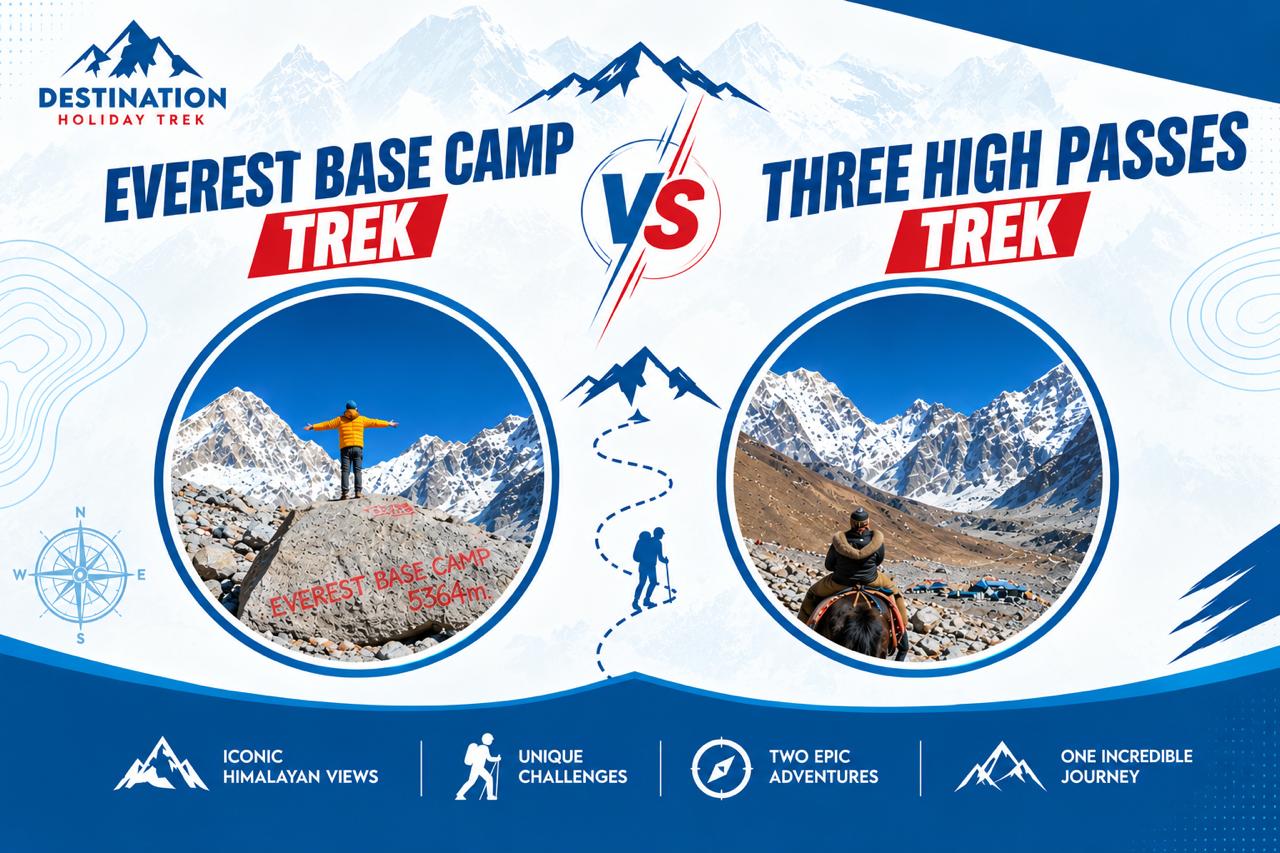
Dreaming of trekking in the Everest region but not sure which route to choose? Should you go for the famous Everest Base Camp Trek, or take on the more challenging Everest Three High Passes Trek? Both treks take you into the beautiful Everest region and offer incredible Himalayan views, but they are quite different experiences. The Everest Base Camp Trek is a classic route that takes you to the famous Everest Base Camp, while the Three High Passes Trek is a longer and more challenging adventure that crosses Kongma La, Cho La, and Renjo La.
So, which trek is right for you? In this guide, we compare the Everest Base Camp Trek vs Three High Passes Trek based on difficulty, altitude, duration, scenery, fitness requirements, and overall experience. By the end, you will have a clearer idea of what to expect from each trek.
What Is the Everest Base Camp Trek?
The Everest Base Camp Trek is one of Nepal’s most popular treks. Starting with a flight from Kathmandu to Lukla, the trail passes through Namche Bazaar, Tengboche, Dingboche, and Lobuche before reaching Everest Base Camp (5,364 m).
The trek usually takes 12 to 14 days from Lukla, or about 14 to 16 days from Kathmandu, with 5 to 7 hours of walking each day. It is moderately challenging, mainly because of the high altitude, and offers incredible views of Mount Everest and the Himalayas. With a well developed trail, teahouses, and beautiful Himalayan views, the Everest Base Camp Trek is a great choice for experiencing the Everest region.
With a well developed trail, teahouses, and beautiful Himalayan views, the Everest Base Camp Trek is a great choice for experiencing the Everest region.
What Is the Everest Three High Passes Trek?
The Everest Three High Passes Trek is a challenging adventure through the Everest region, crossing Kongma La, Cho La, and Renjo La.
The trek also includes Everest Base Camp, Kala Patthar, Gokyo Lakes, and Gokyo Ri. It usually takes 17 to 21 days and involves long walks at high altitudes, making it ideal for experienced and fit trekkers.
Learn more about the Everest Three High Passes Trek.
Everest Base Camp vs Three High Passes Trek : Key Differences
Difficulty
Everest Base Camp is moderately challenging because of the high altitude and long walks. The trail is well established and does not require technical climbing.
Three High Passes is more difficult, with steep trails, rocky paths, and three passes above 5,000 m. Some days can take 8 to 9 hours.
Altitude
Everest Base Camp reaches 5,364 m, while Kala Patthar reaches 5,545 m. The Three High Passes route crosses above 5,000 m several times, so proper acclimatization is important on both treks.
Duration
- Everest Base Camp: 12 to 14 days
- Three High Passes: 17 to 21 days
The Three High Passes Trek takes longer because of its longer route and additional acclimatization.
Scenery
Both treks offer stunning views of Everest, Lhotse, Nuptse, and Ama Dablam.
EBC is known for Everest Base Camp and Kala Patthar, while Three High Passes adds Gokyo Lakes, Gokyo Ri, and three high passes.
Trail Experience
The EBC route is popular and well established, passing through places like Namche Bazaar, Tengboche, Dingboche, and Lobuche.
The Three High Passes route is more remote, with rocky trails, glaciers, high passes, and quieter valleys.
Fitness
For EBC, you should be comfortable walking 5 to 7 hours a day.
Three High Passes requires more fitness, with 6 to 9 hours of walking on some days. Previous high-altitude trekking experience is helpful.
Accommodation
Both treks mainly use teahouses with basic rooms, shared bathrooms, and meals.
EBC has more facilities, while some sections of Three High Passes are more remote with fewer lodges and weaker connectivity.
Everest Base Camp vs Three High Passes: Which One Is Right for You?
Both treks offer an amazing Everest experience, but the right choice depends on your time, fitness, and trekking experience.
Choose Everest Base Camp if:
- You want the classic Everest trekking experience.
- You have around 12 to 14 days available.
- This is your first high altitude trek.
- You prefer a well established trail with regular teahouses.
- You want to visit Everest Base Camp and Kala Patthar.
Choose Three High Passes if:
- You want a longer and more challenging adventure.
- You have previous high altitude trekking experience.
- You want to see Gokyo Lakes and Gokyo Ri.
- You enjoy remote valleys and high mountain passes.
- You have 17 to 21 days available.
For First Time High Altitude Trekkers
Everest Base Camp is a good option for beginners. The trail is easier to follow, there are more teahouses, and there is enough time for acclimatization.
For Experienced Trekkers
Three High Passes Trek is a better fit if you want a longer and more challenging adventure with different landscapes and high mountain passes.
For Travelers with Limited Time
Everest Base Camp is the easier choice because it usually takes less time. The Three High Passes Trek needs more days.
For Those Who Want High Passes and More Variety
Choose the Three High Passes Trek if you want to cross Kongma La, Cho La, and Renjo La and explore the beautiful Gokyo Valley along with the Everest region.
Best Time to Trek
The best time for both the Everest Base Camp Trek and Three High Passes Trek is usually spring and autumn.
- Spring (March to May): The weather is generally stable, with clear mountain views and blooming rhododendrons.
- Autumn (September to November): Clear skies, good visibility, and comfortable temperatures make it a popular trekking season.
- Monsoon (June to August): Rain, clouds, landslides, and flight delays can make trekking more difficult.
- Winter (December to February): It is very cold at higher altitudes, and some teahouses may close. Trekking is still possible with proper preparation.
Overall, spring and autumn are the most comfortable seasons for both treks.
Permits and Entry Requirements
For both the Everest Base Camp Trek and Three High Passes Trek, you need the following permits:
- Sagarmatha National Park Permit: NPR 3,000 for foreign nationals, NPR 1,500 for SAARC nationals, and NPR 100 for Nepali citizens. Children under 10 are exempt.
- Khumbu Pasang Lhamu Rural Municipality Permit: NPR 3,000 for foreign nationals and NPR 2,000 for SAARC nationals.
- TIMS Card: Not currently required for trekking in the Khumbu region.
The Sagarmatha National Park Permit is available in Kathmandu at the Nepal Tourism Board office or at the park checkpoint in Monjo.
The Khumbu permit can be obtained at the trail checkpoints in Lukla or Monjo. It is not available in Kathmandu.
Permit fees and rules can change, so check the latest information from Sagarmatha National Park and the Nepal Tourism Board before your trek.
A licensed guide is required for trekking in the Everest region.
How to Prepare for the Trek
Good preparation can make your Everest trek safer and more enjoyable. Here are some simple tips:
- Get fit: Start training 8 to 12 weeks before your trek. Focus on cardio, leg strength, and regular walking.
- Practice long walks: Go on regular hikes and slowly build up to 6 to 8 hours of walking.
- Pack warm clothes: Bring layers, a warm jacket, waterproof clothing, gloves, a hat, sunglasses, and sunscreen.
- Choose good shoes: Wear comfortable, strong hiking boots and break them in before the trek.
- Stay hydrated: Drink around 3 to 4 litres of water a day and carry a water filter or purification tablets.
- Take time to acclimatize: Follow your rest days and avoid climbing too quickly. If you feel symptoms of altitude sickness, tell your guide and descend if needed.
- Get travel insurance: Choose insurance that covers high altitude trekking and emergency helicopter evacuation.
- Hire a guide: A licensed guide can help with navigation, safety, and altitude related problems. A porter can also help carry your bag.
- Check weather conditions: Check the latest weather and trail conditions before and during your trek.
Everest Base Camp vs Three High Passes – Quick Decision Guide
| If you want | Consider |
| Classic Everest experience | Everest Base Camp |
| A more challenging route | Three High Passes |
| A shorter trekking experience | Everest Base Camp |
| Multiple high mountain passes | Three High Passes |
| Gokyo Lakes + Everest region | Three High Passes |
| A first major Himalayan trek | Everest Base Cam |
Trek with Destination Holiday Trek
Destination Holiday Trek offers trekking and tour packages across Nepal, including the Everest region.
If you are choosing between the classic Everest Base Camp Trek and the more challenging Everest Three High Passes Trek, the team can help you choose a trek based on your fitness, experience, and available time.
If you want more comfort during your trek, you can also choose the Luxury Everest Base Camp Trek.
Explore more Nepal trekking packages or visit the Destination Holiday Trek homepage to find your next Himalayan adventure.
Conclusion
The Everest Base Camp Trek is a great choice for those who want the classic Everest experience on a shorter and well-established route. The Three High Passes Trek is longer and more challenging, with high passes, Gokyo Lakes, remote valleys, and incredible mountain views.
Both treks offer a memorable journey through the Everest region. Choose the route that matches your time, fitness, and trekking experience, and prepare well for a safe and enjoyable adventure.
Ready to explore the Everest region? Visit Destination Holiday Trek to find the right trek for your adventure.
Frequently Asked Questions
- Is Everest Base Camp easier than Three High Passes?
Yes. Everest Base Camp is generally easier because the trail is well established and does not cross high mountain passes.
- Which trek is better for first-time trekkers?
Everest Base Camp is a good option for first-time high-altitude trekkers because the route is easier to follow and has more facilities.
- Can you combine Everest Base Camp with the Three High Passes?
Yes. The Three High Passes Trek includes Everest Base Camp and Kala Patthar.
- How many days does the Three High Passes Trek take?
It usually takes around 18 to 21 days, depending on the itinerary and acclimatization days.
- What is the best season for both treks?
Spring (March to May) and autumn (September to November) are generally the best seasons for both treks.
- Do I need a guide?
Yes. A licensed guide is required for trekking in the Everest region.