
Nepal Restricted Area Trekking 2026/2027: Permits, Cost and Best Treks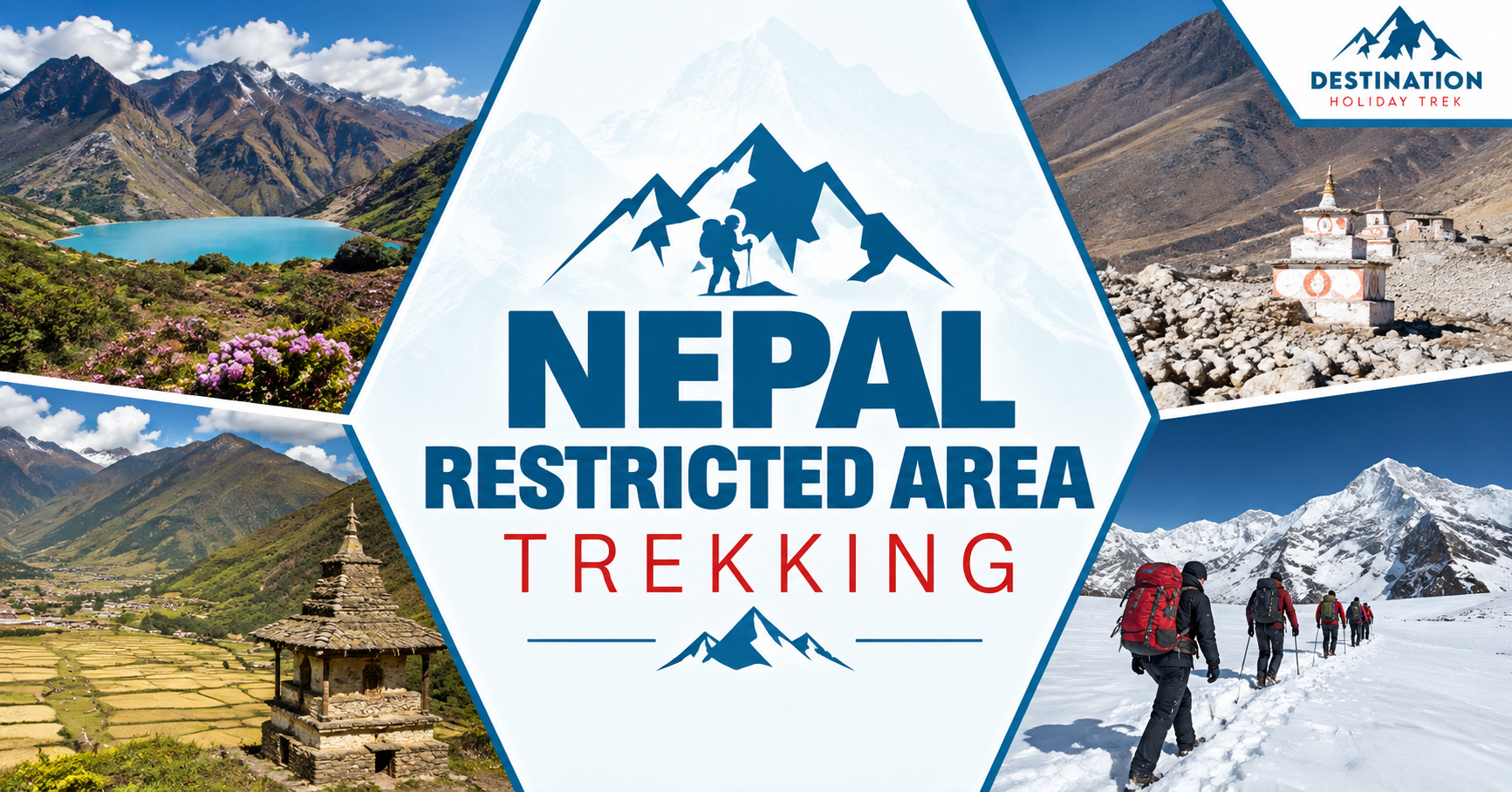
Table of Content
Introduction
Nepal restricted area trekking means walking in remote Himalayan regions, mostly near the Tibet border, where you need a Nepal special trekking permit to enter. Popular restricted trekking routes in Nepal include Manaslu, Tsum Valley, Nar Phu Valley, Upper Mustang, Upper Dolpo, Lower Dolpo and Kanchenjunga. This guide covers Nepal restricted trekking permits, the restricted area trekking permit cost, and the best restricted area treks in Nepal.
If you are planning restricted area trekking in Nepal 2026 or 2027, you will find the latest official Nepal trekking permit fees, the extra costs to expect and tips to choose the right route. Rules can change, so always confirm the latest details with official sources before you book.
What Is Restricted Area Trekking in Nepal?
A restricted area is a region that Nepal has designated as requiring a special trekking permit. Most of these areas lie close to the Tibetan border or in remote western and eastern districts. The NTB trekking permit page states that trekking in these zones requires a special permit from the Department of Immigration in Kathmandu, and that walking outside the specified route counts as a violation of law.
Nepal regulates access to these regions for several reasons: border sensitivity, protection of fragile local culture, limited infrastructure, and the need to track visitors in places where help is far away.
Compared with popular routes, restricted trails usually have simpler lodges, longer distances between villages and more rules about where you can walk. Some, like Upper Dolpo, rely on camping for part of the journey. The reward is a quieter trek through places that see far fewer visitors.
Why Do You Need a Special Permit for Restricted Area Treks?
- The government controls entry to border and sensitive regions.
- The permit helps protect local culture and fragile mountain communities.
- It tracks who is in remote areas where help can be far away.
- It keeps trekkers on approved routes.
- The Department of Immigration issues the permit.
- A registered trekking agency usually applies on your behalf.
- A licensed guide is expected on these routes.
- The permit is separate from TIMS and national park or conservation area tickets.
Nepal Restricted Area Trekking Permit Cost 2026/2027
The table below follows the fees listed by the Nepal Tourism Board. All amounts are in US dollars per person.
| Area | Season | Fee |
| Upper Mustang | All year | USD 50 per day |
| Upper Dolpo | All year | USD 50 per day |
| Manaslu | September to November | USD 100 for week 1, then USD 15 per day |
| Manaslu | December to August | USD 75 for week 1, then USD 10 per day |
| Tsum Valley | September to November | USD 40 for week 1, then USD 7 per day |
| Tsum Valley | December to August | USD 30 for week 1, then USD 7 per day |
| Nar Phu (Manang district) | September to November | USD 100 for week 1, then USD 15 per day |
| Nar Phu (Manang district) | December to August | USD 75 for week 1, then USD 15 per day |
| Kanchenjunga | All year | USD 20 per week for 4 weeks, then USD 25 per week |
| Lower Dolpo | All year | USD 20 for week 1, then USD 5 per week |
| Humla | All year | USD 50 for week 1, then USD 10 per day |
NTB also lists zones in Dolakha, Sankhuwasabha, Solukhumbu, Rasuwa, Bajhang, Mugu and Darchula. Fees depend on the area, the season and the number of days you stay in the zone.
Example: A 10 day stay in Manaslu in autumn costs USD 100 plus 3 extra days at USD 15, so USD 145. A 10 day Upper Mustang permit costs USD 500.
Best Restricted Area Treks in Nepal
Durations are approximate and change with your itinerary.
| Trek | Region | Duration | Special Permit | Other Entry | Difficulty | Highlights |
| Manaslu Circuit | Gorkha | 14 to 18 days | Yes | MCAP, ACAP if you finish at Dharapani | Moderate to strenuous | Larkya La, mountain villages |
| Tsum Valley | Gorkha | 10 to 19 days | Yes | MCAP | Moderate | Monasteries, Tibetan culture |
| Nar Phu Valley | Manang | 10 to 14 days | Yes | ACAP | Strenuous | Old villages, Kang La pass |
| Upper Dolpo | Dolpa | About 25 days | Yes | Shey Phoksundo National Park | Strenuous | Shey Gompa, Phoksundo Lake |
| Lower Dolpo | Dolpa | About 17 days | Yes | Shey Phoksundo National Park | Moderate to strenuous | Phoksundo Lake, Dolpo villages |
| Upper Mustang | Mustang | 10 to 14 days | Yes | ACAP | Moderate | Lo Manthang, cave dwellings |
| Kanchenjunga | Taplejung | 20 to 28 days | Yes | KCAP | Strenuous | North and south base camps |
Manaslu Circuit Trek Permit and Cost
The Manaslu restricted area permit costs USD 100 for the first week in September to November, and USD 75 from December to August. Extra days cost USD 15 or USD 10 per day. You also need a Manaslu Conservation Area Permit (MCAP), and an Annapurna Conservation Area Permit (ACAP) if you end your trek on the Annapurna side. Operators often quote NPR 3,000 plus VAT for each, but confirm before booking. TIMS rules on this route are changing, so ask your agency.
You must go through a registered agency with a licensed guide. The same approach applies to other restricted area treks in Nepal: add the special permit, the park or conservation fee and any TIMS card, then add your guide and logistics. If you want a ready itinerary with permits arranged, look at the Manaslu Circuit Trek from Destination Holiday Trek.
Tsum Valley Trek Permit
The Tsum Valley restricted area permit costs USD 40 for the first week in September to November, and USD 30 from December to August. After week one, it is USD 7 per day. You also need an MCAP, and the Tsum Valley permit is handled through a registered agency with a guide.
Tsum Valley is often combined with the Manaslu Circuit because they share road access and the same conservation area. Your cost then depends on how many days you spend in each zone. Ask your agency for a clear breakdown.
Upper Dolpo Trek Permit and Cost
The Upper Dolpo trekking permit is listed at USD 50 per person per day, so the Upper Dolpo permit cost grows with trek length. You also need entry to Shey Phoksundo National Park, listed at NPR 3,000 for foreigners, with 13% VAT quoted by some sources. Confirm this before booking.
The permit goes through a registered agency, and a licensed guide is expected. Most of the cost on this route comes from camping, porters and flights. Trekkers who want a full plan for the long route can choose the Upper Dolpo Trek and ask how many days fall inside the restricted zone.
Lower Dolpo Trek Permit and Cost
The Lower Dolpo trekking permit is listed at USD 20 for the first week, then USD 5 per week after that. Shey Phoksundo National Park entry also applies, using the same fee as above.
The permit is cheaper than Upper Dolpo, but the remote logistics still add up. A shorter route like the Lower Dolpo Trek can suit travelers who want Dolpo scenery with fewer days.
Nar Phu, Upper Mustang and Kanchenjunga Permits
Here is a short summary for the other main routes:
- Nar Phu Valley restricted area permit: USD 100 or USD 75 for week 1 depending on season, plus ACAP.
- Upper Mustang permit: USD 50 per day, plus ACAP. Permits are checked at Kagbeni.
- Kanchenjunga restricted area permit: USD 20 per week for the first 4 weeks, plus KCAP. Operators often quote NPR 3,000 for KCAP, so confirm it.
What Is Included in a Restricted Area Trekking Permit?
The permit is only government permission to enter a zone. It does not normally pay for:
- Accommodation and food
- Transport and domestic flights
- Guide and porter fees
- National park and conservation area fees
- TIMS
- Insurance
- Equipment
How to Get a Restricted Area Trekking Permit in Nepal
- Choose your restricted trekking route.
- Confirm the latest permit rules and fees.
- Prepare your passport and documents.
- Work with a registered trekking agency.
- Let the agency submit the application.
- Pay the government fees through the agency.
- Carry the permit during the trek.
- Follow checkpoint and route rules.
Permits are tied to dates, so book flights after your permit dates are clear. Reports say the two person minimum was removed from 22 March 2026, but a guide and agency are still needed. Confirm this with your agency.
Documents Required for Restricted Area Trekking
Requirements can vary by route. Commonly needed items are:
- Valid passport
- Valid Nepal tourist visa
- Passport photos where required
- Trekking itinerary
- Application details handled by your agency
- Travel insurance details, often with evacuation cover
Restricted Area Trekking Rules in Nepal
- Stay on the approved route.
- Carry your permit and show it when asked.
- Never enter a restricted area without authorization.
- Follow guide requirements.
- Respect park and conservation rules.
- Follow local rules and checkpoints.
- Check current rules before you travel.
Restricted Area Trekking Cost Beyond the Permit
The permit is often a small part of the total restricted area trek cost in Nepal. Guide, transport and logistics usually cost more. Prices vary by agency, so I have not listed them.
| Cost Category | What It Covers |
| Special Permit | Government restricted area permit |
| Conservation or National Park Fee | Protected area entry |
| TIMS | Trekker registration where applicable |
| Guide | Licensed trekking guide |
| Porter | Porter service where selected |
| Accommodation | Tea houses, lodges or camping |
| Food | Meals during the trek |
| Transportation | Road transfers and domestic flights |
| Insurance | Travel and trekking insurance |
| Equipment | Trekking and technical equipment |
Best Time for Restricted Area Trekking in Nepal
The best time depends on the route.
- Spring (March to May): Stable weather on many routes.
- Autumn (September to November): Clear skies and a busy season. It is also the higher fee season for Manaslu, Tsum Valley and Nar Phu.
- Winter (December to February): Cold, with snow on high passes.
- Monsoon (June to August): Heavy rain in much of Nepal. Dolpo and Mustang are in the rain shadow, so some trekkers visit then, but confirm conditions with your agency.
Who Should Consider Restricted Area Trekking?
These treks may suit you if you have:
- Some multi day trekking experience
- Good fitness
- Some altitude experience
- Comfort with remote places and simple lodges
- Two to four weeks of free time
- A budget that covers permits, guide and logistics
- Interest in Himalayan culture and landscapes
Restricted Area Trekking vs Regular Trekking in Nepal
| Factor | Restricted Area Trekking | Regular Trekking |
| Permit | Special permit often required | Standard permits may apply |
| Agency | Often required | Depends on current rules |
| Guide | Route dependent | Route dependent |
| Cost | Usually higher | Varies |
| Accessibility | More regulated | Generally easier |
| Infrastructure | Often limited | Usually more developed |
| Experience | Remote Himalayan regions | Wide range of trekking environments |
How to Choose the Right Restricted Area Trek
Match the route to your situation:
- Short on time: Lower Dolpo and Upper Mustang fit shorter plans.
- Want a long trek: Upper Dolpo and Kanchenjunga need weeks.
- Want lodges: Manaslu and Tsum Valley have lodges for much of the route.
- Interested in culture: Tsum Valley and Upper Mustang have strong Tibetan Buddhist influence.
- Worried about altitude and effort: Nar Phu, Upper Dolpo and Kanchenjunga are demanding.
- Watching the budget: Compare permit cost with flights, guide and camping needs.
Why Trek with Destination Holiday Trek?
Restricted area treks need careful permit work and remote logistics. You can read why choose Destination Holiday Trek to see how the team plans trips.
- Routes include Manaslu, Upper Dolpo and Lower Dolpo.
- Permit guidance is part of trip planning.
- You can compare Nepal trekking experiences in other regions too.
Plan Your Restricted Area Trek with Destination Holiday Trek
If you are planning restricted area trekking in Nepal for 2026 or 2027, we can help you pick a route and explain the permit steps. Questions about fees, season or trek length are welcome. You can contact Destination Holiday Trek to discuss your itinerary and get current trek information.
Frequently Asked Questions
- What is restricted area trekking in Nepal?
It is trekking in border or sensitive regions that need a special permit from the Department of Immigration. - How much does a restricted area trekking permit cost in Nepal?
It depends on the area. Examples: USD 50 per day for Upper Mustang and Upper Dolpo, USD 100 or USD 75 for the first week in Manaslu, and USD 20 per week for Kanchenjunga and Lower Dolpo. - Which treks require a restricted area permit in Nepal?
Manaslu, Tsum Valley, Nar Phu, Upper Mustang, Upper Dolpo, Lower Dolpo and Kanchenjunga, plus other zones in the NTB list. - Do I need a guide for restricted area trekking?
Yes. A licensed guide and registered agency are expected. - Can I trek in a restricted area independently?
Not without an agency and guide. Reports say solo travelers can apply from March 2026, but still through an agency. - Is Manaslu a restricted area trek?
Yes. It needs a restricted permit plus MCAP, and ACAP on some itineraries. - How much does the Manaslu permit cost?
USD 100 for the first week from September to November, USD 75 from December to August, then USD 15 or USD 10 per extra day. Conservation permits are extra. - Do I need a special permit for Upper Dolpo?
Yes. It is listed at USD 50 per day, plus Shey Phoksundo National Park entry. - Do I need a permit for Lower Dolpo?
Yes. It is listed at USD 20 for the first week, then USD 5 per week, plus park entry. - What documents are required for a restricted area trekking permit?
Usually a valid passport, visa details, photos, an itinerary and an application handled by your agency. - Can restricted area permit fees change?
Yes. Fees, seasons and rules can change.