
Includes/Excludes
Cost Includes
Cost Excludes
Mt. Nuptse Expedition Overview And Highlights
Climb the Majestic 7,864m Peak in the Everest Region
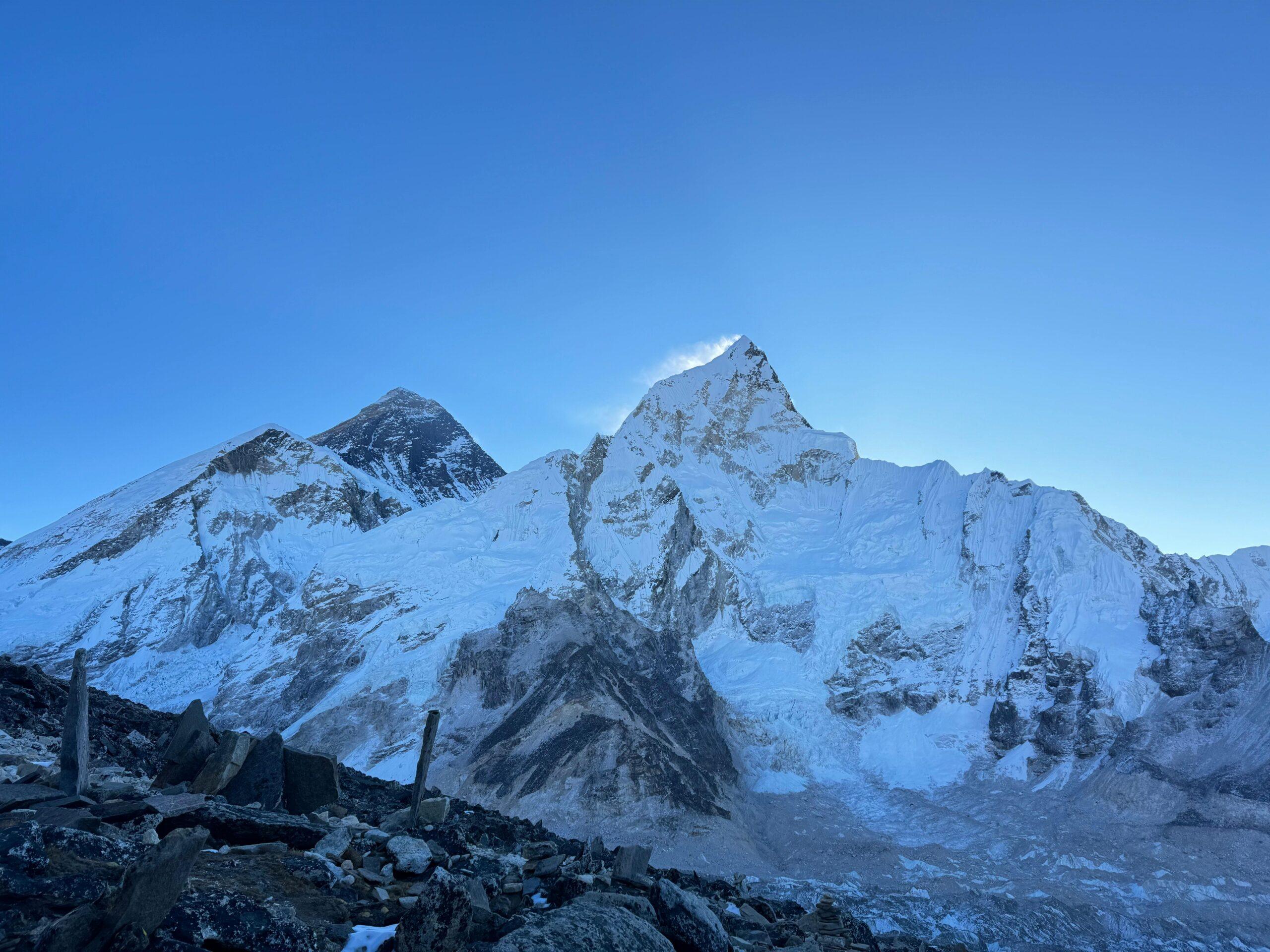
Standing at an impressive 7,864 meters (25,801 ft), Nuptse is one of the most striking mountains in the Everest region. Located just west of Mount Everest and connected to Lhotse via Tenzing Peak, Nuptse forms part of the legendary Everest Massif. In the Sherpa language, Nuptse means “West Peak,” with Nup meaning west and Tse meaning peak.
From viewpoints such as Kala Patthar, Nuptse appears as a towering wall guarding the route to Everest. Its impressive summit ridge consists of seven major sub-peaks, all rising above 7,500 meters, making it one of the most dramatic mountains in the Himalayas.
Why Climb Nuptse?
Nuptse is widely regarded as one of the most challenging and technical peaks in the Himalayas. Despite being slightly lower than Everest and Lhotse, its steep faces, exposed ridges, and demanding climbing conditions make it a serious objective for experienced mountaineers.
The mountain’s near-vertical north face above the Western Cwm presents a formidable challenge, while the knife-edge summit ridge and powerful high-altitude winds test even the strongest climbers. Due to its technical nature, Nuptse is best suited for climbers who already have experience on 6,000m and 7,000m peaks.
Climbing History
Nuptse was first successfully climbed on May 16, 1961, by British mountaineer Dennis Davis and Nepali climber Tashi Sherpa via the North Ridge (Scott Route). Since then, the mountain has remained a coveted goal for skilled alpinists seeking a demanding Himalayan ascent.
Nuptse Expedition Route
Our Nuptse Expedition begins in Kathmandu, where climbers spend several days completing final preparations, gear checks, and permit formalities.
The journey continues with a scenic flight to Tenzing–Hillary Airport, the gateway to the Everest region. From Lukla, trekkers follow the classic Everest Base Camp trail through Sherpa villages and breathtaking Himalayan landscapes before reaching base camp after approximately seven days of trekking.
The climbing route follows the established path through the famous Khumbu Icefall, leading to Camp I. Climbers then continue across the Western Cwm to Camp II, a shared camp used by expeditions on Everest, Lhotse, and Nuptse.
From Camp II, the route ascends the challenging north face of Nuptse via the central spur. Careful acclimatization, technical climbing skills, and favorable weather conditions are essential for a successful summit attempt.
Key Highlights
- Climb Nuptse (7,864m / 25,801ft), one of the most technical and prestigious peaks in the Himalayas.
- Experience breathtaking panoramic views of Mount Everest, Lhotse, Makalu, and the surrounding Himalayan giants.
- Enjoy a scenic mountain flight to Tenzing–Hillary Airport, the gateway to the Everest region.
- Trek through traditional Sherpa villages, ancient monasteries, and stunning alpine landscapes.
- Follow the legendary route through the Khumbu Icefall and the Western Cwm.
- Challenge yourself on steep snow, ice, and mixed terrain requiring advanced mountaineering skills.
- Witness spectacular sunrise and sunset views over the Everest Massif.
- Climb a mountain renowned for its dramatic north face and knife-edge summit ridge.
- Experience a less crowded and more technical alternative to Everest while remaining in the heart of the Everest region.