

Annapurna Base Camp Trek-12 Days
$ 850.00$ 710.00
Product Description
Annapurna Base Camp Trek: Complete Guide to Cost, Itinerary, Difficulty & Best Time
The Annapurna Base Camp Trek is one of the most spectacular and popular trekking adventures in Nepal. Known for its dramatic mountain scenery, diverse landscapes, traditional villages, lush rhododendron forests, and close-up views of the Annapurna mountain range, this trek offers an unforgettable Himalayan experience.
Reaching Annapurna Base Camp at approximately 4,130 meters (13,550 feet) takes you into a natural amphitheater surrounded by some of Nepal’s most impressive peaks, including Annapurna I, Annapurna South, Hiunchuli, Machhapuchhre (Fishtail), and Gangapurna.
Unlike some of Nepal’s longer high-altitude treks, the Annapurna Base Camp Trek can be completed in a relatively short period, making it an excellent choice for travelers who want to experience the Himalayas without committing to a month-long expedition.
This complete guide covers everything you need to know about the Annapurna Base Camp Trek cost, itinerary, difficulty, altitude, route, permits, best time to trek, accommodation, food, preparation, packing list, and frequently asked questions.
What Is the Annapurna Base Camp Trek?
The Annapurna Base Camp Trek, commonly known as the ABC Trek, is a high-altitude trekking route through the Annapurna region of Nepal.
The journey takes you through traditional Gurung and Magar villages, terraced farmland, dense forests, river valleys, and alpine landscapes before reaching Annapurna Base Camp.
The classic route generally follows:
Pokhara → Ghandruk → Chhomrong → Himalaya → Machhapuchhre Base Camp → Annapurna Base Camp
Depending on the itinerary, the trek can begin from different trailheads and may include destinations such as Jhinu Danda, Landruk, Sinuwa, or other villages.
Why Choose the Annapurna Base Camp Trek?
There are many reasons to choose the Annapurna Base Camp Trek in Nepal.
1. Spectacular Himalayan Mountain Views
The trek provides close-up views of some of the most famous peaks in the Annapurna region.
You may see:
- Annapurna I
- Annapurna South
- Machhapuchhre
- Hiunchuli
- Gangapurna
- Annapurna III
- Annapurna IV
- Lamjung Himal
2. Reach Annapurna Base Camp
Standing inside the spectacular Annapurna Sanctuary surrounded by enormous Himalayan peaks is the highlight of the trek.
3. Diverse Landscapes
The trail passes through:
- Rice terraces
- Rhododendron forests
- Bamboo forests
- Waterfalls
- River valleys
- Mountain villages
- Alpine terrain
4. Experience Local Himalayan Culture
The trek provides opportunities to interact with Gurung and Magar communities and experience traditional mountain life.
5. Shorter Than Many Himalayan Treks
The ABC Trek can often be completed in around one to two weeks, making it suitable for travelers with limited time.
Annapurna Base Camp Trek Cost
The Annapurna Base Camp Trek cost depends on the duration, group size, transportation, accommodation, guide and porter services, and package inclusions.
A typical trekking package may include:
- Airport or hotel transfers
- Transportation to and from the trailhead
- Trekking permits
- Experienced trekking guide
- Porter
- Teahouse accommodation
- Meals during the trek
- Trekking documentation
- Basic first-aid support
- Guide and porter insurance
Additional expenses may include:
- International flights
- Travel insurance
- Personal trekking equipment
- Drinks
- Wi-Fi
- Hot showers
- Charging
- Tips
- Emergency evacuation
- Personal expenses
What Determines the Annapurna Base Camp Trek Price?
The total Annapurna Base Camp Trek price depends on several factors:
- Number of trekking days
- Private or group trekking
- Accommodation standard
- Guide and porter services
- Transportation
- Season
- Meals included
- Additional sightseeing
- Route variations
When comparing an Annapurna Base Camp Trek package, always check the services included rather than choosing solely based on price.
Annapurna Base Camp Trek Itinerary
A typical Annapurna Base Camp Trek itinerary takes around 7–12 trekking days, depending on the starting point, transportation, acclimatization, and chosen route.
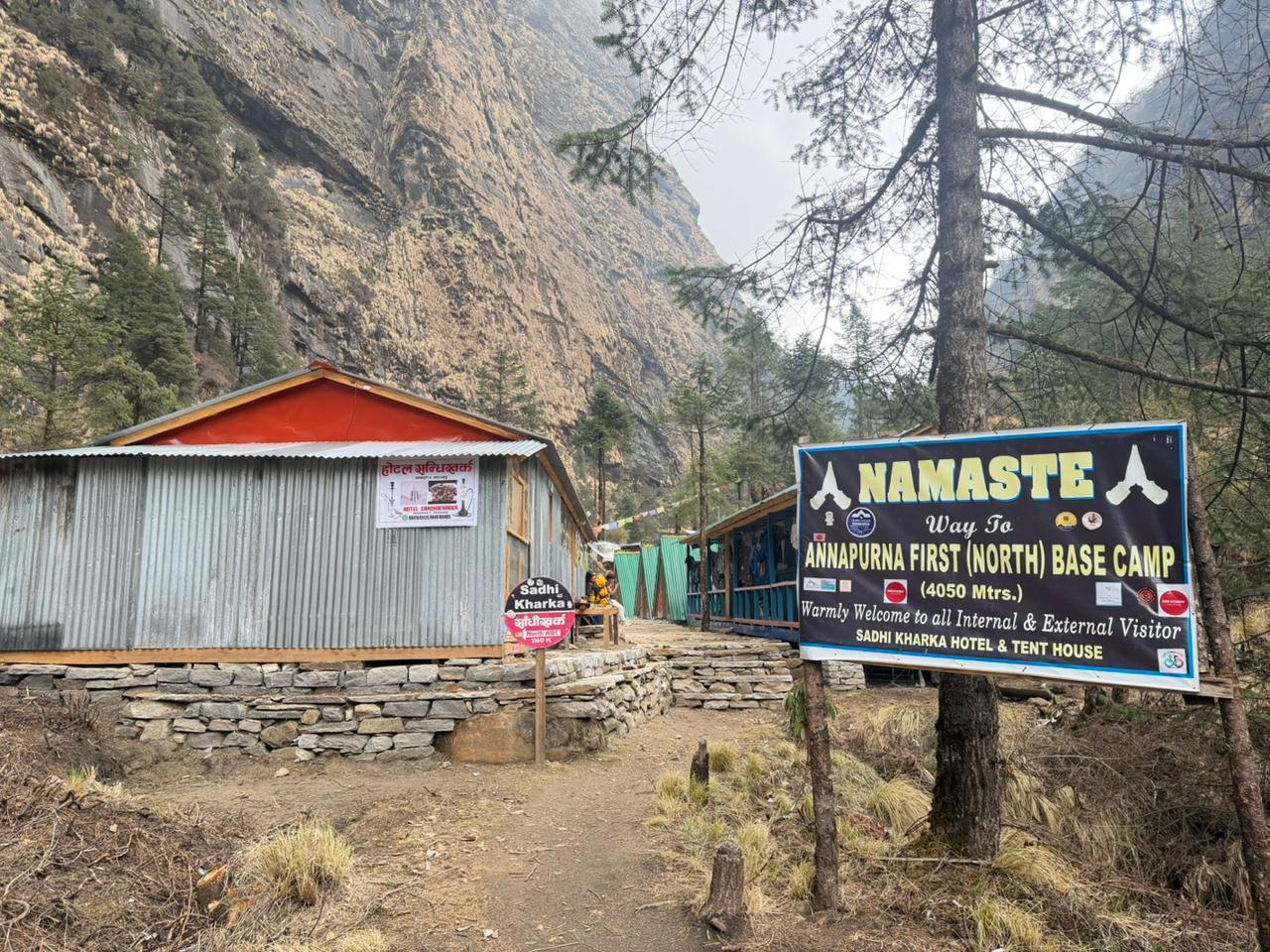
Namaste welcome signboard along the Annapurna Base Camp Trek route
Here is a sample itinerary.
Day 1: Drive from Pokhara to Ghandruk
Travel from Pokhara toward Ghandruk by road.
Ghandruk is a beautiful traditional mountain village with spectacular views of the Annapurna range.
Day 2: Ghandruk to Chhomrong
Trek through forests and traditional villages toward Chhomrong.
The trail offers beautiful views of Annapurna South and Machhapuchhre.
Day 3: Chhomrong to Bamboo
Descend toward the Chhomrong Khola before climbing through dense forest toward Bamboo.
Day 4: Bamboo to Deurali
Continue through bamboo and rhododendron forests toward Deurali.
The landscape gradually changes as you move toward higher elevations.
Day 5: Deurali to Machhapuchhre Base Camp
Continue toward Machhapuchhre Base Camp, also known as MBC.
The surrounding mountains become increasingly dramatic as you enter the Annapurna Sanctuary.
Day 6: Machhapuchhre Base Camp to Annapurna Base Camp
Wake early and continue toward Annapurna Base Camp.
At approximately 4,130 meters, ABC sits within a spectacular natural amphitheater surrounded by towering Himalayan peaks.
Spend time exploring the area and enjoying the mountain panorama.
Day 7: Annapurna Base Camp to Bamboo
Begin the descent toward Bamboo.
Descending is generally easier on the lungs, but the long downhill sections can be demanding on the knees.
Day 8: Bamboo to Jhinu Danda
Continue toward Jhinu Danda.
Depending on your itinerary, you can enjoy the natural hot springs in the area.
Day 9: Drive to Pokhara
Complete the final section of the journey and return to Pokhara.
Note: Actual itineraries vary according to road conditions, weather, trail conditions, fitness, and the trekking route selected.
Annapurna Base Camp Trek Difficulty
The Annapurna Base Camp Trek difficulty is generally considered moderate.
You do not need technical mountaineering skills to complete the standard trek, but you should have reasonable fitness and be prepared for several hours of walking each day.
The main challenges include:
- Steep stone staircases
- Long trekking days
- Repeated ascents and descents
- High altitude
- Cold temperatures
- Uneven terrain
- Weather changes
The trek becomes more challenging as you approach the higher elevations.
How Difficult Is the Annapurna Base Camp Trek?
The Annapurna Base Camp Trek is achievable for many first-time Himalayan trekkers who are physically prepared.
You should be comfortable walking approximately 5–8 hours per day, depending on the itinerary and trail conditions.
Regular hiking and cardiovascular training before your trip can make the journey considerably easier.
Annapurna Base Camp Trek Altitude
Altitude is an important consideration even though ABC is lower than Everest Base Camp.
Key elevations include:
| Location | Approximate Elevation |
|---|---|
| Pokhara | 822 m |
| Ghandruk | 1,940 m |
| Chhomrong | 2,170 m |
| Bamboo | 2,310 m |
| Himalaya | 2,920 m |
| Deurali | 3,230 m |
| Machhapuchhre Base Camp | 3,700 m |
| Annapurna Base Camp | 4,130 m |
The relatively rapid elevation gain means trekkers should pay attention to acclimatization and altitude symptoms.
Best Time for Annapurna Base Camp Trek
The best time for Annapurna Base Camp Trek is generally during spring and autumn.
Spring: March to May
Spring offers:
- Pleasant temperatures
- Good mountain visibility
- Rhododendron blooms
- Generally favorable trekking conditions
The forests can be particularly beautiful during this season.
Autumn: September to November
Autumn is one of the most popular seasons for the ABC Trek.
You can generally expect:
- Clear mountain views
- Stable weather
- Comfortable daytime temperatures
- Good trail conditions
Winter: December to February
Winter trekking is possible, but snow and freezing temperatures can make higher sections more challenging.
Monsoon: June to August
The monsoon season brings heavy rainfall to the Annapurna region.
Potential challenges include:
- Muddy trails
- Landslides
- Leeches at lower elevations
- Cloudy mountain views
- Road disruptions
Annapurna Base Camp Trek Route
The classic Annapurna Base Camp Trek route passes through the beautiful villages and valleys of the Annapurna Sanctuary.
A common route is:
Pokhara → Ghandruk → Chhomrong → Bamboo → Himalaya → Deurali → Machhapuchhre Base Camp → Annapurna Base Camp
The return route typically passes through:
Annapurna Base Camp → Bamboo → Jhinu Danda → Pokhara
Alternative routes and road access can change the starting and ending points.
Annapurna Base Camp Trek Permits
Trekkers need the required permits for the Annapurna region.
The main permits commonly associated with the trek include:
- Annapurna Conservation Area Permit (ACAP)
- TIMS card or applicable trekking registration requirements
Permit requirements and procedures can change, so travelers should verify the latest regulations before beginning the trek.
A registered trekking agency can generally arrange the required documentation.
Annapurna Base Camp Trek Accommodation
Accommodation during the ABC Trek is primarily provided by local teahouses and lodges.
Facilities are generally simple but comfortable enough for trekkers.
Typical facilities may include:
- Twin-sharing rooms
- Beds and mattresses
- Blankets
- Dining rooms
- Shared bathrooms
At higher elevations, facilities become more basic.
Hot showers, Wi-Fi, electricity, and charging may be available for an additional fee depending on the location.
Food on the Annapurna Base Camp Trek
Teahouses offer a variety of meals along the route.
Common foods include:
- Dal bhat
- Rice
- Noodles
- Pasta
- Momos
- Soup
- Potatoes
- Eggs
- Bread
- Pancakes
- Vegetables
- Tea
Dal bhat is particularly popular among trekkers because it provides a filling combination of carbohydrates, protein, and vegetables.
Drink plenty of water throughout the trek and avoid becoming dehydrated.
Annapurna Base Camp Trek Packing List
A good Annapurna Base Camp Trek packing list should include clothing and equipment suitable for changing weather and temperatures.
Clothing
- Base layers
- Fleece jacket
- Down jacket
- Waterproof jacket
- Trekking trousers
- Thermal trousers
- Warm hat
- Gloves
- Trekking socks
- Waterproof trousers
Trekking Equipment
- Backpack
- Duffel bag
- Trekking poles
- Sleeping bag
- Headlamp
- Water bottles
- Water purification system
- Sunglasses
- Sunscreen
- First-aid kit
Personal Items
- Passport
- Travel insurance documents
- Toiletries
- Power bank
- Camera
- Personal medication
Pack according to the season and expected weather conditions.
Physical Preparation for Annapurna Base Camp Trek
You do not need to be an elite athlete to complete the ABC Trek, but good preparation will make the experience significantly more enjoyable.
Cardiovascular Training
Start with activities such as:
- Walking
- Hiking
- Running
- Cycling
- Stair climbing
Strength Training
Focus on:
- Squats
- Lunges
- Step-ups
- Calf raises
- Core exercises
Hiking Practice
Regular hiking before your trip is particularly useful.
Gradually increase the distance and elevation of your training hikes.
If possible, practice hiking while carrying a daypack.
Annapurna Base Camp Trek for Beginners
The Annapurna Base Camp Trek for beginners can be a good introduction to Himalayan trekking.
The trek does not require technical climbing skills, and the infrastructure along the route makes it more accessible than many remote Himalayan routes.
However, beginners should not underestimate:
- Altitude
- Long walking days
- Stone steps
- Weather
- Cold temperatures
- Repeated ascents and descents
A comfortable itinerary with adequate rest can make the trek more enjoyable.
Annapurna Base Camp Trek With Guide and Porter
Hiring a local guide can make the trek easier and more enjoyable.
A professional guide can help with:
- Navigation
- Accommodation
- Route planning
- Altitude management
- Local culture
- Weather decisions
- Emergency situations
A porter can carry most of your main luggage, allowing you to trek with a lighter backpack.
Local guides also provide valuable insight into the history, culture, villages, and environment of the Annapurna region.
Annapurna Base Camp Trek Safety
Although the ABC Trek is accessible to many trekkers, it still involves high-altitude mountain conditions.
Potential risks include:
- Altitude sickness
- Dehydration
- Hypothermia
- Falls
- Exhaustion
- Heavy snowfall
- Landslides
- Rapid weather changes
Always follow your guide’s advice and monitor your health throughout the trek.
If you experience serious altitude-related symptoms, do not continue ascending.
Annapurna Base Camp Trek Insurance
Travel insurance is strongly recommended before starting the trek.
Your insurance should ideally cover:
- High-altitude trekking
- Emergency medical treatment
- Emergency evacuation
- Helicopter evacuation where applicable
- Trip cancellation
- Travel delays
- Lost baggage
Always check the maximum altitude covered by your insurance policy.
Annapurna Base Camp Trek vs Everest Base Camp Trek
Both are iconic Himalayan trekking adventures, but they offer different experiences.
Annapurna Base Camp Trek
- Shorter
- Lower maximum altitude
- Diverse landscapes
- Close-up mountain views
- Beautiful forests
- Gurung and Magar culture
- Excellent for shorter holidays
Everest Base Camp Trek
- Higher altitude
- Longer trekking journey
- Everest-focused experience
- Famous Sherpa villages
- Namche Bazaar
- Tengboche Monastery
- Kala Patthar viewpoint
If you have limited time and want a shorter Himalayan adventure, ABC can be an excellent choice.
If reaching the Everest region and experiencing the world’s highest mountain is your priority, the Everest Base Camp Trek may be more suitable.
Annapurna Base Camp Trek vs Annapurna Circuit Trek
The Annapurna Base Camp Trek and Annapurna Circuit Trek are two different adventures.
ABC takes trekkers into the Annapurna Sanctuary and directly toward the base camp.
The Annapurna Circuit is a much longer journey that circles the Annapurna massif and crosses the Thorong La Pass.
Choose ABC if you want:
- A shorter trek
- A dramatic mountain amphitheater
- Direct access to Annapurna Base Camp
Choose the Circuit if you want:
- A longer adventure
- Greater landscape diversity
- High mountain passes
- A complete journey around the Annapurna massif
How Long Does the Annapurna Base Camp Trek Take?
The Annapurna Base Camp Trek duration generally ranges from around 7 to 12 trekking days, depending on the itinerary and transportation.
Factors that affect the duration include:
- Starting point
- Ending point
- Acclimatization
- Fitness
- Road access
- Weather
- Side trips
- Rest days
A slower itinerary can provide more time to enjoy the villages and scenery.
Why Is Annapurna Base Camp So Popular?
The popularity of the Annapurna Base Camp Trek comes from its combination of accessibility, spectacular scenery, cultural experiences, and relatively short duration.
Trekkers can travel from subtropical forests to a high-altitude Himalayan sanctuary within a matter of days.
The dramatic transition in landscape is one of the defining characteristics of the trek.
Frequently Asked Questions About Annapurna Base Camp Trek
How much does the Annapurna Base Camp Trek cost?
The cost depends on the duration, transportation, guide and porter services, accommodation, meals, permits, group size, and package inclusions.
How difficult is the Annapurna Base Camp Trek?
The trek is generally considered moderate. Good physical fitness is recommended because of the steep sections, stone staircases, long walking days, and altitude.
How high is Annapurna Base Camp?
Annapurna Base Camp is approximately 4,130 meters (13,550 feet) above sea level.
How long does the Annapurna Base Camp Trek take?
A typical trek takes around 7–12 days, depending on the route, transportation, and itinerary.
Can beginners do the Annapurna Base Camp Trek?
Yes. Fit beginners can complete the trek with proper preparation, a sensible itinerary, and appropriate guide support.
What is the best time for Annapurna Base Camp Trek?
Spring and autumn are generally the most popular seasons because of favorable weather and mountain visibility.
Do I need a guide for Annapurna Base Camp?
Current trekking regulations should be checked before traveling. Regardless of requirements, a professional guide can be helpful for navigation, accommodation, altitude management, and safety.
What is the highest point of the Annapurna Base Camp Trek?
Annapurna Base Camp itself is approximately 4,130 meters, while some itineraries may reach nearby viewpoints or higher elevations.
Is Annapurna Base Camp harder than Everest Base Camp?
Both treks have different challenges. Everest Base Camp reaches a considerably higher altitude, while ABC involves significant ascents and descents and can have rapid elevation gain.
Is Annapurna Base Camp worth it?
For travelers seeking spectacular Himalayan scenery, traditional mountain villages, diverse landscapes, and a relatively short trekking adventure, the Annapurna Base Camp Trek can be an excellent choice.
Book Your Annapurna Base Camp Trek in Nepal
The Annapurna Base Camp Trek is a journey through some of Nepal’s most beautiful landscapes, from lush forests and terraced hillsides to the spectacular high-altitude Annapurna Sanctuary.
Whether you are an experienced trekker or planning your first Himalayan adventure, the trek offers a remarkable combination of mountain scenery, culture, nature, and adventure.
With proper preparation, a well-designed Annapurna Base Camp Trek itinerary, suitable equipment, gradual altitude gain, and experienced local support, you can enjoy a safer and more rewarding journey to the heart of the Annapurna Himalayas.
If you are planning an Annapurna Base Camp Trek in Nepal, choose a reliable local trekking company that can assist with permits, transportation, accommodation, guides, porters, and trekking logistics.
Start planning your Annapurna Base Camp adventure and experience the Himalayas up close.
For the latest information on trekking regulations, permits, conservation areas, and mountaineering requirements in Nepal, visit the official Nepal Tourism Board and relevant government authorities before planning your Pisang Peak Climbing adventure.
Also if you want to view our other treks then you can follow this link.
Reviews
There are no reviews yet.