- Government Registration No: 179974/074/075
- PAN No: 606828891
- Tourism License No: 2499


The Dhaulagiri Circuit Trek

Dhaulagiri Circuit Trek
The Dhaulagiri Circuit Trek is one of Nepal’s most spectacular and remote trekking adventures, offering stunning Himalayan landscapes, high-altitude passes, and cultural immersion in the Annapurna and Dhaulagiri regions. Encircling the massive Dhaulagiri Massif (8,167 m / 26,795 ft), this trek is ideal for experienced trekkers seeking solitude, adventure, and dramatic mountain scenery.
Trek Overview
The Dhaulagiri Circuit Trek typically starts with a drive from Pokhara or Kathmandu to the trailhead near Beni or Tatopani. From here, trekkers pass through lush forests, terraced farmland, alpine meadows, and remote villages, gradually ascending toward the high passes that offer panoramic views of Dhaulagiri, Annapurna, Nilgiri, and Tukuche peaks.
The trek is often combined with sections of the Annapurna Circuit, allowing hikers to explore Mustang-influenced villages, Gurung and Magar settlements, and Buddhist monasteries, providing a rich cultural experience along the way.
Highlights & Scenery
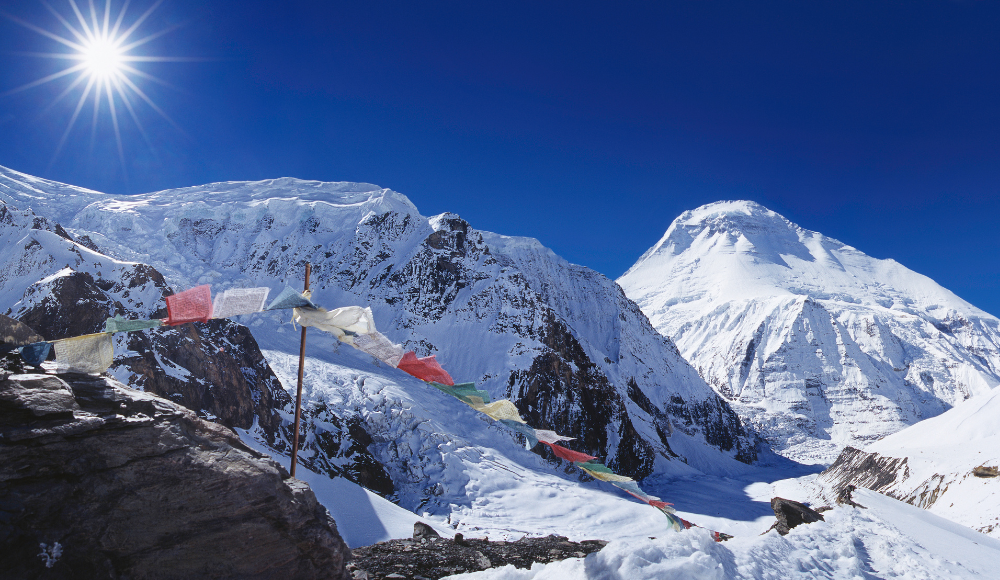
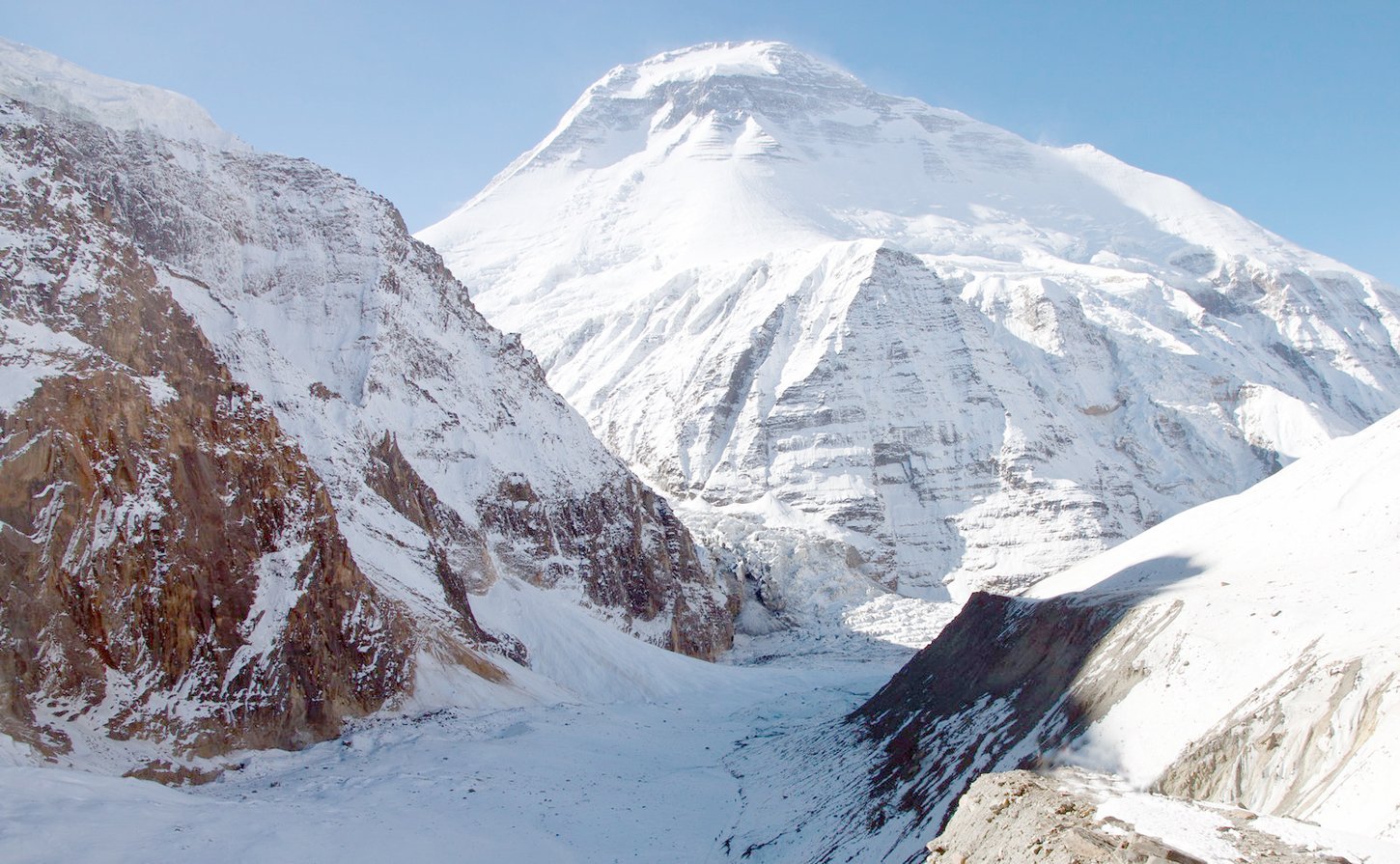
Dhaulagiri Massif: Towering above 8,000 meters, it dominates the skyline throughout the trek.
High Passes: Crossing French Pass (5,360 m) and other challenging passes with breathtaking views.
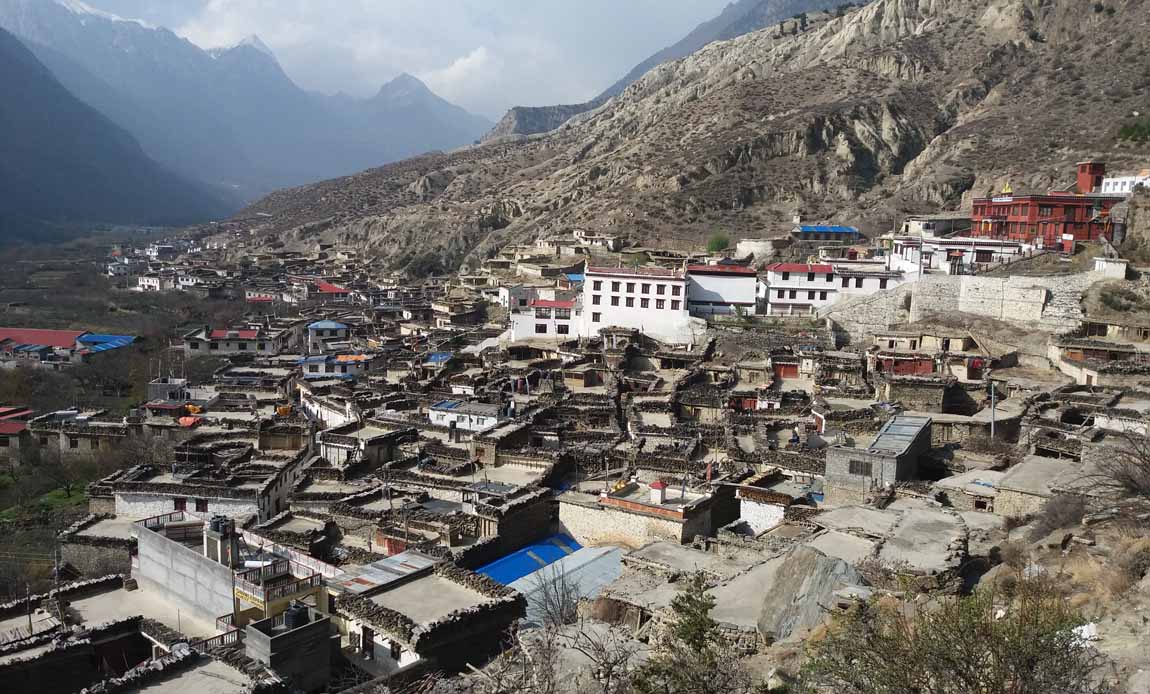
Remote Villages: Explore traditional Gurung, Magar, and Thakali communities untouched by mass tourism.
Diverse Landscapes: From subtropical forests to alpine deserts, glacial valleys, and mountain rivers.
Wildlife & Flora: Rich biodiversity in the Dhaulagiri and Annapurna Conservation Areas, including rare Himalayan plants and bird species.
Trekking Experience
The Dhaulagiri Circuit is a challenging trek, suitable for experienced hikers due to its:
High-altitude terrain (up to 5,360 m at French Pass)
Steep ascents and descents
Remote areas with limited amenities
Trekkers experience both adventure and self-reliance while being guided by licensed trekking guides and support staff.
TREK FACTS
Destination: Dhaulagiri Circuit Trek, Nepal
Highest Point: French Pass (5,360 m / 17,585 ft)
Duration: 14–18 Days (typical full circuit)
Difficulty Level: Challenging – suitable for experienced trekkers
Best Seasons: Spring (March–May) & Autumn (September–November)
Starting Point: Beni / Tatopani (drive from Pokhara)
Ending Point: Tatopani / Beni / Pokhara
Accommodation: Teahouses / Lodges along the trail
Maximum Altitude Risk: Moderate to High – proper acclimatization required
Transportation: Private vehicle or local bus from Pokhara / Kathmandu
Group Size: Flexible (solo trekkers or small groups)
Meals: Local Nepali, Tibetan, and Western dishes available in teahouses
Internet & Electricity: Available in main villages (extra charge may apply)
PERMIT REQUIREMENTS
Annapurna Conservation Area Permit (ACAP)
TIMS Card (Trekkers’ Information Management System)
- Highlights
- Costs
- FAQ
- Riding Gear
- Fixed Departure
Spectacular Views of Dhaulagiri Massif
Towering 8,167 m peaks dominate the skyline throughout the trek.
French Pass (5,360 m)
One of the highest trekking passes in Nepal, offering panoramic Himalayan vistas.
Remote Villages & Local Culture
Explore traditional Gurung, Magar, and Thakali communities untouched by mass tourism.
Diverse Landscapes
From subtropical forests, terraced farmland, and alpine meadows to high-altitude deserts and glacial valleys.
Photography Paradise
Dramatic mountain scenery, rivers, waterfalls, and serene landscapes.
Adventure & Solitude
Less crowded than Annapurna or Everest circuits, ideal for trekkers seeking a remote experience.
Cultural and Spiritual Experience
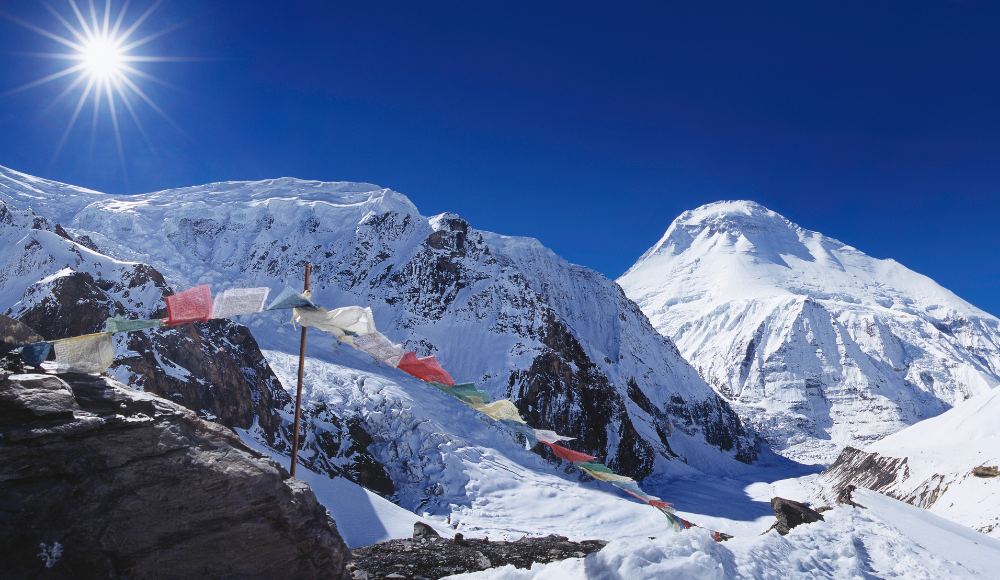
Ancient monasteries, prayer flags, and traditional Himalayan architecture along the trail.
Biodiversity
Trek within the Annapurna & Dhaulagiri Conservation Areas, home to rare flora and wildlife.
Cost Includes
Accommodation
✅ Twin-sharing / double accommodation in a 3-star hotel in Kathmandu for 2 nights, including breakfast. (Private room available at an additional cost).
✅ Twin-sharing guesthouse/lodge accommodation during the trek with attached bathrooms where available in city areas.
Meals & Drinking Water
✅ All standard meals during the trek: Breakfast, Lunch, and Dinner.
✅ Tea or coffee served with meals.
✅ Fresh seasonal fruits served after dinner during the trek.
✅ Farewell dinner in Kathmandu on the final night of the trip.
Transportation & Domestic Flights
✅ All airport transfers (international and domestic) by private tourist vehicle.
✅ All domestic flights and ground transportation required for the trekking itinerary in Nepal.
Guide & Trekking Staff
✅ Experienced, English-speaking, government-licensed trekking guide trained in first aid.
(2 guides provided for groups larger than 7 participants.)
✅ Porters for luggage carrying during the trek (1 porter for every 2 trekkers).
✅ All staff expenses including wages, meals, accommodation, insurance, equipment, and medications.
Permits & Documentation
✅ All trekking permits and required documentation.
✅ TIMS (Trekkers’ Information Management System) Card.
Benefits & Trekking Souvenirs
✅ 1 Destination Holiday Trek duffel bag / kit bag.
✅ Trekking map, sun hat, and Buff (neck gaiter).
✅ Comprehensive first aid kit, including an Oximeter to monitor pulse and oxygen levels during the trek.
✅ Trip completion certificate.
Administrative & Government Charges
✅ All administrative costs and government taxes.
Cost Excludes
❌ Lunch and dinner in Kathmandu (except farewell dinner).
❌ International airfare and airport departure taxes.
❌ Nepal entry visa fee
(USD 30 for 15 days, USD 50 for 30 days, USD 125 for 90 days).
❌ Travel insurance, including high-altitude rescue and emergency evacuation coverage.
❌ Beverages, including bottled water, boiled water, soft drinks, and alcoholic drinks.
❌ Tips for trekking staff and drivers.
❌ Personal trekking equipment and gear.
❌ Any additional expenses not mentioned in the “Cost Includes” section.
Q1. How Difficult is the Dhaulagiri Circuit Trek?
A: This is a very challenging trek. It involves remote trails, glacier crossings, high passes like French Pass (5,360m) and Dhampus Pass (5,200m), and basic camping conditions. It is recommended for experienced trekkers with strong physical fitness.
Q2. How many days does the trek take?
A: Usually 17–21 days, depending on your itinerary, acclimatization days, and weather conditions.
Q3. What is the highest point of the trek?
A: The highest point is French Pass (5,360m), offering incredible views of Dhaulagiri I (8,167m), the seventh highest mountain in the world.
Q4. Do I need prior trekking experience?
A: Yes. Previous high-altitude trekking experience (like Everest Base Camp or Annapurna Circuit) is highly recommended due to the remote and technical nature of the trek.
Q5.Is camping required?
A: Yes. Unlike popular teahouse treks, much of the Dhaulagiri Circuit requires fully supported camping, especially in remote sections like Dhaulagiri Base Camp and Hidden Valley.
Q6. What permits are required?
A: You need:
Annapurna Conservation Area Permit (ACAP)
TIMS (Trekkers’ Information Management System) card
Q7. When is the best time to go?
Spring (March–May) 🌸
Autumn (September–November) 🍂
These seasons offer stable weather and clear mountain views.
Q8. Is altitude sickness a risk?
A: Yes. The trek goes above 5,000m, so proper acclimatization is essential. Guides monitor symptoms and adjust pace if needed.
Q9. Is a guide mandatory?
A: Yes. Since 2023, Nepal requires foreign trekkers to hire a licensed guide in national parks and conservation areas.
Q10. What makes this trek special?
A: Dramatic glacier crossings
Close-up views of the Dhaulagiri massif
Remote wilderness experience
Fewer crowds compared to Everest Base Camp
Q11. How fit should i be?
A: You should be able to walk 6–8 hours daily carrying a daypack at high altitude. Cardiovascular endurance and leg strength are important.
Q12. Is travel insurance required?
A: Yes. Insurance must cover:
High-altitude trekking (above 5,000m)
Emergency helicopter evacuation
Backpack (50–65L), Daypack (20–30L), Rain cover, Down jacket, Fleece jacket, Thermal top, Thermal bottom, Waterproof jacket, Waterproof pants, Trekking pants, Quick-dry T-shirts, Warm hat (beanie), Sun hat / cap, Gloves, Buff / neck gaiter, Trekking boots, Trekking socks, Camp shoes / sandals, Sleeping bag (-10°C or lower), Trekking poles, Headlamp, Sunglasses (UV protection), Water bottle, Water purification tablets / filter, Sunscreen, Lip balm (SPF), Personal first aid kit, Toiletries, Towel (quick dry), Power bank
ITINERARY
- Start your journey with a scenic drive along the Kali Gandaki River.
Stay overnight in Beni, the district headquarters of Myagdi.
Transport: Private jeep or tourist bus
Accommodation: Guesthouse
Meals: Lunch, Dinner
- Trek begins following the Myagdi River through small villages and terraced farmlands.
Gentle walk with few ascents.
Accommodation: Camping
Meals: Breakfast, Lunch, Dinner
- Cross suspension bridges and pass traditional Magar villages.
The trail begins to ascend gradually.
- Cross Dhara Khola and climb uphill to reach Muri, a large Magar village with amazing views of Mt. Dhaulagiri IV and V.
- Trail descends steeply then climbs through forests and terraced fields.
Terrain starts getting more remote and wild.
- The path is narrow and passes through dense jungle.
May encounter wildlife like monkeys and mountain goats.
- Cross several rivers on log bridges.
Camping in a quiet pine forest.
- Climb steeply to the base of the Dhaulagiri range.
First views of the mighty Dhaulagiri I (8,167m).
Camp beside the glacial moraine.
Check equipment and prepare for glacier and high pass crossing.
- The most technical section begins.
Walk on lateral moraine and ice paths.
Rope support may be needed depending on conditions.
- Close-up views of Dhaulagiri I, II, III, IV.
Huge glacier environment.
One of the most dramatic camp sites in the Himalayas.
- Rest, hydrate, and prepare for high pass.
Optional short hikes around the glacier.
- The highest point of the trek.
Challenging but rewarding day with 360° views: Mukut Himal, Tukuche, and Dhaulagiri.
- Another high pass crossing.
Descend to Yak Kharka, an open pasture for yaks and blue sheep.
Continue downhill into the Kali Gandaki Valley.
Civilization returns gradually.
Early morning flight with stunning views of Annapurna and Dhaulagiri ranges.
Rest day in Pokhara.
Accommodation: Hotel in Pokhara
Meals: Breakfast
Optional sightseeing or relaxing day.
Reserved in case of flight delays from Jomsom.
Trip ends. Transfer to airport or continue to your next destination.
Trekking Map
Photo Gallery


1335USD/ person
| No. of People | Price Per Person |
|---|---|
| 1 Pax | 1635USD |
| 2–4 Pax | 1585USD |
| 4–10 Pax | 1435USD |
| 10–14 Pax | 1335USD |
800USD/ person
| No. of People | Price Per Person |
|---|---|
| 1 Pax | 1100USD |
| 2–4 Pax | 1000USD |
| 4–10 Pax | 900USD |
| 10–14 Pax | 800USD |
1050USD/ person
| No. of People | Price Per Person |
|---|---|
| 1 Pax | 1250USD |
| 2–4 Pax | 1050USD |
| 4–10 Pax | 950USD |
| 10–14 Pax | 800USD |
395USD/ person
| No. of People | Price Per Person |
|---|---|
| 1 Pax | 500USD |
| 2–4 Pax | 465USD |
| 4–10 Pax | 430USD |
| 10–14 Pax | 395USD |
395USD/ person
| No. of People | Price Per Person |
|---|---|
| 1 Pax | 500USD |
| 2–4 Pax | 465USD |
| 4–10 Pax | 430USD |
| 10–14 Pax | 395USD |
1325USD/ person
| No. of People | Price Per Person |
|---|---|
| 1 Pax | 1575USD |
| 2–4 Pax | 1525USD |
| 4–10 Pax | 1425USD |
| 10–14 Pax | 1325USD |
2199USD/ person
| No. of People | Price Per Person |
|---|---|
| 1 Pax | 2500USD |
| 2–4 Pax | 2400USD |
| 4–10 Pax | 2300USD |
| 10–14 Pax | 2199USD |
2199USD/ person
| No. of People | Price Per Person |
|---|---|
| 1 Pax | 2500USD |
| 2–4 Pax | 2400USD |
| 4–10 Pax | 2300USD |
| 10–14 Pax | 2199USD |
2199USD/ person
| No. of People | Price Per Person |
|---|---|
| 1 Pax | 2500USD |
| 2–4 Pax | 2400USD |
| 4–10 Pax | 2300USD |
| 10–14 Pax | 2199USD |
2199USD/ person
| No. of People | Price Per Person |
|---|---|
| 1 Pax | 2500USD |
| 2–4 Pax | 2400USD |
| 4–10 Pax | 2300USD |
| 10–14 Pax | 2199USD |
FIXED DEPARTURE
| Date | Package | Availability | Book Now |
|---|---|---|---|
| MARCH 11 2026 MARCH 20 2026 | Everest Base Camp Everest Base Camp | Available Available | Book Now |
| MARCH 20 2026 | Manaslu Circuit | Available | Book Now |
| MARCH 13 2026 MARCH 25 2026 | Annapurna Base Camp Annapurna Base Camp | Available Available | Book Now |
| MARCH 15 2026 MARCH 29 2026 | Mardi Himal Mardi Himal | Available Available | Book Now |
| MARCH 25 2026 | Gokyo Trek | Available | Book Now |
| MARCH 20 2026 | Annapurna Circuit Trek | Available | Book Now |
| MARCH 25 2026 | Muktinath Damodarkunda | Available Available | Book Now |
| MARCH 11 2026 | Kanchenjunga Trek | Available | Book Now |
| MARCH 15 2026 MARCH 22 2026 MARCH 29 2026 | Aama Yangri Trek Aama Yangri Trek Aama Yangri Trek | Available Available Available | Book Now |
| MARCH 11 2026 MARCH 22 2026 | Pikey Trek Pikey Trek | Available Available | Book Now |
| MARCH 11 2026 MARCH 20 2026 | Mera Peak Mera Peak | Available Available | Book Now |
| MARCH 13 2026 MARCH 25 2026 | Island Peak Island Peak | Available Available | Book Now |
| MARCH 10 2026 MARCH 17 2026 MARCH 25 2026 | Lobuche Peak Lobuche Peak Lobuche Peak | Available Available Available | Book Now |
| MARCH 21 2026 | Pisang Peak | Available | Book Now |
 Inquire Now