- Government Registration No: 179974/074/075
- PAN No: 606828891
- Tourism License No: 2499


Everest Three Pass Trek(5,545 meters)
THE EVEREST THREE PASSES TREK
The Everest Three Passes Trek is widely regarded as the most complete and adventurous trekking circuit in the Everest region of Nepal. It is not just a trek—it is a high-altitude Himalayan expedition that challenges your endurance, rewards your determination, and immerses you in the dramatic beauty of the world’s tallest mountains. Designed for experienced trekkers and ambitious adventurers, this journey crosses three spectacular mountain passes—Kongma La (5,535m), Cho La (5,420m), and Renjo La (5,360m)—while also including iconic destinations such as Everest Base Camp and the pristine Gokyo Lakes.
Unlike the standard Everest Base Camp route, which follows a single in-and-out trail, the Three Passes Trek forms a vast circular route through the heart of the Khumbu region. This means trekkers experience a broader and more diverse landscape, from lush rhododendron forests and roaring glacial rivers to stark alpine deserts and massive ice formations. Every day reveals a new perspective of the Himalayas, with towering peaks rising dramatically above remote valleys.
The journey typically begins with a thrilling mountain flight from Kathmandu to Lukla, often described as one of the most scenic flights in the world. From Lukla, the trail gradually ascends through traditional Sherpa villages such as Namche Bazaar, the vibrant trading hub of the Khumbu. Here, trekkers acclimatize while enjoying panoramic views of Himalayan giants including Mount Everest, Lhotse, Ama Dablam, and Thamserku.
As the trek progresses, the route diverts from the classic Everest trail and heads toward higher and wilder terrain. Crossing Kongma La Pass, the highest of the three, is a physically demanding challenge requiring stamina and careful acclimatization. The reward is a breathtaking panorama of glaciers and snow-covered summits stretching endlessly into the horizon. The route then leads to Everest Base Camp (5,364m), where trekkers stand at the foot of the world’s highest peak, witnessing the legendary Khumbu Icefall.
TREK FACTS IN DETAIL
Region: Located in northeastern Nepal, the Khumbu region is home to Mount Everest and rich Sherpa culture, featuring dramatic landscapes, glaciers, monasteries, and iconic Himalayan villages.
Duration: 18–21 Days
This includes international arrival, domestic flights, trekking days, acclimatization, and contingency days for weather.
Difficulty Level: Challenging
Suitable for physically fit trekkers with good stamina. Prior trekking experience is recommended due to long walking days, steep ascents, and high altitude.
Maximum Altitude: 5,545 meters (Kala Patthar)
Kala Patthar offers the best close-up views of Mount Everest, Nuptse, and Pumori.
Trek Style:
Accommodation in comfortable local lodges with private or shared rooms. Dining halls are warm and social.
Meals: Nepali & Continental Cuisine
Includes dal bhat, noodles, soups, pasta, pancakes, eggs, potatoes, rice dishes, and seasonal vegetables.
Group Size: 1–15 Persons
Small groups ensure personalized service, flexibility, and better acclimatization support.
Best Seasons:
Spring: March – May (Clear skies, blooming rhododendrons)
Autumn: September – November (Stable weather, sharp mountain views)
Accommodation:
Tea houses and lodges with basic but cozy facilities. Hot showers and Wi-Fi available in most villages (extra cost).a
PERMIT REQUIREMENTS
1. Sagarmatha National Park Entry Permit
2. Khumbu Pasang Lhamu Municipality Entry Fee
- Highlights
- Costs
- FAQ
- Riding Gear
- Fixed Departure
The Everest Three Passes Trek is one of the most challenging and rewarding trekking routes in Nepal, combining the famous Everest Base Camp Trek, the stunning Gokyo Lakes Trek, and three high Himalayan passes into one unforgettable adventure.
Three Iconic High Passes in the Everest Region:
Conquer the legendary Kongma La Pass (5,535m), Cho La Pass (5,420m), and Renjo La Pass (5,360m) — the highest trekking passes in the Everest region. This trek is ideal for experienced hikers seeking a true high-altitude trekking adventure in Nepal.
Everest Base Camp Trek (5,364m):
Reach the world-famous Everest Base Camp, standing beneath Mount Everest (8,848.86m) and witnessing the legendary route used by Everest climbers from around the world.
Kala Patthar Viewpoint (5,545m):
Hike to Kala Patthar, the best viewpoint in the Everest region, offering the most spectacular sunrise views of Mount Everest, Nuptse, Pumori, and the Khumbu Icefall.
Gokyo Lakes Trek – Crystal-Clear Alpine Lakes:
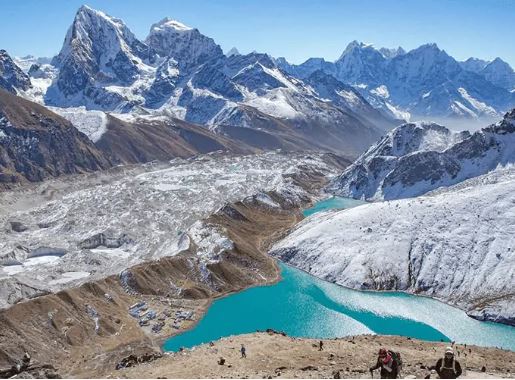
Explore the pristine Gokyo Lakes, the highest freshwater lake system in the world, located in the heart of the Everest Himalayas and surrounded by snow-covered peaks.
Gokyo Ri Viewpoint (5,357m):
Climb Gokyo Ri for one of the finest panoramic views in Nepal, featuring Mount Everest, Cho Oyu, Lhotse, Makalu, and hundreds of Himalayan peaks.
Scenic Flight to Lukla:
Enjoy a thrilling Kathmandu to Lukla flight, considered one of the most scenic mountain flights in the world and the gateway to the Everest trekking region.
Sherpa Culture & Traditional Villages:
Experience authentic Sherpa culture while trekking through famous villages such as Namche Bazaar, Thame, Dingboche, Lobuche, and Gokyo, rich in Himalayan traditions and mountain lifestyle.
Tengboche Monastery Visit:
Visit the iconic Tengboche Monastery, the spiritual center of the Everest region, offering breathtaking views of Ama Dablam and Mount Everest.
Sagarmatha National Park (UNESCO World Heritage Site):
Trek through Sagarmatha National Park, a UNESCO World Heritage Site known for its alpine landscapes, Himalayan wildlife, and dramatic mountain scenery.
Suspension Bridges & Glaciers:
Cross famous Himalayan suspension bridges, navigate the Khumbu Glacier, and trek across rugged high-altitude terrain.
Teahouse Trekking in Nepal:
Enjoy traditional teahouse accommodation in the Everest region, providing comfortable lodging and meals throughout the trek.
Remote Trails & Fewer Crowds:
The Three Passes route leads away from crowded paths, offering a more remote and adventurous Everest trekking experience.
One of the Most Challenging Treks in Nepal:
The Everest Three Passes Trek is widely regarded as one of the hardest and most adventurous treks in Nepal, suitable for physically fit and experienced trekkers.
Ultimate Everest Trekking Experience:
This trek combines everything the Everest region has to offer — high passes, base camp, alpine lakes, Sherpa culture, and iconic viewpoints — making it the ultimate Everest trekking package.
Cost Includes
Accommodation
✅ Twin-sharing / double accommodation in a 3-star hotel in Kathmandu for 2 nights, including breakfast. (Private room available at an additional cost).
✅ Twin-sharing guesthouse/lodge accommodation during the trek with attached bathrooms where available in city areas.
Meals & Drinking Water
✅ All standard meals during the trek: Breakfast, Lunch, and Dinner.
✅ Tea or coffee served with meals.
✅ Fresh seasonal fruits served after dinner during the trek.
✅ Farewell dinner in Kathmandu on the final night of the trip.
Transportation & Domestic Flights
✅ All airport transfers (international and domestic) by private tourist vehicle.
✅ All domestic flights and ground transportation required for the trekking itinerary in Nepal.
Guide & Trekking Staff
✅ Experienced, English-speaking, government-licensed trekking guide trained in first aid.
(2 guides provided for groups larger than 7 participants.)
✅ Porters for luggage carrying during the trek (1 porter for every 2 trekkers).
✅ All staff expenses including wages, meals, accommodation, insurance, equipment, and medications.
Permits & Documentation
✅ All trekking permits and required documentation.
✅ TIMS (Trekkers’ Information Management System) Card.
Benefits & Trekking Souvenirs
✅ 1 Destination Holiday Trek duffel bag / kit bag.
✅ Trekking map, sun hat, and Buff (neck gaiter).
✅ Comprehensive first aid kit, including an Oximeter to monitor pulse and oxygen levels during the trek.
✅ Trip completion certificate.
Administrative & Government Charges
✅ All administrative costs and government taxes.
Cost Excludes
❌ Lunch and dinner in Kathmandu (except farewell dinner).
❌ International airfare and airport departure taxes.
❌ Nepal entry visa fee
(USD 30 for 15 days, USD 50 for 30 days, USD 125 for 90 days).
❌ Travel insurance, including high-altitude rescue and emergency evacuation coverage.
❌ Beverages, including bottled water, boiled water, soft drinks, and alcoholic drinks.
❌ Tips for trekking staff and drivers.
❌ Personal trekking equipment and gear.
❌ Any additional expenses not mentioned in the “Cost Includes” section.
Q1: Best Time to Trek?
A: Pre-monsoon (March–May) and post-monsoon (September–November) for clear skies, stable weather, and stunning Himalayan views.
Q2: Trek Difficulty?
A: Challenging. Suitable for fit trekkers with stamina and prior high-altitude trekking experience recommended. Acclimatization days reduce altitude sickness risks.
Q3: Trek Duration?
A: 18–21 days including flights, trekking, acclimatization, and return to Kathmandu.
Q4: Highest Point?
A: Kongma La Pass (5,535m) is the highest point on the trek, with spectacular panoramic views of Everest and surrounding peaks.
Q5: Previous Experience Needed?
A: Recommended. High-altitude trekking experience helps, but motivated and fit trekkers can complete it with proper guidance.
Q6: How to Start the Trek?
A: A scenic 35-minute flight from Kathmandu to Lukla marks the trekking start.
Q7: Accommodation?
A: Comfortable teahouses/lodges along the route with basic amenities, warm dining areas, and cozy rooms.
Q8: Meals Provided?
A: Yes. Teahouses serve Nepali and Western meals, hot drinks, and snacks throughout the trek.
Q9: Guides & Porters?
A: Professional Sherpa guides and porters are included for safety, support, and logistics.
Q10: Safe for First-Timers?
A: Only recommended for fit and experienced trekkers due to high passes. Professional guidance, acclimatization, and organized support make it safer.
Q11: What to Pack?
A: Warm clothing, down jacket, trekking boots, sleeping bag, trekking poles, sunscreen, water bottle, and personal first aid kit.
Q12: Mobile & Internet?
A: Mobile coverage is available in main villages; Wi-Fi is offered at most teahouses (extra cost).
Q13: Altitude Sickness?
A: Guides are trained in prevention and management. Proper acclimatization, hydration, and rest are essential.
Q14: Physical Preparation?
A: Cardio, hiking, stair climbing, and endurance training 2–3 months before the trek help your body adapt to high altitude and long trekking days.
Backpack (50–65L), Daypack (20–30L), Rain cover, Down jacket, Fleece jacket, Thermal top, Thermal bottom, Waterproof jacket, Waterproof pants, Trekking pants, Quick-dry T-shirts, Warm hat (beanie), Sun hat / cap, Gloves, Buff / neck gaiter, Trekking boots, Trekking socks, Camp shoes / sandals, Sleeping bag (-10°C or lower), Trekking poles, Headlamp, Sunglasses (UV protection), Water bottle, Water purification tablets / filter, Sunscreen, Lip balm (SPF), Personal first aid kit, Toiletries, Towel (quick dry), Power bank
WHY CHOOSE EVEREST THREE PASSES TREK?
Three High Himalayan Passes: Cross Kongma La, Cho La, and Renjo La—some of the highest trekking passes in the world.
Ultimate Everest Adventure: A true test of endurance, spirit, and determination.
Authentic Sherpa Culture: Explore remote villages, monasteries, and traditional mountain life.
Unmatched Natural Beauty: Glaciers, turquoise lakes, icefalls, and towering snow peaks.
Safe & Well-Guided Expedition: Led by professional Sherpa guides with extensive high-altitude experience.
World-Class Photography: Panoramic views from passes, Everest Base Camp, Kala Patthar, and Gokyo Ri.
Fully Organized & Supported: We handle permits, logistics, accommodation, staff, and safety—so you focus on the adventure.
ITINERARY
Upon your arrival in Kathmandu, our representative will meet you at Tribhuvan International Airport, extend a warm welcome, and transfer to your hotel. Take advantage of this day to adjust to the new time zone and immerse yourself in the lively atmosphere of Kathmandu. Orientation Program will be at 5 PM. After orientation program welcome Dinner with guide.
Today is the beginning of your journey to Everest Three Pass Trek. You will take early flight to Lukla. Upon reaching Lukla enjoy the stunning mountain views. Start your trek to Phakding, descending through pine forests and picturesque Sherpa villages. Reach the delightful village of Phakding and settle into a tea house for the night. Make the most of the remaining daylight to explore Phakding. Wrap up your day with a satisfying dinner at the tea house.
During peak season (March, April, May, October, and November), flights to Lukla operates from Ramechhap/Manthali. Manthali is around 5 to 6 hours' drive from Kathmandu. In non-peak seasons (January, February, June, July, August, September, and December), flights to lukla operates from Kathmandu.
Today's trek takes you further into the heart of the Khumbu region as you ascend along the Dudh Koshi River. Start your trek after breakfast, crossing suspension bridges and journeying through pine forests. Pass through the small check point of Monjo, verification of your entry into Sagarmatha National Park. Keep trekking alongside the Dudh Koshi River, passing through the village of Jorsalle. Commence the challenging ascent to Namche Bazaar after crossing Tenzing Hillary Suspension Bridge, featuring a steep climb with breathtaking views of Thamserku, Everest, and other peaks. Reach Namche Bazaar, a bustling market town and the commercial hub of the Khumbu region. Check into a tea house for your stay.
Acclimatization is vital for a successful trek to Everest Base Camp, and Namche Bazaar serves as an ideal spot for this purpose. Today is designated for relaxation and exploration, enabling your body to adapt to the higher altitude. Take a short hike to Everest View Hotel for better acclimatization. Explore Namche Bazaar and the Sherpa Museum in the afternoon. Stay hydrated by drinking lots of fluids. Have a taste of local Sherpa cuisine for dinner. Ensure a good night's sleep by going to bed early.
The trek today takes you deeper into the Khumbu region, passing through picturesque landscapes and traditional Sherpa villages. You'll continue your ascent, reaching the village of Deboche, known for its serene monasteries and breathtaking views. Embark on your trek after breakfast from Namche Bazaar to Tengboche, trek uphill for panoramic views of Everest, Lhotse, and Ama Dablam, explore the peaceful Tengboche Monastery upon arrival, then move towards Deboche, cross the Imja River, and finally, check into a tea house for your overnight stay in Tengboche.
After staying overnight in Tengboche, we head to Dingboche in the morning. The trek continues through the alpine forest to Deboche, where you cross Imja Khola (River) using a suspension bridge. Along the way, you will pass by a wall with inscribed stones.
Later in the day, you'll enjoy a stunning view of Ama Dablam. You will climb to the village of Pangboche and follow the trail to Imja Valley. Finally, Reach Dingboche and check into a tea house in Dingboche for your overnight stay.
Acclimatization is essential for a safe and enjoyable trek at higher altitudes. Today is all about resting and exploring Dingboche, helping your body adapt to the rising elevation and getting you ready for the upcoming challenges.Start your day with a breakfast. For additional acclimatization, hike to Nangkartshang Peak, which provides views of Makalu, Lhotse, Chalotse, Tawache, and Ama Dablam. Stay hydrated, take it easy, read, or enjoy light activities during the day, then have dinner at the tea house.
Today's trek includes a mix of uphill and downhill sections. Following breakfast in Dingboche, we head towards Chukung where we'll stop for lunch. Since Chukung is our final destination for the day, you can enjoy a leisurely and steady pace along the trails.
En route, you'll encounter traditional farms and fences constructed with local stones. The trail takes you through the picturesque Imja Khola valley and passes by Bibre, a location known for yak herding. After approximately 4 to 5 hours of trekking, we'll reach Chukung, where we'll have lunch and spend the night.
Today, we'll be trekking for about 8-9 hours to reach the top of Kongma La pass. There are two paths to get there: one goes northwest of Chukung over the Nuptse Glacier moraines, and the other goes back to Bibre and follows the trail above the Niyang Khola.
Since there are no hotels or shops along the way, we need to bring our own packed food and water. Once we reach the top of Kongma La pass, we'll see beautiful Buddhist prayer flags. From there, we'll head north of the Khumbu Glacier to reach Lobuche.
Today is an important day as you finally reach Everest Base Camp. Start your morning trek after a filling breakfast in Lobuche, navigate rocky terrain as you ascend to Gorakshep, the last settlement before Everest Base Camp. Check into the tea house for a quick lunch, then embark on the journey to Everest Base Camp through the Khumbu Glacier. Take time to capture memories with photographs at this incredible spot. After enjoying the Everest Base Camp experience, trek back to Gorakshep, have dinner at the tea house in Gorak Shep, and rest early.
Begin your day early to catch a stunning sunrise over the Himalayas at Kala Patthar and spend time taking photographs. Afterward, descend from Kala Patthar to Gorakshep, trek back down towards Pheriche, stop for lunch in the familiar spot of Dzongla, and finally, reach Pheriche to check into a tea house. Spend the evening resting and enjoy dinner at the tea house.
Today, start your trek early, around 4-5 am, to cross Cho La pass before mid-day. Keep an eye on the weather, as it can be a bit tricky due to the high altitude and steep, rocky terrain.
Be prepared for some snow on Cho La pass, and watch out for rockfalls even if the weather seems good. The view from the top of Cho La Pass is amazing. After that, head down to your destination, Gokyo (4,800 m).
You'll pass through Khara, Pangka, and the Ngozumpa glacier, the longest glacier in Nepal, with great views of Kantaga and Cho-oyu Mountain. There are six lakes, and the third one is Gokyo Lake.
Stay in a small village near Gokyo Lake for two nights, exploring the area with sightseeing and hiking trips.
Early in the morning, you will trekup to the top of Gokyo Ri, standing at an elevation of 5,483 m. If you take on this adventure, there are plenty of rewards waiting for you. You'll be treated to breathtaking views of the impressive Gokyo valley, the massive Ngozumpa glacier, and an incredible panoramic sight of the entire Khumbu Himalayas, including the giants like Everest, Lhotse, Nuptse, Makalu, Cho-Oyu, and Gychung Kang.Early in the morning, you will trekup to the top of Gokyo Ri, standing at an elevation of 5,483 m. If you take on this adventure, there are plenty of rewards waiting for you. You'll be treated to breathtaking views of the impressive Gokyo valley, the massive Ngozumpa glacier, and an incredible panoramic sight of the entire Khumbu Himalayas, including the giants like Everest, Lhotse, Nuptse, Makalu, Cho-Oyu, and Gychung Kang.
One of the best viewpoints in the Everest region. See Everest, Lhotse, Makalu, and Cho Oyu.
Today, you begin your trek in the morning. It's a long journey on a regular trail. You'll enjoy an amazing view of Mt. Everest from the top of the Renjo pass. After that, you head down to Landen, which is your final stop for the day.
Embark on your trek after breakfast. Today's trail leads mostly downhill to Namche. As you stroll, you'll be treated to breathtaking views of snowy peaks. About 150 meters above Thame, you'll come across the Thame Monastery, a delightful place surrounded by the homes of monks and locals. On your way to Thame, you'll also get a glimpse of the beautiful Nangpala valley, which is main road access to the Tibet border.
Thame is on the border between Nepal and Tibet and is the birthplace of many famous international and national climbers/trekkers. Take a break for lunch in Thame before continuing your journey towards Namche.
The trek downhill to your destination of the day, Namche Bazar, will take approximately 3.5 hours.
Today is the last part of your Everest Base Camp trek as you come down from Namche Bazaar to Lukla. The path goes through familiar villages and landscapes, giving you a chance to think about the amazing journey you've been on. Start your descent from Namche Bazaar after breakfast. Take breaks for tea, enjoy the scenic beauty, and catch glimpses of the mountains one last time. Have lunch in the charming village of Phakding. Continue your trek, crossing suspension bridges and passing through forests. Finally, arrive in Lukla, the gateway to the Everest region, and check into a tea house. Have a dinner celebration dinner with all crew members and sleep.
Take a morning flight from Lukla to Kathmandu. Explore Kathmandu, enjoy dinner and enjoy your last night in kathmandu. Once you land at the airport, you'll be transferrred to the hotel. Please note that flight operations are solely determined by the airline and may be influenced by the weather.
Free day for sightseeing or rest in case of flight delay.
Use your last morning in Kathmandu according to your flight time. Pack your things, check out of the hotel, Head to Tribhuvan International Airport for your departure. Wishing you a safe and pleasant journey back home!
TREKKING MAP

PHOTO GALLERY
1335USD/ person
| No. of People | Price Per Person |
|---|---|
| 1 Pax | 1635USD |
| 2–4 Pax | 1585USD |
| 4–10 Pax | 1435USD |
| 10–14 Pax | 1335USD |
800USD/ person
| No. of People | Price Per Person |
|---|---|
| 1 Pax | 1100USD |
| 2–4 Pax | 1000USD |
| 4–10 Pax | 900USD |
| 10–14 Pax | 800USD |
1050USD/ person
| No. of People | Price Per Person |
|---|---|
| 1 Pax | 1250USD |
| 2–4 Pax | 1050USD |
| 4–10 Pax | 950USD |
| 10–14 Pax | 800USD |
395USD/ person
| No. of People | Price Per Person |
|---|---|
| 1 Pax | 500USD |
| 2–4 Pax | 465USD |
| 4–10 Pax | 430USD |
| 10–14 Pax | 395USD |
395USD/ person
| No. of People | Price Per Person |
|---|---|
| 1 Pax | 500USD |
| 2–4 Pax | 465USD |
| 4–10 Pax | 430USD |
| 10–14 Pax | 395USD |
1325USD/ person
| No. of People | Price Per Person |
|---|---|
| 1 Pax | 1575USD |
| 2–4 Pax | 1525USD |
| 4–10 Pax | 1425USD |
| 10–14 Pax | 1325USD |
2199USD/ person
| No. of People | Price Per Person |
|---|---|
| 1 Pax | 2500USD |
| 2–4 Pax | 2400USD |
| 4–10 Pax | 2300USD |
| 10–14 Pax | 2199USD |
2199USD/ person
| No. of People | Price Per Person |
|---|---|
| 1 Pax | 2500USD |
| 2–4 Pax | 2400USD |
| 4–10 Pax | 2300USD |
| 10–14 Pax | 2199USD |
2199USD/ person
| No. of People | Price Per Person |
|---|---|
| 1 Pax | 2500USD |
| 2–4 Pax | 2400USD |
| 4–10 Pax | 2300USD |
| 10–14 Pax | 2199USD |
2199USD/ person
| No. of People | Price Per Person |
|---|---|
| 1 Pax | 2500USD |
| 2–4 Pax | 2400USD |
| 4–10 Pax | 2300USD |
| 10–14 Pax | 2199USD |
FIXED DEPARTURE
| Date | Package | Availability | Book Now |
|---|---|---|---|
| MARCH 11 2026 MARCH 20 2026 | Everest Base Camp Everest Base Camp | Available Available | Book Now |
| MARCH 20 2026 | Manaslu Circuit | Available | Book Now |
| MARCH 13 2026 MARCH 25 2026 | Annapurna Base Camp Annapurna Base Camp | Available Available | Book Now |
| MARCH 15 2026 MARCH 29 2026 | Mardi Himal Mardi Himal | Available Available | Book Now |
| MARCH 25 2026 | Gokyo Trek | Available | Book Now |
| MARCH 20 2026 | Annapurna Circuit Trek | Available | Book Now |
| MARCH 25 2026 | Muktinath Damodarkunda | Available Available | Book Now |
| MARCH 11 2026 | Kanchenjunga Trek | Available | Book Now |
| MARCH 15 2026 MARCH 22 2026 MARCH 29 2026 | Aama Yangri Trek Aama Yangri Trek Aama Yangri Trek | Available Available Available | Book Now |
| MARCH 11 2026 MARCH 22 2026 | Pikey Trek Pikey Trek | Available Available | Book Now |
| MARCH 11 2026 MARCH 20 2026 | Mera Peak Mera Peak | Available Available | Book Now |
| MARCH 13 2026 MARCH 25 2026 | Island Peak Island Peak | Available Available | Book Now |
| MARCH 10 2026 MARCH 17 2026 MARCH 25 2026 | Lobuche Peak Lobuche Peak Lobuche Peak | Available Available Available | Book Now |
| MARCH 21 2026 | Pisang Peak | Available | Book Now |
 Inquire Now