Mt. Everest Expedition (8,848m)

Β 

Mount Everest Expedition – South Col Route
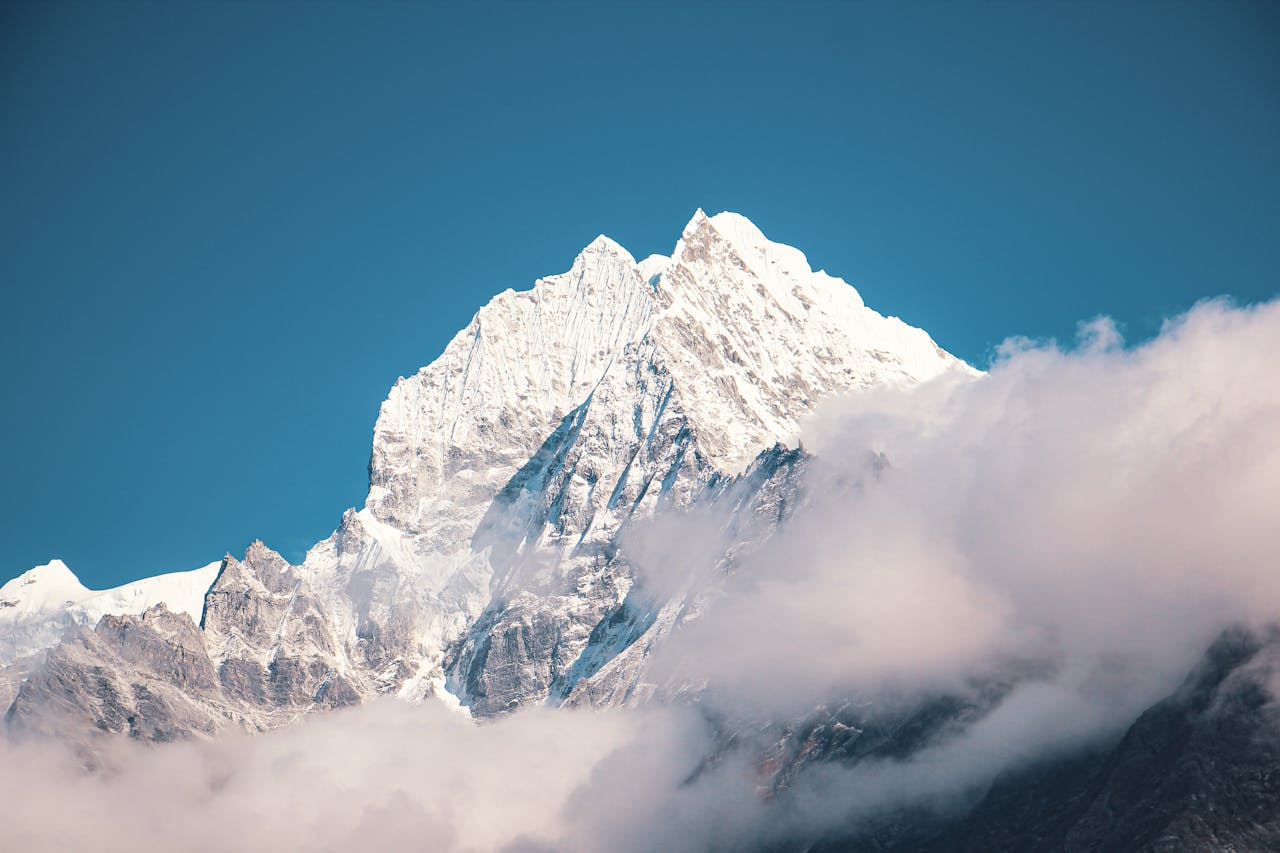
everest base camp trek

If standing on the roof of the world (8,848.86 m) inspires you, a guided Everest Expedition with Destination Holiday Treks & Expedition is the ultimate adventure. This is more than a climbβ€”it is a life-changing journey through the heart of the Himalayas, testing your strength, resilience, and determination while rewarding you with one of the greatest achievements on Earth.

Climbing Everest from the South Col Route (South Side) is the most historic and proven path to the summit. This legendary route was first successfully climbed in 1953 by Edmund Hillary and Tenzing Norgay, and it remains the preferred choice for climbers seeking a well-supported and strategically organized expedition.


Why Climb Everest with Destination Holiday Treks?

We are committed to professionalism, ethics, safety, and success. Our expedition combines experienced leadership, strong logistics, and carefully planned acclimatization to give you the best possible chance of reaching the summit safely.

What We Provide:

  • Highly experienced Sherpa guides (multiple Everest summiteers)

  • IFMGA-trained expedition leadership

  • Fixed ropes, ladders, and continuous route maintenance

  • Multiple acclimatization rotations

  • Carefully planned rest days

  • Reliable communication systems

  • Medical and emergency support

  • High-quality Base Camp facilities

Our goal is not only to help you reach the summitβ€”but to do so with maximum safety and efficiency.


The South Col Route – A Legendary Path

The South Col Route includes some of the most iconic sections of Everest:

The Khumbu Icefall

One of the most technical and dangerous sections of the climb. Climbers navigate deep crevasses, towering seracs, and shifting ice formations using fixed ropes and ladders under expert supervision.

The Lhotse Face

A steep blue-ice wall fixed with ropes at angles of 30–45 degrees, demanding strong technical climbing skills.

The Yellow Band & Geneva Spur

Rocky sections before reaching the South Col, requiring focus and controlled movement.

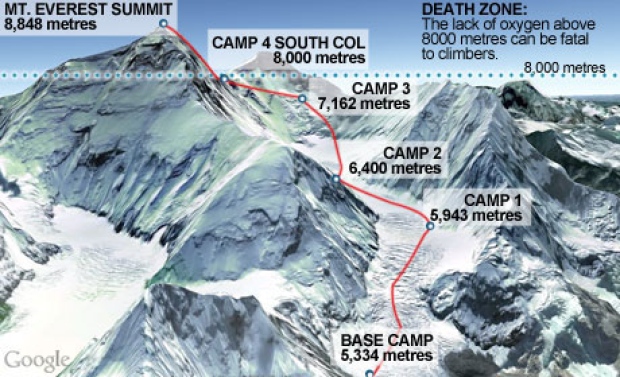
From Camp IV onward, climbers typically use supplemental oxygen as they enter the β€œdeath zone” above 8,000 meters.


Everest Camp Structure (South Side)

Everest Base Camp (5,200 m / 17,060 ft)

Located on the Khumbu Glacier, Base Camp is home for up to 45 days. Surrounded by peaks like Pumori, Nuptse, and Lhotse, it becomes a small expedition village during climbing season.

We provide:

  • Comfortable expedition tents

  • Professional kitchen and nutritious meals

  • Satellite communication

  • Dedicated logistics team


Camp I (5,900 m / 19,357 ft)

Reached after crossing the Khumbu Icefall. Climbers stay 1–2 nights for acclimatization.

Camp II (6,400 m / 20,998 ft)

Located in the Western Cwm. This serves as the Advanced Base Camp with kitchen, dining tents, and rest facilities.

Camp III (7,100 m / 23,294 ft)

Positioned on the Lhotse Face. Climbers usually spend two nights here during rotations.

Camp IV – South Col (8,000 m / 26,300 ft)

The final camp before summit push. A harsh and windy environment where oxygen support begins for most climbers.


Summit Day (8,848.86 m / 29,032 ft)

The final ascent takes 9–13 hours. Key landmarks include:

  • The Balcony

  • The South Summit

  • The Hillary Step

From there, a final snow ridge leads to the summit of Mount Everestβ€”the highest point on Earth.

Standing on the summit offers 360Β° views of Himalayan giants such as Makalu, Cho Oyu, and Ama Dablam.


Acclimatization & Preparation

Climbing Everest requires:

  • Strong mountaineering experience

  • Excellent physical fitness

  • Prior high-altitude climbing (6000m–7000m peaks recommended)

  • Mental resilience

Our expedition follows a scientifically planned acclimatization schedule with multiple rotations between Camps I, II, and III to maximize safety and summit success.


More Than a Climb

Reaching the summit of Mount Everest is not only about altitudeβ€”it is about courage, endurance, discipline, and self-discovery. It pushes you beyond limits and changes how you see yourself and the world.

With Destination Holiday Treks & Expedition, you are not just joining an expeditionβ€”you are becoming part of Everest’s extraordinary history.

TREK FACTS IN DETAIL

Region: Sagarmatha (Everest) Region, Eastern Nepal – within Sagarmatha National Park

Duration: 60–70 days (including acclimatization, rotations, summit push, and contingency days)

Difficulty Level: Extremely Challenging – technical climbing at extreme altitudes above 8,000 meters

Maximum Altitude: 8,848 meters (29,029 ft) – summit of Mount Everest

Trek Style:

  • Fully supported mountaineering expedition

  • Fixed ropes, high camps, and optional supplemental oxygen

  • Experienced Sherpa guides for route fixing and summit support

Meals:

  • 3 meals per day during trek and at Base Camp

  • High-altitude meals at Base Camp and higher camps

  • Tea, coffee, and hot drinks included

Group Size: 2–12 climbers per expedition team (can vary depending on operator)

Best Seasons:
🌸 Spring: April – May ( most stable weather and optimal summit window )
🍁 Autumn: September – October ( clear skies, colder conditions, less crowded )

Accommodation:

  • Tea houses/lodges during approach trek to Base Camp

  • Tented Base Camp and higher camps with dining, kitchen, and toilet tents
PERMIT REQUIREMENTS
  • Sagarmatha National Park (SNP) Permit
  • 8,000m Peak Climbing Permit from Nepal Government
  • TIMS (Trekking Information Management System) Card
  • Liaison Officer Fee
  • Garbage Deposit & Environmental Fees
  • Emergency & Safety Compliance
  • Climb the world’s highest peak (8,848m)

  • Experience extreme high-altitude mountaineering

  • Panoramic views of Everest, Lhotse, Nuptse, Ama Dablam, and surrounding Himalayan giants

  • Trek through Sherpa villages and experience Buddhist culture

  • Base Camp and higher camps fully supported with tents and dining facilities

  • Historic climbing routes, following footsteps of legendary climbers Edmund Hillary and Tenzing Norgay

  • Challenging glacier travel, icefall navigation, and technical climbing

  • Β 

βœ”οΈ Experienced English-speaking expedition leader and high-altitude Sherpa guides
βœ”οΈ Accommodation: tea houses/lodges during approach trek; tents at Base Camp and higher camps
βœ”οΈ 3 meals per day during trek and at Base Camp
βœ”οΈ Climbing Sherpa support for summit rotations
βœ”οΈ Fixed ropes, ladders, and route preparation
βœ”οΈ Base Camp setup: dining, kitchen, and toilet tents
βœ”οΈ Sagarmatha National Park (SNP) permit
βœ”οΈ 8,000m Peak Climbing Permit for Everest
βœ”οΈ TIMS card (if trekking approach included)
βœ”οΈ Liaison officer fees
βœ”οΈ Garbage management and environmental fees
βœ”οΈ Ground transportation from/to Kathmandu or Lukla
βœ”οΈ Emergency communication equipment (satellite phone/radio)
βœ”οΈ Basic first aid kit and high-altitude medical support
βœ”οΈ Government taxes and service charges

❌ International airfare to/from Nepal
❌ Nepal visa fees
❌ Personal travel and medical insurance (mandatory)
❌ Personal climbing gear (boots, harness, crampons, down suit, sleeping bag, gloves, etc.)
❌ Supplemental oxygen for summit push (unless included in package)
❌ Personal expenses (laundry, WiFi, snacks, drinks, souvenirs)
❌ Tips for guides, Sherpas, and support staff
❌ Rescue or medical evacuation costs beyond provided support
❌ Costs arising from weather delays, natural disasters, or political issues

Q1. How long is the Everest expedition?
60–70 days, including acclimatization, rotations, summit push, and contingency days.

Q2. What is the difficulty level?
Extremely challenging – requires prior high-altitude and technical climbing experience.

Q3. Do climbers need supplemental oxygen?
Yes, most climbers use supplemental oxygen above 7,500–8,000 meters for safety.

Q4. What is the best season to climb?
Spring (April–May) is most popular; Autumn (September–October) is also suitable but colder.

Q5. Who can attempt Everest?

  • Experienced climbers with prior 6,000–7,000m expeditions

  • Skilled in ice climbing, high-altitude endurance, and crevasse navigation

Q6. How much does it cost?
Generally ranges from USD 35,000–60,000+, depending on support, oxygen use, and Sherpa ratio.

Q7. Are there risks?
Yes – avalanche, crevasses, altitude sickness, extreme weather, and technical climbing hazards.

Q8. What permits are required?
SNP permit, 8,000m Climbing Permit, TIMS card (if trekking), Liaison Officer fee, and environmental/garbage fees.

Q9. What is the maximum altitude?
8,848 meters – summit of Mount Everest.

Q10. Who first climbed Everest?
Sir Edmund Hillary and Tenzing Norgay in 1953.

Itineary

Arrive at Tribhuvan International Airport, Kathmandu.
  • Transfer to hotel and rest.
  • Pre-expedition briefing and equipment check.
Day 02–03: Expedition Preparation in Kathmandu

Equipment check, documentation, shopping, introduction to Sherpa team.

Day 04: Fly to Lukla (2,840m) & Trek to Phakding (2,610m)
  • Early morning scenic flight to Lukla.
  • Begin trek through Sherpa villages and rhododendron forests.
  • Overnight in Phakding lodge.
Day 05: Trek to Namche Bazaar (3,440m)
  • Trek along Dudh Koshi River.
  • Cross suspension bridges and small villages.
  • Acclimatization in Namche Bazaar, Sherpa culture exposure.
Day 06: Acclimatization Day in Namche

Optional short hikes to Everest View Hotel or Khumjung Village.

Adjust to high altitude.

Day 07: Trek to Tengboche (3,860m)
  • Trek through pine forests and Mani walls.
  • Visit Tengboche Monastery, one of the largest in Khumbu.
Day 08: Trek to Dingboche (4,410m)

Gradual climb with views of Ama Dablam and surrounding peaks.

Overnight in Dingboche.

Day 09: Acclimatization Day in Dingboche

Short hikes to Nangkar Tshang for acclimatization.

Prepare for higher altitude trek.

Day 10: Trek to Lobuche (4,910m)

Trek through moraine landscapes.

Overnight in Lobuche lodge.

Day 11: Trek to Everest Base Camp (5,364m) – Everest Base Camp Setup
  • Early trek to Everest Base Camp.
  • Explore Base Camp and interact with Sherpa climbers.
  • Return to Gorak Shep for overnight.
Day 10: Gorak Shep – Kala Patthar (5,545m) – Gorak Shep
  • Early morning trek to Kala Patthar for sunrise and panoramic Everest view.
  • Return to Gorak Shep and rest.
Day 11–50: Summit Rotation (Climbing Days)
  • Acclimatization rotations between Base Camp and higher camps.
  • Key climbing sections: Khumbu Icefall, Western Cwm, Lhotse Face, South Col.
  • Summit push made during optimal weather window.
  • All rotations include rest and oxygen support.
Day 51: Descend to Base Camp

Rest and recover at Base Camp.

Celebrate successful climbs with Sherpa team.

Day 52: Base Camp – Pheriche / Dingboche

Trek down to lower altitude for rest.

Day 53: Dingboche – Namche Bazaar
  • Continue descent through villages.
  • Overnight in Namche Bazaar.
Day 54: Namche Bazaar – Lukla

Trek to Lukla.

Overnight at lodge.

Day 52: Trek to Lukla

Overnight at lodge.

Day 55: Lukla – Kathmandu

Morning flight back to Kathmandu.

Rest and celebrate expedition completion.

Day 56: Departure from Kathmandu

Transfer to Tribhuvan International Airport for onward flight.

WHY CHOOSE EVEREST EXPEDITION?
  1. Climb the World’s Highest Peak

    • Mount Everest (8,848m / 29,029 ft) is the ultimate mountaineering challenge.

    • Achieving the summit is a life-changing accomplishment recognized worldwide.

  2. Ultimate High-Altitude Adventure

    • Test your physical and mental endurance at extreme altitudes.

    • Experience technical climbing on ice, snow, and mixed terrain.

  3. Epic Himalayan Scenery

    • Trek through Khumbu region villages, glaciers, and high-altitude landscapes.

    • Spectacular views of Everest, Lhotse, Nuptse, Cho Oyu, and Ama Dablam.

  4. Historic Mountaineering Achievement

    • Follow in the footsteps of legendary climbers like Edmund Hillary and Tenzing Norgay.

    • Be part of the world’s most iconic climbing history.

  5. Fully Supported Expeditions

    • Guided expeditions include experienced Sherpas, base camp setup, route fixing, and logistics.

    • Safety equipment, oxygen, and emergency protocols are professionally managed.

  6. Personal Growth and Achievement

    • Push limits of endurance, resilience, and decision-making under extreme conditions.

    • Gain unmatched confidence and personal satisfaction from achieving a peak few attempt.

  7. Unique Cultural Experience

    • Interact with Sherpa communities, learn Buddhist traditions, and explore monasteries like Tengboche.

  8. Challenge and Recognition

    • Completing an Everest expedition is recognized globally among mountaineers.

    • Inspires lifelong stories, achievements, and unforgettable experiences.

  9. Preparation for Future Expeditions

    • Everest teaches technical climbing, high-altitude acclimatization, and team coordination.

    • Valuable experience for future 8,000m expeditions or extreme mountaineering challenges.

TREKKING MAP

PHOTO GALLERY
