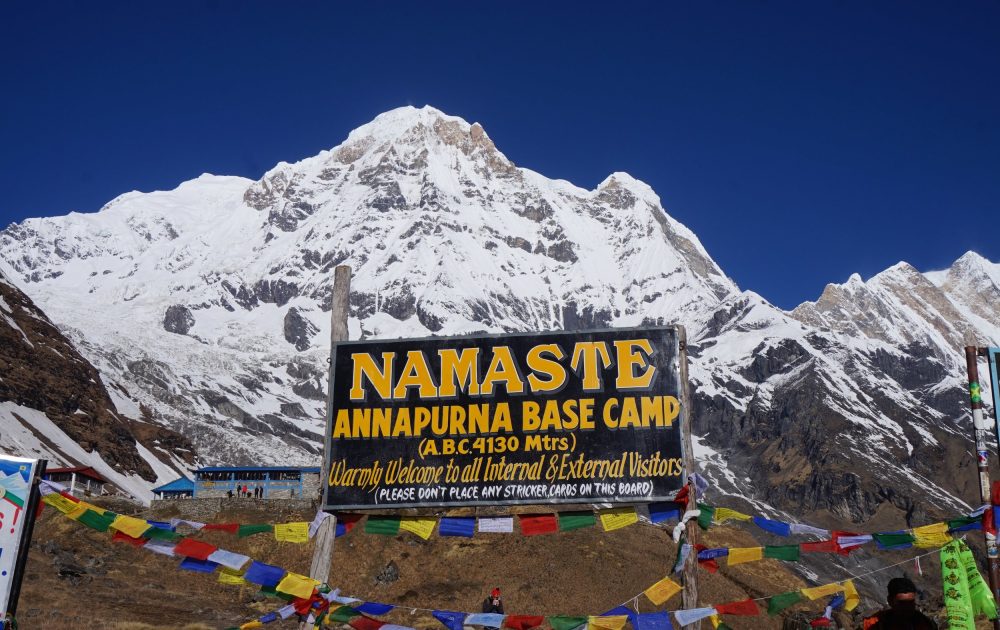
A typical Annapurna Base Camp Trek itinerary takes around 7 to 12 days
The ideal time for trekking in the annapurna base camp are between spring that is from march to may and the autumn september to november.
However, it is not generally advised to trek during the winter as there can be heavy snowfall and can make things difficult even though during this period the crowd gathering is less and more peaceful. But it is not worth the risk.
And monsoon can be rainy, slippery tracks and occasional landslides. So this is also not recommended to be on the safe side.

The Food and Accommodation The Annapurna Base Camp Trek is considered a teahouse trek that means the accommodation is usually done in local lodges alongside the trail and the rooms are basic but comfortable. There is also an option of twin beds and bathrooms that can be shared.
The Permits that are Required are Annapurna Conservation Area Permit (ACAP) and TIMS Card (Trekkers’ Information Management System)
These help ensure the trekkers saftey.
The main highlight of this trek is the rich culture and the gurung and magar communities that inhabit this wonderful place. The hospitality and the culture is unmatched. The trekkers can get a good glimpse of the stone houses, the prayer flags, the buddhist monasteries and the local farm
We ensure that the guides and porters have all the necessary tools and guides to guide you along the way. We provide a custom itinerary and the schedule can be arranged as per the requirements and with proper planning and safer measures in place, we support our trekkers with all the precautionary measures needed before the trek starts.
The Annapurna Base Camp Trek is regarded as moderate to difficult and no prior technical climbing skills are needed however the trekkers need to be in good physical fitness and need to be able to walk 5–7 hours per day on difficult terrain.
The main obstacles that the trekkers might encounter are the ascents and descends that are uneven and less predictable.
The altitude is demanding and the oxygen level at these high altitudes is sparse and has very limited supply. A proper acclimatization is recommended with proper hydration is considered a must.
For more exciting blogs on our website you can follow this link 👈